

Bloating, Gas, Fatigue – Could You Have IBS Without Knowing It?

Bloating, Gas, Fatigue – Could You Have IBS Without Knowing It? The bloating shows up sometime after lunch. By evening, the abdomen is visibly distended – tight enough to be uncomfortable, soft enough that nobody else would notice unless you pointed it out. Some days there’s a cramping that comes and goes without much pattern. Mornings are often the worst for it, and then without any particular reason, a day goes by where everything feels normal. Most people in this situation have tried cutting out certain foods, eating slower, drinking more water, avoiding street food. Some things help a little. Nothing helps consistently. And because the symptoms aren’t dramatic – there’s no blood, no vomiting, no dramatic weight loss – it never quite crosses the threshold of ‘serious enough’ to investigate properly. Irritable bowel syndrome sits in this exact gap. It’s common, real, and significantly underdiagnosed in India – partly because the symptoms are so easy to attribute to diet or stress, and partly because many people assume that if it’s not dangerous, it doesn’t need a name. But living with unmanaged IBS isn’t just uncomfortable. It shapes what you eat, where you go, how you plan your day, and over time, how you feel about your own body. That’s worth taking seriously. What IBS Actually Is – and What It Isn’t Irritable bowel syndrome is classified as a functional gut disorder. That word – functional – trips people up. It doesn’t mean the problem is imaginary or purely psychological. It means the gut’s structure looks normal on imaging and scoping, but the way it functions – how it moves, how it responds to food and stress, how it processes sensation – is disrupted. The gut has its own nervous system – the enteric nervous system – which communicates constantly with the brain via the gut-brain axis. In people with IBS, this communication is dysregulated. The gut is hypersensitive: normal levels of gas or bowel movement that most people wouldn’t feel become genuinely painful or intensely uncomfortable. Gut motility – the rhythmic muscle contractions that move food through the intestine – is erratic, which produces the alternating constipation and diarrhoea that many people with IBS experience. IBS is not the same as inflammatory bowel disease (IBD), which includes Crohn’s disease and ulcerative colitis. IBD involves visible structural inflammation and carries different risks and treatment requirements. This distinction matters because people sometimes use the terms interchangeably, which leads to significant confusion about what they actually have. The Symptom Picture – Beyond Just a Sensitive Stomach IBS presents differently in different people, which is one of the reasons it goes unrecognised for so long. There’s no single symptom that confirms it – it’s a pattern that emerges across time. The core features are: Recurrent abdominal pain or cramping, typically related to bowel movements – either relieved by them or triggered by them Bloating that worsens through the day and is often visibly noticeable by evening Changes in stool consistency – ranging from hard, pellet-like stools to loose or watery ones, sometimes alternating between both A feeling of incomplete evacuation after a bowel movement Urgency – needing to reach a bathroom quickly, often with little warning Excess gas that doesn’t fully resolve with dietary changes What people don’t as often connect to IBS: Fatigue that isn’t explained by sleep quality or workload – the gut-brain connection means chronic gut stress has a real draining effect on energy Nausea, particularly in the mornings or before stressful events Backache and a feeling of pelvic heaviness – the bowel is anatomically close enough to the lower back that IBS-related distension causes referred discomfort Anxiety and low mood – not just as psychological consequences of living with IBS, but as bidirectional features of the gut-brain axis dysfunction that underlies the condition Symptoms that reliably worsen around the menstrual cycle in women – hormonal fluctuations directly affect gut motility IBS is also more common than most people realise. Conservative estimates put its prevalence at 10 to 15 percent of the global population, with higher rates in urban populations with high stress levels and dietary patterns that include significant processed food intake. In India, actual prevalence is likely higher than reported due to underdiagnosis. The Three Types – and Why It Matters Which One You Have IBS is broadly categorised based on which bowel pattern dominates, because the triggers, dietary management, and treatment approach differ meaningfully between types: IBS-C (Constipation Predominant) Hard or infrequent stools are the primary feature. Bloating is typically severe because stool sitting in the colon ferments and produces gas. Abdominal pain is common and tends to ease after a bowel movement. People with IBS-C often have a days-long gap between movements and significant straining. This type is frequently mismanaged with laxatives alone, which treat the symptom without addressing the underlying motility and sensitivity issue. IBS-D (Diarrhoea Predominant) Loose, watery, or urgently passed stools are the dominant feature – often occurring in clusters first thing in the morning or after meals. The urgency can be socially limiting; many people with IBS-D plan their lives around bathroom access. Certain foods – particularly fatty meals, coffee, and stress – are reliable triggers. This type is often dismissed as ‘a sensitive stomach’ for years before a proper assessment is sought. IBS-M (Mixed Pattern) Alternating between constipation and diarrhoea within the same week – sometimes within the same day. This is the type most likely to go undiagnosed because the pattern seems contradictory and people assume the episodes aren’t related. They are. Mixed IBS reflects erratic gut motility that swings between under- and over-activity rather than being consistently dysregulated in one direction. What Triggers IBS and Keeps It Going IBS doesn’t have a single cause. It develops from an interaction of factors, and the same interaction tends to perpetuate it: Stress and the gut-brain axis Psychological stress doesn’t just feel like it affects the gut – it measurably does. Cortisol and adrenaline directly alter gut
Sitting All Day Is Breaking Your Spine – An Ortho Doctor Explains

Sitting All Day Is Breaking Your Spine – An Ortho Doctor Explains There is a version of this that sounds like an exaggeration. Sitting, after all, is something humans have done forever. Chairs exist for a reason. How bad can it really be? Here’s what the orthopaedic clinic actually sees: a 32-year-old software developer with disc herniation at two levels. A 28-year-old with chronic cervical spondylosis that’s causing radiating arm pain. People in their late twenties with the spinal imaging of someone a generation older. And in almost every case, the common thread is the same – eight to ten hours a day seated, for years, in positions their spine was never designed to sustain. The human spine was built for movement. Not for prolonged static loading in a flexed position with a screen at eye level and both feet barely touching the floor. And when you hold it in that position for most of your waking hours – day after day, year after year – it accumulates damage that doesn’t announce itself loudly until something finally crosses a threshold. By that point, the conversation has shifted from prevention to management. This post is about having it earlier. What Sitting Actually Does to the Spine The lumbar spine – the lower back – has a natural inward curve called the lordosis. This curve distributes the load of the upper body efficiently across the vertebrae and discs. When you sit in a typical chair, particularly one without proper lumbar support, this curve flattens or reverses. The load shifts forward onto the front edges of the intervertebral discs rather than being distributed evenly. Studies measuring intradiscal pressure have found that sitting with a forward lean – the posture most people unconsciously adopt when working at a desk or looking at a phone – generates significantly higher pressure on the lumbar discs than standing upright or even walking. You are loading your discs more intensely by sitting badly than you would be by being on your feet. Over time, that sustained uneven loading has several consequences: Disc Degeneration and Herniation Intervertebral discs are the shock-absorbing pads between each vertebra. They don’t have a direct blood supply in adults – they get their nutrition through the movement of fluid, which happens when you load and unload them through activity. Prolonged static sitting starves the discs of this nutrient exchange while simultaneously loading them unevenly. The result, over years, is accelerated disc degeneration – the disc loses height and hydration and becomes less able to absorb load. A degenerated disc is more vulnerable to herniation – where the soft inner material pushes through the outer wall and presses on nearby nerve roots. This is when back pain stops being a dull ache and starts radiating down the leg. That radiation pattern is sciatica, and it is far more common in desk workers than most people expect. Cervical Spondylosis from Forward Head Posture For every inch the head moves forward of its neutral position, the effective load on the cervical spine roughly doubles. At the neutral position, the head weighs around 5 to 6 kilograms. At 5 centimetres of forward lean – a typical phone-use posture – the cervical spine is managing the equivalent of significantly more. Hours of this, daily, accelerates wear on the cervical discs and facet joints. Cervical spondylosis – degenerative changes in the neck vertebrae – used to be primarily a condition of people in their fifties and beyond. It’s now consistently presenting in people in their late twenties and thirties, with symptoms ranging from chronic neck stiffness and headaches to numbness and tingling in the fingers from nerve root compression. Muscle Imbalance That Becomes Self-Perpetuating Prolonged sitting tightens the hip flexors – the muscles at the front of the hip that keep the leg lifted. When these muscles are chronically shortened, they pull the pelvis into an anterior tilt, which exaggerates the lumbar curve and compresses the lower back joints. Simultaneously, the glutes – the primary stabilisers of the pelvis – become weak and underactivated from spending hours compressed under body weight. The outcome is a spine that’s being asked to do stability work it wasn’t designed for, because the surrounding muscles that should be sharing that load have become unreliable. This is the biomechanical foundation of most chronic lower back pain in desk workers, and it’s why back pain that starts as a workplace issue follows people to the gym, the park, and eventually to bed. The Symptoms That Show Up Before the Serious Damage The spine rarely gives you one dramatic warning sign. It tends to build a case incrementally: Morning stiffness in the lower back or neck that takes 15 to 20 minutes to ease – a sign of reduced disc hydration and facet joint irritation A persistent dull ache in the lower back that is worse after long sitting sessions and temporarily better after walking Tension headaches that originate at the base of the skull and radiate forward – often a cervicogenic headache from upper neck joint irritation Numbness, tingling, or a ‘dead’ feeling in one or both arms – particularly in the hand or fingers Pain that shoots from the lower back into the buttock or down the leg, especially when sitting or bending forward Difficulty sitting for more than 20 to 30 minutes before needing to shift position or stand A feeling of the neck or upper back being ‘locked’ after a long screen session These symptoms are easy to manage temporarily with painkillers and ignore otherwise. The risk of doing so is that the underlying structural problem – disc degeneration, nerve compression, muscle imbalance – quietly progresses while the symptom gets suppressed. Why ‘Just Exercise More’ Is Incomplete Advice Exercise helps. It genuinely does – people who are physically active outside work hours have significantly lower rates of back pain than those who are sedentary across the board. But there’s a flaw in the logic of offsetting eight hours of poor seated
5 Things Paediatricians Notice About Your Child That Parents Always Overlook

5 Things Paediatricians Notice About Your Child That Parents Always Overlook A paediatric consultation is a strange experience from a parent’s perspective. You go in with one concern – a cough, a fever, a rash – and the doctor spends time looking at things you hadn’t even thought to mention. The way your child walks across the room. How they respond to their name. Whether they make eye contact with a stranger. Paediatricians are trained observers. Every routine checkup is as much an assessment of overall development, growth patterns, and subtle health signals as it is a response to the presenting complaint. And because parents see their child every single day, gradual changes are often the hardest to notice from the inside. Here are five things that consistently come up in paediatric assessments – not because parents are inattentive, but because these are exactly the kinds of things you need a trained eye and a comparison baseline to spot. 1. Growth Patterns That Don’t Follow the Curve Every child grows at their own pace – that much is true. But growth doesn’t happen randomly. It follows a trajectory, and that trajectory is what paediatricians track across multiple visits rather than at a single point in time. A child who is consistently in the 30th percentile for height and weight isn’t a concern – that’s simply their growth curve. A child who was tracking at the 60th percentile and has dropped to the 25th over six months is a different picture entirely, even if their absolute measurements seem fine to a parent comparing them to siblings or classmates. What parents tend to focus on is whether their child is eating enough. What paediatricians track is whether whatever the child is eating is translating into consistent growth. The distinction matters. Poor weight gain despite adequate food intake can point toward absorption issues, chronic infection, thyroid dysfunction, or cardiac concerns that have nothing to do with portion sizes. Conversely, unexpectedly rapid weight gain in a young child – particularly with other symptoms – can indicate hormonal issues that are worth investigating early, before they become harder to manage. 2. Speech and Language Markers That Are Off by More Than ‘Late Talking’ Late talkers are common. Some children are simply on the quieter end of the developmental range and catch up without intervention. Parents and relatives are often quick to reassure each other with examples of cousins who didn’t speak until three and then never stopped. But there’s a meaningful difference between a child who is talking late and a child whose speech and language development has flagged markers that warrant assessment. Paediatricians are specifically looking for: No babbling or pointing by 12 months No single words by 16 months No two-word phrases by 24 months Any loss of previously acquired language at any age – this is particularly significant and should never be normalised Limited eye contact, reduced social engagement, or not responding to their name consistently by 12 months The last point matters because speech delay sometimes sits alongside broader developmental differences that benefit enormously from early identification. The 18-month to 3-year window is when early intervention has the most impact on outcomes – and it’s a window that closes. A parent’s instinct that something feels different is worth acting on. Waiting until school age to see whether a child ‘catches up’ on their own means missing years of intervention that can’t be fully recovered. 3. Pallor That Suggests Anaemia – Not Just ‘Fair Skin’ This is one of the most commonly missed findings in Indian children, and it happens precisely because of how it’s interpreted at home. A child who is pale, tires easily, seems less energetic than peers, and eats poorly is often described as ‘fair’, ‘delicate’, or simply a light eater. Paediatricians check specific sites that are harder to misread: the inner surface of the lower eyelid, the gumline, the tongue, and the palm. Pallor in these areas – where the skin is thin and blood supply is visible – is a reliable clinical sign of anaemia, regardless of the child’s natural skin tone. Iron deficiency anaemia is the most common nutritional deficiency in children globally, and India carries a disproportionately high burden of it. Beyond fatigue and pale appearance, iron deficiency affects brain development and cognitive function during the years when neural connections are being built at their fastest rate. A child who is chronically iron-deficient may be less curious, less alert, and slower to reach cognitive milestones – not because of their capacity, but because their brain hasn’t had adequate iron for its development. A simple blood count confirms it, treatment is straightforward, and the difference after correction is often visible within weeks. The problem is that it rarely gets identified unless someone specifically looks for it. 4. Posture, Gait, and Movement Patterns That Signal More Than Clumsiness Children fall over. They bump into things. They sit in bizarre positions that would hospitalise an adult. Most of this is completely normal and reflects the ongoing development of motor control and spatial awareness. But there are gait and posture patterns that paediatricians specifically look for because they can indicate underlying issues that respond well to early management: Toe walking beyond age three Walking on tiptoes is normal up to around two years of age as motor development matures. When it persists beyond three, it can indicate tight Achilles tendons, sensory processing differences, or – in some cases – early signs of conditions affecting muscle tone or neurological development. It’s not automatically serious, but it needs assessment rather than assumption. In-toeing or out-toeing that is pronounced and asymmetric Mild in-toeing in toddlers is typically a phase. Pronounced asymmetry – where one foot points significantly differently from the other – or in-toeing that doesn’t improve with age can reflect rotational differences in the hip, tibia, or foot that benefit from orthopaedic monitoring. Flat feet with pain or altered gait Flat arches are normal in toddlers
Why Your Child Keeps Getting Ear Infections (And What Parents Miss Every Time)

Why Your Child Keeps Getting Ear Infections (And What Parents Miss Every Time) Every parent knows the pattern. A cold shows up, runs its course, and just when things seem to be improving – the child starts tugging at their ear. Fever climbs back up. Sleep falls apart again. Another trip to the clinic, another round of antibiotics, and a few weeks later the whole cycle starts over. One ear infection is common. Two in a year is still within normal range for young children. But three, four, five in a twelve-month period? That’s not bad luck. That’s a pattern – and patterns have causes. Most parents manage each episode as it comes without stepping back to ask why it keeps happening. And most of the time, nobody asks them to. The underlying reason – whether structural, anatomical, or related to something in the child’s environment – keeps quietly doing its job while the surface infection gets treated and retreated. Here’s what’s actually going on, and what most parents don’t get told until the infections have been recurring for over a year. Why Children Get Ear Infections More Than Adults It’s not just that children have weaker immune systems. The architecture of a child’s ear is genuinely different from an adult’s, and that difference is the main reason ear infections are so common in the under-seven age group. The Eustachian tube – the narrow channel connecting the middle ear to the back of the throat – performs a critical function. It drains fluid from the middle ear, equalises pressure, and keeps the ear space clean. In adults, this tube sits at roughly a 45-degree angle, which allows gravity to assist drainage. In young children, the Eustachian tube is shorter, narrower, and positioned nearly horizontally. Fluid that accumulates in the middle ear – from a cold, an allergy, or ambient irritants – doesn’t drain efficiently. It sits there. Bacteria or viruses from the throat travel up easily. The warm, fluid-filled middle ear becomes an ideal environment for an infection to develop. As children grow, the tube gradually assumes the adult angle and drainage improves. This is why most children ‘grow out of’ recurrent ear infections by the time they’re seven or eight. But that’s cold comfort when you’re in the middle of the third infection this winter. The Most Common Reasons It Keeps Coming Back Recurrent infections – defined as three or more episodes in six months, or four or more in a year – almost always have a reason beyond simple bad luck. Here are the ones that get missed most often: Enlarged Adenoids The adenoids are lymphatic tissue sitting at the back of the nasal passage, right where the Eustachian tube opens. In young children, adenoids are naturally larger relative to the airway. When they become chronically enlarged – usually from repeated infections – they physically block the opening of the Eustachian tube and harbour bacteria that repeatedly infect the middle ear. Enlarged adenoids are one of the most common and most frequently missed contributors to recurrent ear infections. A child who also snores, breathes through their mouth regularly, or has persistent nasal congestion alongside the ear infections almost certainly has adenoid involvement. An ENT assessment will pick this up; a standard GP visit often won’t. Glue Ear (Otitis Media with Effusion) Glue ear is a condition where thick, sticky fluid builds up in the middle ear without the signs of acute infection – no dramatic fever, no obvious pain. It’s extremely common in children and is frequently missed because the child doesn’t complain directly. The signs are subtler: the child seems inattentive, asks ‘what?’ more than usual, turns the TV up, doesn’t respond to their name from across the room, or has started speaking more loudly than normal. Teachers sometimes flag it before parents do. What looks like selective hearing or a behavioural issue is often temporary hearing loss from fluid in the middle ear. Glue ear resolves on its own in many children over three to six months, but persistent cases affect speech development and learning and need intervention. Unmanaged Allergies Allergic rhinitis – inflammation of the nasal lining from allergens like dust, pollen, or mould – causes persistent nasal swelling that blocks the Eustachian tube opening just as effectively as enlarged adenoids. Children with undiagnosed or poorly managed nasal allergies are in a constant state of nasal congestion, which keeps middle ear drainage compromised year-round. If ear infections cluster around certain seasons, worsen at home compared to outdoors, or come alongside symptoms like frequent sneezing, runny nose, and itchy eyes – allergic rhinitis is likely in the picture. Treating the ear infection without addressing the allergy is treating the symptom while the cause continues. Secondhand Smoke and Indoor Air Quality Exposure to cigarette smoke is one of the strongest modifiable risk factors for recurrent ear infections in children. Smoke irritates the Eustachian tube lining, impairs the mucus-clearing action of the respiratory tract, and increases susceptibility to upper respiratory infections that then spread to the ear. Studies consistently show children in smoking households have significantly higher rates of ear infections and glue ear. This includes passive exposure – a parent who smokes outdoors but returns indoors still carries smoke residue on clothing and hair. It also includes cooking smoke in poorly ventilated kitchens, which is a relevant factor in many Indian households that doesn’t get discussed enough in this context. Daycare and Group Settings Children in group childcare settings are exposed to a significantly higher number of respiratory viruses than children cared for at home. More upper respiratory infections mean more opportunities for middle ear involvement. This doesn’t mean daycare is the problem – the immune exposure is actually valuable – but it does mean children in these settings are higher risk and benefit from earlier ENT evaluation when the infection pattern becomes recurrent. Signs That Something More Is Going On Beyond the ear pain and fever that signal an acute infection, these
Irregular Periods, Mood Swings, Weight Gain – Is Your Body Sending You a Warning?

Irregular Periods, Mood Swings, Weight Gain – Is Your Body Sending You a Warning? It starts quietly. A period that shows up ten days late one month, then two weeks early the next. A few extra kilos that appeared gradually and refuse to leave despite no obvious change in diet. Mood that shifts unpredictably – irritable in the morning, exhausted by afternoon, anxious for no clear reason by evening. Most women file these under stress, age, or lifestyle and keep moving. And sometimes, that’s all it is. But when these three things – irregular cycles, unexplained weight changes, and persistent mood disruption – arrive together and stick around, they are almost always pointing to something hormonal. The body’s endocrine system is remarkably interconnected. A shift in one hormone rarely stays contained – it ripples outward and shows up in places you wouldn’t immediately connect to a hormonal cause. Which is exactly why these symptoms are so easy to dismiss, and why they go undiagnosed for years in a significant number of women. What ‘Hormonal’ Actually Means in This Context Hormones are chemical messengers produced by glands throughout the body – the ovaries, thyroid, adrenal glands, pituitary, and pancreas all contribute to a finely tuned system that regulates everything from metabolism and mood to sleep, skin, and reproductive cycles. When this system is balanced, things run quietly in the background. When it’s not, the signals are hard to ignore – but they’re often confusing because the same symptom can come from multiple different hormonal sources. Fatigue, for instance, can come from low oestrogen, low thyroid function, elevated cortisol, or insulin resistance. All of these are hormonal problems. All of them feel similar from the inside. This is why self-diagnosing from a symptoms list only gets you so far. The actual diagnosis requires blood work – and in some cases, imaging – to identify which part of the system is out of balance and why. The Most Likely Culprits When All Three Symptoms Appear Together Polycystic Ovary Syndrome (PCOS) PCOS is probably the most common hormonal condition in women of reproductive age in India, and it’s consistently underdiagnosed. The classic presentation is irregular or absent periods, elevated androgen levels (which cause acne and hair thinning on the scalp while increasing facial and body hair), and multiple small follicles visible on the ovaries during an ultrasound. But PCOS also comes with metabolic consequences. The majority of women with PCOS have some degree of insulin resistance – the body’s cells don’t respond to insulin efficiently, so the pancreas produces more of it. Elevated insulin drives weight gain, particularly around the abdomen, makes weight loss disproportionately difficult, and worsens the hormonal imbalance further. It’s a self-reinforcing cycle. The mood component isn’t incidental either. Women with PCOS have higher rates of anxiety and depression than the general population – partly from the hormonal environment itself, and partly from the cumulative effect of managing a condition that often goes unrecognised for years. Thyroid Dysfunction – Particularly Hypothyroidism The thyroid gland sits at the base of the throat and regulates the pace of virtually every metabolic process in the body. When it underperforms – a condition called hypothyroidism – everything slows down. Metabolism drops, weight goes up even on a controlled diet, energy becomes chronically low, and mood takes a significant hit. Hypothyroidism also disrupts the menstrual cycle. Periods can become heavier, more frequent, or increasingly irregular. Some women experience complete cycle disruption. The condition is far more common in women than men and often develops gradually enough that the changes are attributed to stress or ageing before the thyroid is considered. A simple TSH blood test is enough to screen for thyroid dysfunction – but it’s remarkable how often women carry these symptoms for years before anyone orders one. Elevated Cortisol (Chronic Stress Response) Cortisol is the body’s primary stress hormone, produced by the adrenal glands in response to physical or psychological stress. In short bursts, it’s useful. When it stays chronically elevated – because of unrelenting work pressure, poor sleep, relationship stress, or a combination of all three – it becomes a direct driver of hormonal disruption. High cortisol suppresses the hormones that regulate the menstrual cycle, making periods irregular or causing them to disappear altogether in severe cases. It promotes fat storage specifically around the abdomen. And it profoundly affects mood – the anxious, wired-but-exhausted feeling that so many women recognise but struggle to explain. Cortisol dysfunction also worsens thyroid function and insulin sensitivity, meaning chronic stress doesn’t just sit in one lane – it worsens everything simultaneously. Perimenopause (Earlier Than Most Women Expect) Perimenopause – the transitional phase leading up to menopause – can begin as early as the late thirties, though most women don’t anticipate it until their late forties. Oestrogen and progesterone levels start fluctuating rather than following a predictable pattern, and those fluctuations produce exactly the symptom combination this article is about: irregular cycles, mood instability, weight redistribution (particularly to the abdomen), sleep disruption, and reduced energy. Women in their late thirties and early forties who are experiencing these symptoms are sometimes told their hormone levels are ‘normal for their age’ without being told that perimenopause is the reason why – and that there are management options. Symptoms That Don’t Always Get Connected to Hormones Beyond the obvious three, hormonal imbalance in women shows up in ways that don’t immediately suggest a gynaecological or endocrine cause: Hair thinning or increased hair loss – elevated androgens in PCOS, or low thyroid function, are both common culprits Skin changes – adult acne along the jawline is strongly associated with androgen excess Difficulty sleeping or waking at 3 to 4am and being unable to fall back asleep – a pattern linked to cortisol rhythm disruption Brain fog and difficulty concentrating, which can accompany both thyroid dysfunction and oestrogen fluctuation Bloating that’s worse in the second half of the cycle – related to progesterone’s effect on gut motility Increased sugar cravings,
Your Phone Is Slowly Damaging Your Eyes – Here’s What Eye Doctors Won’t Tell You First

Your Phone Is Slowly Damaging Your Eyes – Here’s What Eye Doctors Won’t Tell You First Most people reading this are doing so on a phone screen. And before that, there was probably a laptop open, a meeting on a video call, maybe a quick scroll through social media in between. By the time the day ends, the average adult in India is looking at some kind of screen for eight to ten hours. Sometimes more. Nobody really designed our eyes for this. The human visual system evolved for open spaces, varied distances, natural light – not for staring at a backlit rectangle held 25 centimetres from the face for the better part of a waking day. The effects of that mismatch are showing up in ophthalmology clinics across the country, in patients who are younger than ever, with complaints that didn’t exist in the same volume a decade ago. And most of them had no idea their screen habits were the cause. What Screens Are Actually Doing to Your Eyes The damage isn’t dramatic or sudden – which is part of why it goes unnoticed for so long. It accumulates through a few distinct mechanisms: You blink far less than you think The normal blink rate is around 15 to 20 times per minute. Studies consistently show this drops to 5 to 7 times per minute during screen use. Blinking is how the eye distributes its tear film – the thin protective layer that keeps the corneal surface lubricated, smooth, and clear. When the blink rate drops, the tear film breaks up faster than it’s replenished, and the exposed corneal surface dries out. This is why eyes feel gritty, tired, and irritated after extended screen sessions rather than during them. The damage to the surface happens gradually; the discomfort is just how the eye eventually signals it. The focusing muscle never fully relaxes Inside the eye, a muscle called the ciliary muscle controls the shape of the lens to focus at different distances. For near work – reading, typing, scrolling – this muscle stays contracted. For hours. That sustained contraction leads to a condition called accommodative spasm, colloquially known as ‘eye fatigue’ or ‘eye strain’. The symptom is blurry vision when you look up from a screen and try to focus on something across the room – the muscle has been locked in close-focus mode for so long that it struggles to release quickly. Over years, in children especially, this near-constant near-focus demand is a significant driver of myopia progression. Blue light exposure – what’s real and what’s overstated Blue light from screens gets talked about constantly – and some of that conversation has drifted into marketing territory. The honest picture is nuanced. The amount of blue light emitted by a phone or laptop is considerably lower than what comes from sunlight, so the retinal damage narrative is probably overstated for most adults in regular use. What blue light from screens does demonstrably affect is sleep. The eye contains photoreceptors that use blue light as a signal to suppress melatonin production – essentially telling the brain it’s daytime. Phone use in the hour before bed delays melatonin onset, pushes back the sleep cycle, and reduces sleep quality. Poor sleep, in turn, makes eye symptoms worse the next day. It’s a feedback loop that’s easy to miss because the connection isn’t obvious. For children, however, the blue light concern is more substantive – developing retinas are more permeable to short-wavelength light, and cumulative exposure during growth years warrants more caution than most parents currently apply. The Symptoms People Attribute to Everything Except Their Screen Computer vision syndrome – the umbrella term for screen-related eye and vision problems – produces a cluster of symptoms that are individually easy to misattribute: Headaches that appear in the late afternoon or evening and ease after sleep Eyes that feel dry, gritty, or like there’s something in them by mid-afternoon Blurry or slightly double vision when switching between near and far focus Eye redness that’s worse at the end of the day Neck and shoulder tension – often a postural consequence of poor screen positioning Difficulty concentrating on screens after a certain number of hours, even when you’re not physically tired Light sensitivity that’s worse indoors, especially under fluorescent lighting People blame dehydration, sinuses, stress, bad sleep, or ‘just getting older’. Screen use is rarely the first thing that comes to mind, even when someone spends nine hours a day in front of one. Children Are the More Urgent Story Here Adults who developed their visual system before smartphones arrived have a baseline to return to. Children who are growing up with screens don’t. Myopia – short-sightedness – is increasing at a rate that researchers have described as epidemic in several Asian countries, including India. The primary drivers identified are reduced time outdoors and increased near-work demand from screens and academics. Once myopia develops in a child, it typically progresses through their teens, and higher myopia is associated with a greater lifetime risk of serious eye conditions including retinal detachment, glaucoma, and macular degeneration. The window where intervention makes the most difference – myopia control through orthokeratology, low-dose atropine, or increased outdoor time – is during the growth years. By the time a teenager has a high prescription, the options narrow considerably. If your child is squinting at the board, sitting closer to the TV, getting headaches after homework, or rubbing their eyes frequently – these aren’t things to wait and see on. The 20-20-20 Rule – And Why It’s Not Enough on Its Own Every eye specialist will mention the 20-20-20 rule: every 20 minutes of screen time, look at something 20 feet away for 20 seconds. It’s genuinely useful for giving the ciliary muscle a brief release, and it’s backed by reasonable logic. But it doesn’t address reduced blinking, it doesn’t fix poor screen positioning, and it doesn’t compensate for eight hours of near work with a twenty-second break
Acidity Every Single Day Your Gut Is Trying to Tell You Something Serious
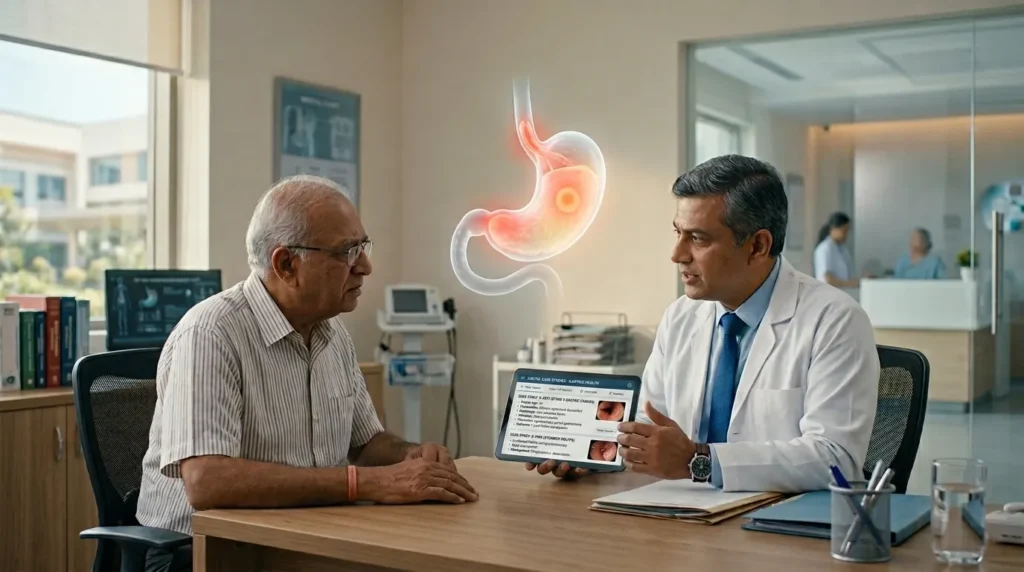
Acidity Every Single Day? Your Gut Is Trying to Tell You Something Serious There’s a particular kind of person who reaches for antacids the way most people reach for their morning coffee – automatically, without thinking twice. The burn after lunch, the bloating by evening, the sour taste that greets them before they’ve even brushed their teeth. It’s just how things are. Except it isn’t how things are supposed to be. Daily acidity is not a personality trait or a consequence of ‘eating spicy food’. It’s a pattern that, when left untreated for long enough, has a documented path toward complications that go well beyond discomfort. If you’re reaching for an antacid more days than not, your gut has been trying to get your attention for a while. Here’s what it might actually be saying. What’s Actually Happening When You Get Acidity Stomach acid is supposed to stay in the stomach. A muscular valve called the lower esophageal sphincter (LES) sits at the junction between the oesophagus and stomach, and its job is to keep that acid from travelling upward. When this valve weakens or relaxes at the wrong time, acid escapes into the oesophagus – which has no protective lining – and you feel it as burning, sourness, or pressure in the chest and throat. A single episode of this is completely normal. A heavy meal, lying down too soon after eating, a particularly stressful week – these can all trigger occasional reflux. The body handles it and moves on. The problem starts when it’s happening every day, or nearly every day. At that point, the oesophageal lining is being exposed to acid repeatedly, and repeated exposure causes damage that accumulates over time. When Acidity Becomes GERD – and Why That Matters Gastroesophageal reflux disease – GERD – is the clinical diagnosis when acid reflux becomes a chronic, recurring condition rather than an occasional inconvenience. It’s one of the most common gastrointestinal diagnoses in India, and one of the most undertreated. GERD doesn’t always look like dramatic heartburn. The symptom picture is broader than most people realise: Persistent burning sensation in the chest or upper abdomen, especially after meals Sour or bitter liquid rising into the throat (acid regurgitation) Chronic dry cough that doesn’t respond to cough medication Hoarseness or a ‘scratchy’ throat in the mornings Difficulty swallowing, or a sensation of food getting stuck Unexplained nausea, particularly after eating Worsening symptoms when lying down or bending forward The cough and hoarseness are particularly easy to misattribute. Many people treat these as respiratory problems for months before a gastroenterologist identifies reflux as the underlying cause. Conditions That Daily Acidity Could Actually Signal Chronic acidity is a symptom, not a diagnosis in itself. And it can point toward several different underlying conditions, some of which are more serious than others. pylori Infection Helicobacter pylori is a bacterial infection that affects the stomach lining and is far more common in India than most people realise. It disrupts the stomach’s natural acid-regulating mechanisms and, over time, leads to gastritis and peptic ulcers. Many people carry H. pylori for years without obvious symptoms – daily bloating, mild nausea, and persistent acidity are often the only signs. It’s diagnosed with a simple breath test or stool antigen test and treated with a defined course of antibiotics. Peptic Ulcers Peptic Ulcers which is acid repeatedly damages the stomach lining or the lining of the upper small intestine, ulcers form. The classic symptom is a burning or gnawing pain in the upper abdomen, often occurring on an empty stomach and temporarily relieved by eating. People frequently mistake this for hunger-related acidity and treat it with antacids for months without addressing the ulcer itself. Hiatal Hernia A hiatal hernia occurs when part of the stomach pushes upward through the diaphragm into the chest cavity. It weakens the lower esophageal sphincter and makes acid reflux significantly more likely. Many people have a small hiatal hernia without ever knowing it, but larger ones cause persistent, difficult-to-control GERD that doesn’t respond well to standard antacids or even prescription medications. Barrett’s Esophagus Barrett’s Esophagus is the complication people least expect to hear about from what started as ‘just acidity’. Barrett’s oesophagus is a condition where chronic acid exposure causes the normal lining of the lower oesophagus to change into tissue resembling the intestinal lining. It’s a direct consequence of long-term untreated GERD, and while it doesn’t always progress further, it does carry a small but measurable increased risk of oesophageal cancer. Regular monitoring through endoscopy is the standard approach once it’s been identified. Functional Dyspepsia Not all chronic stomach discomfort traces back to acid. Functional dyspepsia – persistent upper abdominal discomfort, bloating, and early satiety without a clear structural cause – is increasingly recognised as a gut-brain axis disorder. Stress, anxiety, and sleep disruption all directly affect gut motility and acid secretion. The stomach is more neurologically connected to the brain than most organs, which is why stress reliably makes acidity worse. Why Antacids Are a Plaster, Not a Fix Antacids neutralise stomach acid temporarily. They work quickly, which is exactly why they’re so easy to rely on. But they don’t address why the acid is escaping the stomach in the first place, and they don’t protect the oesophageal lining from ongoing damage. Long-term, heavy reliance on antacids – particularly calcium carbonate types – can actually rebound, triggering increased acid production once the dose wears off. Proton pump inhibitors (PPIs) like omeprazole are more effective for GERD management but also come with considerations when used for extended periods without medical supervision. The point isn’t that these medications are harmful. The point is that managing the symptom without diagnosing the cause means whatever is actually happening in your gut continues unchecked. Lifestyle Factors That Quietly Fuel the Fire Several common habits significantly worsen acid reflux, and many people don’t connect them to their symptoms: Eating large meals rather than smaller, more frequent ones – volume directly increases stomach pressure Lying
That Knee Pain After 30 Is Not Normal Aging – Here’s What’s Really Happening

That Knee Pain After 30 Is Not Normal Aging – Here’s What’s Really Happening At some point in your early thirties, the knee starts having opinions. Climbing stairs feels heavier than it used to. Sitting cross-legged on the floor is fine going down but awkward coming back up. After a long walk, there’s a dull ache that wasn’t there at 25. Most people file this under ‘getting older’ and move on. A pain reliever here, a knee brace from the pharmacy there. And because it doesn’t stop them completely, it never quite becomes urgent enough to deal with properly. But here’s what orthopaedic specialists consistently point out: knee pain in your thirties and forties is rarely about age. It’s almost always about something specific – a structural issue, a movement pattern, a gradual wear problem – that has a name, a cause, and in most cases, a treatment path that doesn’t involve surgery or permanently giving up activity. The problem is that leaving it unaddressed quietly makes it worse. What’s manageable at 33 becomes limiting at 43. Why Your Knee Hurts: The Actual Reasons The knee is the largest joint in the body and one of the most mechanically complex. It takes the full load of your body weight with every step, absorbs impact during running or jumping, and relies on a careful balance of cartilage, ligaments, tendons, and muscle to stay stable. When any one of those components gets stressed or damaged, the joint lets you know. Here are the conditions most commonly responsible for knee pain in adults between 30 and 55: Early Osteoarthritis This is the most commonly misunderstood one. Osteoarthritis is widely assumed to be an ‘old person’s disease’, but early-stage OA can begin as early as the mid-thirties in people with prior joint injuries, high-impact activity histories, or genetic predisposition. It doesn’t mean your joint is ‘worn out’ – it means cartilage is losing its cushioning quality faster than normal. Caught early, the progression can genuinely be slowed. Patellofemoral Pain Syndrome (Runner’s Knee) This is one of the most common knee pain diagnoses in active adults and has nothing to do with running exclusively. It’s a tracking problem – the kneecap isn’t gliding smoothly over the femur, often due to muscle imbalances in the hip and quad. The hallmark symptom is pain around or behind the kneecap, particularly when going down stairs, squatting, or sitting for long periods. Meniscus Tears The menisci are two C-shaped cartilage pads that act as shock absorbers between the thigh and shin bones. In younger adults, they typically tear from a sudden twist or impact. But from the mid-thirties onward, degenerative meniscus tears become more common – the cartilage weakens over time and can tear from ordinary movements like stepping off a kerb awkwardly or squatting. These don’t always cause dramatic pain; sometimes it’s just persistent stiffness, occasional locking, or a deep ache on one side of the knee. Ligament Laxity or Old Ligament Injuries A lot of adults in their thirties are walking around with ligament injuries from their twenties that were never properly treated – a sports twist that was iced and forgotten, a bad fall that healed ‘well enough’. Partial ligament tears and ligament laxity can cause chronic instability in the joint, leading to compensatory stress on surrounding structures. Over years, that compensation has consequences. IT Band Syndrome The iliotibial band – a thick strip of connective tissue running from the hip to the outer knee – is a common pain source in runners, cyclists, and people who sit for extended hours. When it tightens, it creates friction at the outer knee that feels like a sharp or burning pain, especially during downhill movement or after prolonged sitting. Patellar Tendinitis Inflammation of the patellar tendon – the tissue connecting the kneecap to the shinbone – shows up as pain just below the kneecap, often after jumping or prolonged activity. It’s common in people who play badminton, basketball, or cricket, and in those who’ve recently increased their exercise intensity without gradual progression. The Symptoms People Normalise That They Shouldn’t Part of why knee problems progress unchecked is that the early symptoms are easy to rationalise: Stiffness in the morning that loosens up after 10–15 minutes of movement A clicking or grinding sound when bending the knee (crepitus) – often dismissed as harmless Pain that’s consistently worse going downstairs vs. upstairs Swelling that appears after activity and settles overnight A feeling of the knee ‘giving way’ occasionally Needing to shift position frequently when seated because of joint discomfort None of these are dramatic on their own. All of them together paint a picture that an orthopaedic specialist can read clearly – and act on before the underlying issue becomes harder to manage. Does Knee Pain After 30 Always Mean Surgery? This is the fear that keeps many people from seeking a proper diagnosis – the assumption that seeing an orthopaedic doctor automatically leads to an operation. In practice, that’s far from the case. The majority of knee pain in adults under 55 is managed successfully without surgery. The treatment pathway depends entirely on the diagnosis, but commonly includes: Targeted physiotherapy – strengthening the muscles around the knee (especially quads, hamstrings, and hip abductors) to offload joint stress Activity modification – not stopping activity, but restructuring it to reduce the specific loading that’s causing damage Anti-inflammatory medication or corticosteroid injections for acute flare-ups Viscosupplementation (hyaluronic acid injections) for early cartilage degeneration Custom orthotics or knee bracing to correct alignment issues during movement Weight management, which directly reduces the mechanical load through the knee joint Surgery – whether arthroscopic for a meniscus tear or partial knee replacement for advanced OA – is recommended when conservative management has been tried thoroughly and hasn’t achieved adequate relief. It’s not the default starting point. What Happens When You Keep Ignoring It The human body compensates remarkably well – but compensation has a price. When one knee is painful, people unconsciously shift weight
Your Child Has a Fever Again – When Is It Actually an Emergency?

Your Child Has a Fever Again – When Is It Actually an Emergency? Every parent knows the feeling. You put your hand on your child’s forehead and something just feels off. You reach for the thermometer, check the reading, and then spend the next twenty minutes on your phone trying to figure out whether this needs a doctor visit or another dose of paracetamol. Fever in children is one of the most common reasons parents rush to a paediatric clinic -and also one of the most commonly misunderstood. Not every fever is a crisis. But some are. And the difference between the two isn’t always as simple as a number on a thermometer. Here’s what actually matters when your child’s temperature goes up, and when you should stop waiting and get them seen immediately. What a Fever Actually Is (and What It Isn’t) A fever is not an illness. It’s a response -the body’s immune system raising its temperature to make the environment harder for bacteria and viruses to survive. In that sense, a fever doing its job is actually a sign that your child’s body is fighting back. Technically, a temperature above 38°C (100.4°F) is classified as a fever. Below that is normal variation. A reading between 38°C and 38.9°C is considered a low-grade fever, while anything above 39.4°C moves into the high fever range for most children. The number matters. But what’s happening alongside the fever matters just as much -sometimes more. Age Changes Everything – Especially for Babies The younger the child, the more seriously a fever needs to be taken. This isn’t a rule people invented to scare parents -it reflects real differences in how infants and toddlers respond to infection compared to older children. Under 3 months: Any fever -even 38°C -requires immediate medical attention. Newborns and young infants can deteriorate quickly, and infections that older children handle easily can become serious in days or even hours at this age. Don’t try to manage this at home. Go in. 3 to 6 months: A fever above 38°C warrants a same-day paediatric consultation, particularly if your baby seems unusually lethargic, is feeding poorly, or is inconsolably crying. These are behavioural cues that carry as much weight as the temperature reading. 6 months to 2 years: Fever at this age is common, especially with teething and the constant parade of daycare-related viruses. A fever below 39°C with a child who is still relatively alert and drinking fluids can usually be monitored at home. But a fever that climbs above 39.4°C, doesn’t come down with fever medication, or has been going for more than two days needs a doctor’s eyes on it. Above 2 years: School-age children tolerate fevers better overall. A high reading is less alarming by itself -but the symptoms accompanying it still guide how urgently you need to act. Warning Signs That Mean Go Now -Not Tomorrow Regardless of age or temperature reading, these signs mean you need to head to a paediatric emergency or clinic immediately: Difficulty breathing, rapid breathing, or flaring nostrils A rash that appears alongside the fever -especially a non-blanching rash (one that doesn’t fade when you press a glass against it) Seizure or convulsion, even a brief one -this is called a febrile seizure and needs urgent evaluation Extreme lethargy -the child is hard to wake, floppy, or simply not responding normally Persistent vomiting that prevents them from keeping any fluids down Signs of dehydration -no tears when crying, dry mouth, sunken eyes, no wet nappy in six or more hours A stiff neck or sensitivity to light alongside the fever Fever above 40°C that isn’t coming down with medication Fever that has lasted more than five days, even if it seems manageable Some of these, like the rash and stiff neck combination, can indicate bacterial meningitis -a condition where time genuinely determines outcome. When in doubt, always err toward getting it checked. What You Can Do at Home (While You Monitor) For a child above two years with a moderate fever who is still alert, playful, drinking fluids, and not showing any of the warning signs above, home management is reasonable for the first day or two. Give weight-appropriate doses of paracetamol (acetaminophen) or ibuprofen -not both simultaneously unless advised by a doctor Keep them dressed lightly -bundling up traps heat rather than releasing it Push fluids consistently -water, diluted juice, oral rehydration solution if they’re reluctant to drink Lukewarm sponging can help with comfort, but avoid cold water or ice baths, which cause shivering and can actually raise core temperature Let them rest -sleep is genuinely useful when the immune system is working What doesn’t work: alternating paracetamol and ibuprofen on an aggressive schedule without medical guidance, using adult formulations in smaller doses, or pushing the child to eat when they’re not interested. The Question Parents Often Ask Too Late Most paediatricians will tell you the same thing: the question isn’t usually ‘was this fever an emergency?’ Looking back, it’s almost always obvious. The harder question is what to do in real time, at 11pm, when your child is miserable and you’re trying to decide. A useful mental checklist in that moment: Is my child alert and responding to me normally? Are they drinking at least something? Is the fever coming down at all with medication? Is there anything else going on -a rash, laboured breathing, a stiff neck? If the answers to the first three are yes and the fourth is no -monitor through the night and see a paediatrician in the morning. If any of those answers flip, don’t wait. Parents who come to our paediatric clinic in Padappai having held out through a rough night often say the same thing afterward: “I should have just come in.” The reassurance of a proper examination -even when everything turns out to be fine -is genuinely worth it. Paediatric Care at Sayee Specialty Hospital, Padappai Sayee Specialty Hospital has a dedicated paediatrics department serving families across Padappai,
That Blocked Nose Isn’t Just Allergies – When You Actually Need an ENT Doctor

That Blocked Nose Isn’t Just Allergies – When You Actually Need an ENT Doctor A blocked nose feels like one of those things you just live with. You grab a decongestant, maybe try a steam inhaler, and wait it out. And honestly, for a short-term cold or a mild allergy flare, that approach works fine. But what about when it doesn’t go away? What about the person who hasn’t breathed clearly through both nostrils in three years and has simply stopped noticing? Or the one who wakes up with headaches so regularly they’ve started calling them ‘just sinus’? A chronic blocked nose is rarely ‘just’ anything. And it’s one of the most common reasons people in Padappai and the surrounding areas eventually walk into an ENT clinic – often wishing they’d come earlier. First, What’s Actually Blocking Your Nose? Nasal congestion has more possible causes than most people realise. The most common ones include: Allergic rhinitis – triggered by dust, pollen, pet dander, or mould Chronic sinusitis – persistent inflammation of the sinus cavities Deviated nasal septum – where the wall between your nostrils is shifted to one side, often from an old injury Nasal polyps – soft, non-cancerous growths that develop from inflamed tissue Adenoid enlargement – more common in children but not exclusive to them Non-allergic rhinitis – where congestion is triggered by weather changes, strong smells, or even stress The tricky part is that several of these can overlap, and treating one without identifying the other leads to partial relief at best. A decongestant spray, for instance, opens the airway but doesn’t touch an underlying structural problem like a deviated septum. Signs That This Has Gone Beyond a Simple Allergy Allergies are seasonal for most people – they follow a pattern, respond to antihistamines, and settle down eventually. Here’s when the picture changes: The blockage has been there for more than 10–12 weeks Anything beyond three months shifts from ‘acute’ to ‘chronic’ territory. At that point, the body is no longer just reacting to something – there’s a sustained underlying issue that needs proper diagnosis. You’ve lost your sense of smell (or it’s noticeably reduced) Hyposmia – reduced smell – is one of the less obvious signs of nasal polyps or advanced sinusitis. People adapt to it slowly enough that many don’t even register the change until someone else points it out. Only one side is blocked – consistently Nasal congestion that alternates sides is usually fine – that’s your nasal cycle at work. But congestion that stays on the same side, all the time, warrants a closer look. A deviated nasal septum is the most common explanation, and it doesn’t resolve on its own. You’re snoring heavily or waking up exhausted Chronic nasal obstruction forces mouth breathing during sleep, which disrupts sleep quality considerably. If someone’s telling you that your snoring has worsened, or you’re waking up unrefreshed despite eight hours in bed, your nose could well be the reason. Regular headaches around your forehead, cheeks, or behind the eyes Sinus headaches have a specific quality – they tend to be dull, pressure-like, and worse in the morning or when bending forward. Recurring pain in these areas, especially paired with congestion or postnasal drip, points toward chronic sinusitis rather than a tension headache. Recurrent ear fullness or hearing changes The ears, nose, and throat are physically connected through the Eustachian tube. When nasal congestion is persistent, it can affect ear pressure, causing a feeling of fullness, muffled hearing, or recurring ear infections – especially in children. This is exactly the kind of cross-system symptom that an ENT specialist is trained to trace back to its source. What an ENT Evaluation Actually Involves People often delay seeing an ENT doctor in Padappai because they expect something invasive or complicated. In practice, the initial consultation is usually quite straightforward. A specialist will typically start with a detailed history of your symptoms – how long, how severe, what makes it better or worse, any previous treatments. This is followed by a physical examination of the nasal passage, ears, and throat. In many cases, a nasal endoscopy is done – a brief procedure using a thin, flexible camera to look directly inside the nasal cavity – which gives a far clearer picture than a surface examination ever could. Depending on findings, imaging like a CT scan of the sinuses might be recommended to map out the extent of inflammation or identify structural issues. The entire diagnostic process is far less daunting than people assume, and it often answers questions that years of self-managed allergy treatment never could. Can This Be Treated Without Surgery? In a large number of cases – yes. Chronic sinusitis responds well to a combination of nasal corticosteroid sprays, saline rinses, and targeted allergy management. Allergic rhinitis can often be brought under long-term control with immunotherapy when standard medications aren’t enough. Nasal polyps are sometimes managed medically, though larger ones may require endoscopic sinus surgery (FESS) – a minimally invasive procedure with a relatively quick recovery. A deviated septum that’s genuinely affecting quality of life typically needs a septoplasty to correct, but this is a planned, elective procedure – not an emergency. The point isn’t that surgery is inevitable. The point is that getting an accurate diagnosis opens up options that self-management simply can’t provide. Speak to an ENT Specialist at Sayee Specialty Hospital Sayee Specialty Hospital’s ENT department in Padappai offers comprehensive consultations for chronic nasal congestion, sinusitis, ear problems, throat conditions, and more. Whether you’re dealing with something that’s been bothering you for months, or you’re not sure if what you’re experiencing is worth looking into – that’s exactly what the consultation is for. Book an appointment with our ENT specialist at Sayee Specialty Hospital, Padappai, or call us at 9 976 976 976 to schedule your visit. Your nose has been telling you something for a while. It might be time to actually listen to it. Recent Posts