Multispecialty Hospital in Padappai | Sayee Specialty Hospital


Project Timeline
Services
Get an Appointment
24-Hour Pharmacy | Sayee Specialty Hospital, Padappai
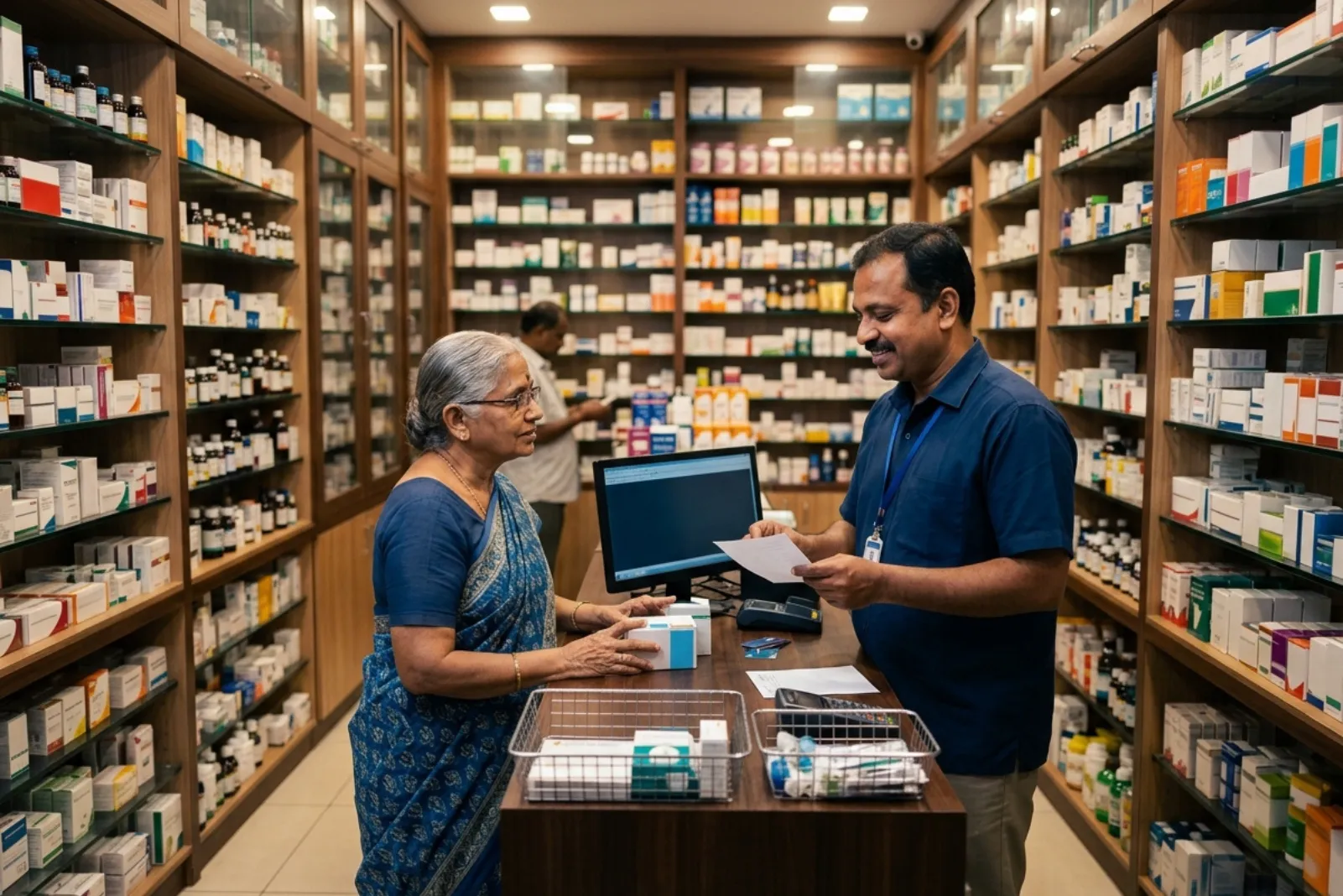
A prescription written at 2 a.m. is only useful if there’s somewhere to fill it. The in-house pharmacy at Sayee Specialty Hospital operates every hour of every day, including weekends and public holidays, so patients, families and on-duty clinical teams are never left waiting on a medicine that can’t wait. Located within the hospital premises in Padappai, the pharmacy serves outpatients, inpatients, and the Emergency and ICU departments directly, without the delay of sourcing medication off-site.
What the Pharmacy Stocks
The pharmacy maintains a comprehensive inventory spanning general prescription medicines, chronic disease management drugs, surgical and post-operative consumables, and emergency and critical care medication. Stock levels are maintained specifically to support the hospital’s own departments, meaning drugs used regularly in orthopaedics, cardiology, nephrology, obstetrics and critical care are kept on hand rather than ordered on demand.
- Prescription medicines across general medicine, chronic disease and speciality care
- Surgical consumables and post-operative supplies
- Emergency and critical care drugs for the ICU and trauma unit
- Maternity and paediatric medication
- Dialysis-related and nephrology medication
- Over-the-counter healthcare products and general wellness items
How Dispensing Works
Outpatient Prescriptions: patients presenting a valid prescription from a Sayee consultant, or an external physician, can have it filled directly at the pharmacy counter, with a licensed pharmacist verifying dosage and any potential drug interaction before dispensing.
Inpatient Dispensing: for admitted patients, medication is dispensed directly against the hospital’s clinical record and administered by the nursing team as part of the treatment schedule, so there’s no separate trip to a counter required.
Emergency Dispensing: for trauma, cardiac and other emergency cases, the pharmacy coordinates directly with the Emergency department to release time-critical medication without administrative delay.
Why This Matters for Patients
For a hospital operating a 24-hour Emergency department, ICU and dialysis unit, an on-site pharmacy isn’t a convenience, it’s part of how continuity of care is maintained. A patient stabilised in the Emergency department at midnight, or a dialysis patient requiring an unscheduled medication adjustment, is served without being sent to an external chemist that may or may not be open, or stocked correctly.
Why Choose Sayee's Pharmacy
Hospital-Integrated Stock: medicines are stocked against the actual clinical demand of the hospital’s own specialities, reducing the chance of an out-of-stock delay for commonly prescribed drugs.
Licensed, On-Site Pharmacists: every prescription is checked and dispensed by a qualified pharmacist, with dosage and interaction checks built into the process.
True Round-the-Clock Availability: the pharmacy does not close for nights, weekends or public holidays, in line with the hospital’s 24/7 emergency and critical care operations.
Insurance and Cashless Support: medication costs for admitted patients are factored into cashless insurance processing where applicable, coordinated by the hospital’s insurance desk.
Graded conditioning for patients recovering from cardiac events or prolonged respiratory illness, and fall-prevention and mobility programs for older adults where deconditioning, balance loss or a previous fall is the primary concern.
Frequently Asked Questions
Yes. The pharmacy operates 24 hours a day, 7 days a week, including public holidays, in line with the hospital's Emergency and ICU services.
Yes, prescriptions from external physicians can be filled at the pharmacy, subject to availability and standard verification by the on-duty pharmacist.
Yes. Given the hospital's 24/7 Emergency, ICU and dialysis operations, the pharmacy maintains stock of time-critical and critical care medication as a standard part of its inventory.
For admitted patients, medication costs are generally included as part of the overall treatment bill and processed through the hospital's insurance and cashless coordination team, subject to the patient's specific policy terms.