


Lower Back Pain: Causes, Diagnosis, and Treatment
Lower Back Pain Causes, Diagnosis, and Treatment Almost...
Multispecialty Hospital in Padappai | Sayee Specialty Hospital
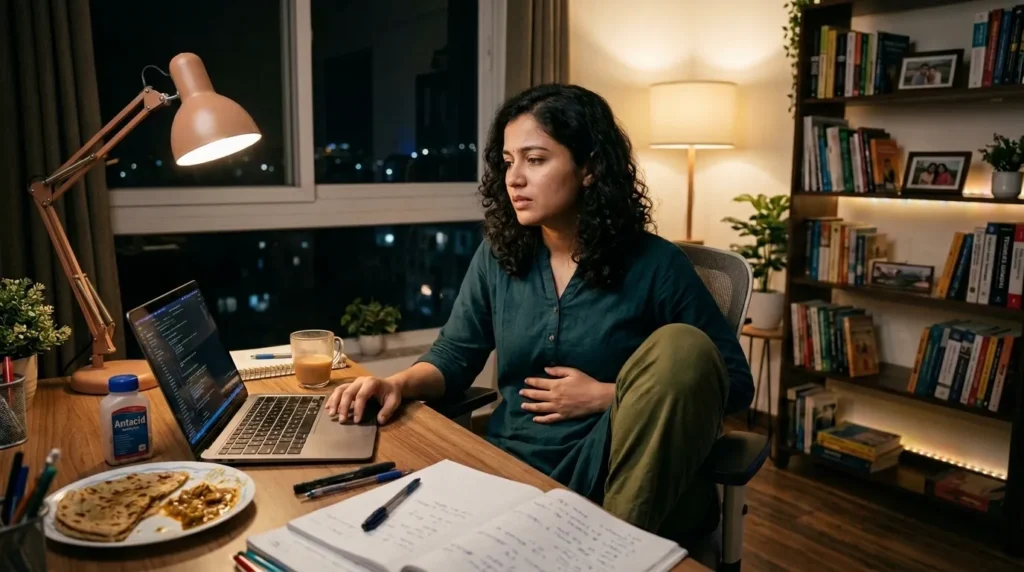
What a Gastroenterologist Looks for When Your Stomach Pain Won’t Go Away
Stomach pain is one of those symptoms that almost everyone has experienced, and almost no one takes seriously enough when it keeps coming back. There’s a reason for that. A single episode of abdominal discomfort rarely amounts to much – something you ate, a passing virus, a stressful week. The body sorts it out and moves on.
But the stomach pain that doesn’t go away – the kind that has been there for weeks, or that disappears for a few days and reliably returns, or that gets progressively worse over months – is a different conversation entirely. That kind of pain is communicating something, and the question is whether anyone is listening carefully enough to work out what.
A gastroenterologist approaching a patient with persistent abdominal pain isn’t just asking ‘where does it hurt?’. The clinical thought process is considerably more structured than that – and the pattern of details that emerge from a careful history will often point toward a diagnosis before a single test has been ordered. This post walks through how that process actually works, and what it means for someone who has been managing stomach pain on their own for longer than they should have.
In gastroenterology, the clinical history is the most powerful diagnostic tool available. Imaging and endoscopy confirm – they rarely surprise. The diagnosis is usually already forming in the gastroenterologist’s mind by the time the patient finishes describing their symptoms in full. Here is what a specialist is specifically listening for:
The abdomen is not a single compartment. Pain in the upper centre of the abdomen – the epigastric region – implicates the stomach, duodenum, pancreas, or lower oesophagus. Pain in the upper right points toward the liver, gallbladder, or bile ducts. Upper left pain is less common and can involve the spleen or splenic flexure of the colon. Pain around the navel often involves the small intestine. Lower abdominal pain – either central, right, or left – pulls the colon, appendix (on the right), ovaries, or bladder into consideration.
Pain that is diffuse – spread across the whole abdomen without a consistent location – is its own diagnostic category. It can indicate a functional condition like IBS, a motility disorder, or something more generalised. The location alone narrows the differential considerably before a single question about character or timing is asked.
Cramping or colicky pain that comes in waves and then eases points toward a hollow organ – the bowel or gallbladder – contracting against an obstruction or trying to push something through. A steady, burning sensation in the upper abdomen that is worse on an empty stomach and eased by eating suggests a duodenal ulcer. The same burning that is worse after eating and comes with regurgitation suggests gastro-oesophageal reflux or gastritis. Severe, constant pain that bores through to the back is one of the classic presentations of pancreatitis or pancreatic disease.
Pain that is sharp and knife-like, particularly if it radiates, is different from pain that is dull and pressure-like, which is different again from pain that is burning. These distinctions are not academic – they directly inform the diagnostic thinking.
When does the pain occur? Pain that consistently comes 30 to 60 minutes after eating is different from pain that comes on an empty stomach. Pain that wakes someone from sleep at 2am has different implications from pain that never bothers them at night. Pain that is reliably worse during periods of stress points toward a functional component. Pain that has been gradually and consistently worsening over weeks – without ever fully resolving – is more concerning than pain that flares and settles.
Dietary triggers tell their own story. Pain consistently after fatty meals implicates the gallbladder. Pain after gluten-containing foods that also comes with bloating and changes in stool is a flag for coeliac disease. Pain that worsens with certain vegetables and legumes has fermentation-related causes. The pattern across meals gives the gastroenterologist a picture that a blood test cannot.
Stomach pain doesn’t exist in isolation. A gastroenterologist will systematically ask about nausea, vomiting, changes in bowel habits, blood in the stool, unexplained weight loss, loss of appetite, fever, jaundice, and difficulty swallowing. Each accompanying symptom either broadens or narrows the differential. Abdominal pain with jaundice points to the liver or bile ducts. Pain with significant unintentional weight loss is a red flag combination that always warrants urgent investigation. Pain with alternating constipation and diarrhoea in a young adult without red flag features strongly suggests a functional cause.
Within the broader picture of chronic stomach pain, certain symptom combinations significantly raise the clinical urgency and prompt faster, more invasive investigation. These are the features a gastroenterologist is specifically watching for:
None of these individually confirms a serious diagnosis. But each one shifts the probability distribution enough that investigation cannot wait. A gastroenterologist seeing these features will move directly to endoscopy, imaging, or both rather than proceeding with a trial of medication first.
Once the clinical history is complete, the investigations chosen are not a standard panel applied uniformly to everyone. They are specifically selected based on what the history has suggested. Here is how the most common investigations are deployed:
An upper endoscopy – where a thin, flexible camera is passed through the mouth into the oesophagus, stomach, and first part of the small intestine – is the primary investigation for persistent upper abdominal pain. It directly visualises the mucosa of these structures and can identify gastritis, peptic ulcers, oesophageal damage from reflux, H. pylori infection (through biopsy), and early mucosal changes that imaging cannot see. It is a quick outpatient procedure under mild sedation and is both safer and more informative than most patients expect.
For lower abdominal pain, changes in bowel habits, rectal bleeding, or any red flag features suggesting a lower GI source, colonoscopy is the investigation of choice. It visualises the entire large intestine from the rectum to the caecum and can identify colitis, polyps, inflammatory bowel disease, and colorectal cancer at early, treatable stages. It is also used for cancer surveillance in patients with risk factors or family history.
Ultrasound is the first-line imaging for upper abdominal pain when biliary or hepatic pathology is suspected – gallstones, gallbladder inflammation, liver lesions, or bile duct dilation. It’s quick, non-invasive, and excellent for these structures. It is less useful for visualising the bowel or pancreas, where CT or MRI provides a better picture.
When the clinical picture is complex, when red flag features are present, or when a structural cause is suspected that ultrasound has not clarified, a CT scan provides a comprehensive view of all abdominal organs and their relationships. It is particularly useful for assessing the pancreas, detecting free fluid or air in the abdomen, identifying lymph node enlargement, and evaluating the bowel wall. For urgent presentations or when malignancy is a concern, CT is often the first imaging ordered rather than the second.
Blood investigations for abdominal pain are targeted, not generic. A full blood count assesses for anaemia and signs of infection or inflammation. Liver function tests evaluate the liver and bile ducts. Amylase and lipase indicate pancreatic involvement. CRP and ESR measure systemic inflammation. Coeliac antibodies screen for gluten sensitivity. H. pylori can be detected via a stool antigen test or a urea breath test without the need for endoscopy in appropriate patients.
What blood tests don’t do is diagnose most causes of chronic stomach pain on their own. Normal blood tests in a patient with persistent abdominal pain are common – they rule out certain serious causes but do not rule in a benign one. The investigation is incomplete without direct visualisation of the GI tract when the history suggests it.
Across all the investigations, certain diagnoses emerge most consistently from the workup of chronic abdominal pain in adults:
For a single episode of abdominal pain with no red flag features in an otherwise healthy young adult, watchful waiting is perfectly appropriate. But watchful waiting has a time limit. When pain has been present for more than four to six weeks, when it is recurring in a consistent pattern, or when it is progressive – the window for watching has closed and the window for investigating has opened.
The reasons people delay gastroenterology referral follow familiar patterns: assuming the symptoms are stress-related, fear of what an investigation might find, the inconvenience of booking and attending a specialist appointment, or continued reliance on over-the-counter antacids that suppress symptoms without addressing their source.
The cost of delay is real. H. pylori gastritis managed with antacids for three years has more mucosal damage than it would have at six months. Colorectal cancer identified at stage one has significantly better outcomes than the same cancer identified at stage three. Inflammatory bowel disease caught early can be managed to remission; caught late, after significant intestinal damage has accumulated, the management options narrow.
A gastroenterology consultation for persistent stomach pain is not a dramatic intervention. It is a structured conversation and a targeted investigation plan. Most patients walk out with either a clear diagnosis and a treatment path, or the considerable reassurance that nothing serious is going on. Either outcome is more useful than another month of paracetamol and hope.
Sayee Specialty Hospital’s Gastroenterology department provides comprehensive evaluations for persistent abdominal pain, digestive symptoms, and all GI concerns – with in-house endoscopy, colonoscopy, and imaging facilities for a complete diagnostic workup without the run-around across multiple facilities. Our gastroenterology team takes the time to take a proper history, order the right investigations, and explain findings clearly.
If your stomach pain has been there longer than it should have been – or if you’ve been managing it yourself and it keeps coming back – a specialist consultation is the most direct route to an answer that actually helps.
Book a gastroenterology consultation at Sayee Specialty Hospital, or call us at 9 976 976 976. Available across the week, serving Padappai, Vandalur, Chromepet, and South Chennai.
Recent Posts
Lower Back Pain Causes, Diagnosis, and Treatment Almost...

Strep Throat: Symptoms, Diagnosis, and Treatment Sore throats...

Understanding Menorrhagia: Causes, Diagnosis, and Treatment Most women...

Your Posture Is Destroying Your Spine Before 40...