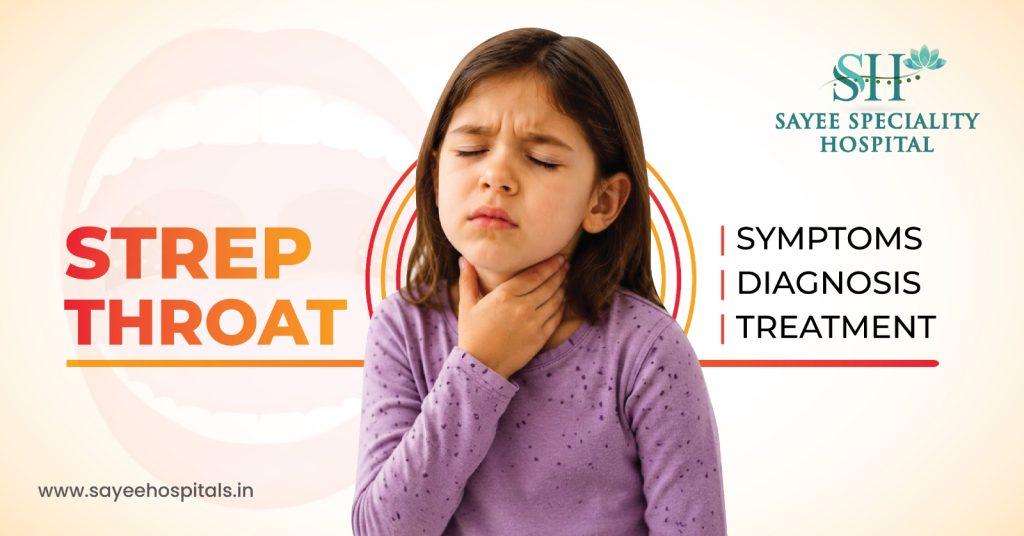
Sore throats are one of those everyday complaints that most parents learn to triage on instinct – a scratchy throat, a sip of warm water, a day of rest, and it usually clears on its own within a few days. But every so often a sore throat shows up differently: it comes on fast, it hurts to swallow, the fever spikes quickly, and no amount of home remedies seems to touch it. That pattern is worth paying attention to, because it’s often the calling card of strep throat – a bacterial infection that behaves nothing like an ordinary viral cold and, unlike most throat infections, actually needs a prescription to clear.
Strep throat is caused by group A Streptococcus bacteria, and it’s highly contagious – which is exactly why it spreads so efficiently through classrooms, playgroups, and households. While anyone can catch it, it shows up most often in school-aged children between 5 and 15, a fact that has more to do with close contact in classrooms than with anything unusual about that age group’s immune systems. What sets strep apart from the dozens of other things that cause a sore throat is that it won’t resolve on its own the way a viral infection typically does, and treating it properly matters for reasons that go well beyond simple comfort.
Recognising the Symptoms
One of the more useful things to know about strep throat is how suddenly it tends to arrive. Where a viral sore throat usually builds gradually over a day or two, alongside a runny nose and a cough, strep throat symptoms tend to hit all at once and hit hard. The telltale signs include:
- A severe sore throat that makes swallowing genuinely painful, not just uncomfortable
- A sudden high fever, often paired with chills and a pounding headache
- Swollen, tender lymph nodes along the neck
- Red, visibly swollen tonsils, sometimes streaked with white patches or pus
- Tiny red spots, called petechiae, scattered across the roof of the mouth
- In some cases, nausea, vomiting, stomach pain, or a fine, rough rash that feels a bit like sandpaper – a sign of scarlet fever, which is essentially strep throat with this added rash
One detail that’s easy to overlook but genuinely useful for telling strep apart from a garden-variety cold: strep throat typically doesn’t come with a cough or a runny nose. If those symptoms are front and centre, you’re very likely dealing with a virus rather than strep – which matters, because it changes what kind of treatment is actually going to help.
How It Spreads, and How It’s Actually Diagnosed
Group A Streptococcus spreads through respiratory droplets – coughing, sneezing, talking in close range – and can also pass through direct contact with sores on infected skin. That transmission route is exactly why it moves so quickly through households with young kids and through classrooms where sharing space, snacks, and supplies is pretty much unavoidable.
Because strep throat symptoms overlap so heavily with viral throat infections, guessing isn’t really a reliable option, and diagnosis needs an actual test rather than a visual check alone. Two main tools are used:
- Rapid strep test – a simple throat swab that delivers results in around 20 minutes, making it the usual first step in a clinic or paediatrician’s office
- Throat culture – used as a backup when the rapid test comes back negative but strep is still suspected clinically; it takes one to two days to grow and confirm the bacteria, but it’s more sensitive than the rapid test
This two-step approach exists because a negative rapid test doesn’t always mean the bacteria isn’t there – it just means the test didn’t pick it up in that particular sample, which is why a culture is sometimes ordered to double-check before ruling strep out entirely.
Treatment – Why Antibiotics Aren’t Optional
Unlike a viral sore throat, which mostly just needs time and supportive care, strep throat is a bacterial infection and needs to be treated as one. Antibiotics – typically penicillin or amoxicillin – are the standard treatment, and they do more than just make the illness feel shorter. They actively clear the bacteria from the body and significantly reduce the risk of more serious downstream complications, including rheumatic fever and post-streptococcal kidney inflammation, both of which can cause lasting damage if the infection is left untreated or only partially treated.
This is also where a lot of people trip up: once the antibiotics kick in, symptoms usually improve within a day or two, and it’s tempting to stop taking them once you feel better. Doing that is a genuine mistake – the full course, usually around 10 days, needs to be completed even after symptoms disappear. Stopping early gives the remaining bacteria a chance to survive, regroup, and potentially lead to complications or a relapse that’s harder to treat the second time around.
Alongside antibiotics, supportive home care makes the illness a lot more bearable while the medication does its work: plenty of rest, staying well hydrated, warm tea, saltwater gargles for the sore throat itself, and over-the-counter pain relief such as acetaminophen or ibuprofen. One important caution – aspirin should be avoided in children with a suspected viral or bacterial infection, since it carries a risk of Reye’s syndrome, a rare but serious condition affecting the liver and brain.
When It’s Safe to Return to School or Work
Contagiousness is one of the more practical questions parents ask, and thankfully the answer is fairly clear-cut. Once antibiotics have been started and the fever has broken, most people are no longer contagious after about 24 hours, and can reasonably return to school, daycare, or work at that point – as long as they’re genuinely feeling up to it and not still running a temperature.
Reducing the Risk of Catching or Spreading It
Because strep spreads so easily through everyday contact, prevention comes down to fairly simple, consistent habits rather than anything elaborate: washing hands regularly and thoroughly with soap and water, covering coughs and sneezes with a tissue or the elbow rather than a bare hand, and steering clear of sharing cups, utensils, or straws – particularly within a household where one member is already sick. None of this eliminates the risk entirely, but it does meaningfully cut down how easily the bacteria move from one person to the next.
Strep throat is common, it’s treatable, and in most cases it resolves completely with the right antibiotic course and a bit of patience. The part that actually matters is not skipping the diagnosis step and not cutting the treatment short – both of which are what stand between a straightforward recovery and the kind of complications that are genuinely avoidable when strep throat is caught and treated properly the first time.