


Lower Back Pain: Causes, Diagnosis, and Treatment
Lower Back Pain Causes, Diagnosis, and Treatment Almost...
Multispecialty Hospital in Padappai | Sayee Specialty Hospital
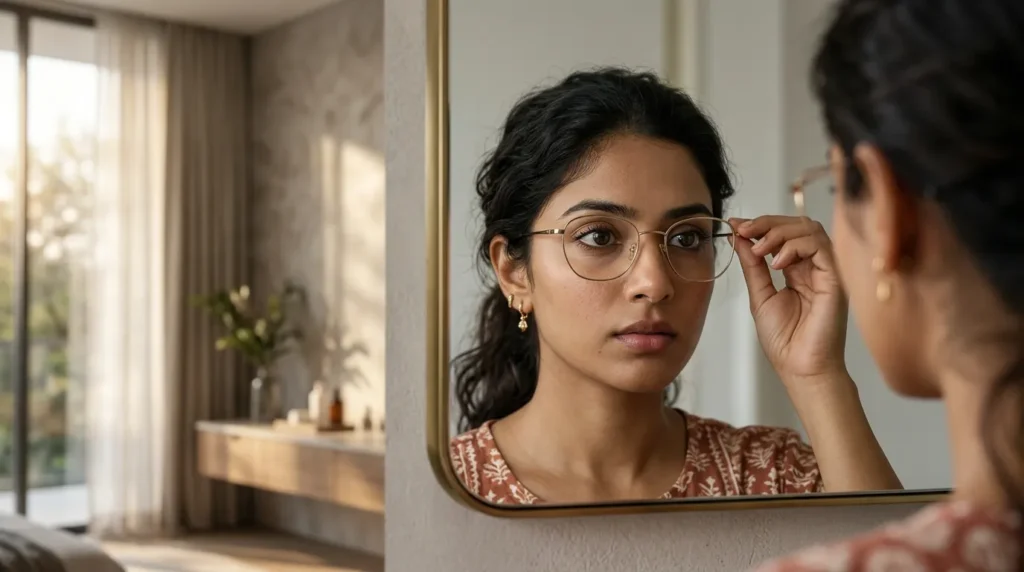
Wearing Glasses for Years Here's Why Your Power Keeps Increasing
It happens at almost every eye check-up. The optometrist compares this year’s reading to last year’s, and the prescription has crept up again. Half a dioptre here, a quarter there. The glasses that were perfect eighteen months ago are now slightly off. A new pair is ordered, the world sharpens up, and somewhere in the back of the mind a quiet question forms: will this ever stop?
For most people with myopia – short-sightedness – that question never gets a proper answer. The optician adjusts the prescription, the glasses improve, and the underlying reason for the change is left unaddressed. Which means it keeps changing.
Understanding why glasses power increases – and in particular why it keeps increasing in some people long after it should have stabilised – is not just an academic question. It has real clinical consequences that are worth knowing before the prescription climbs high enough to raise the stakes considerably.
A glasses prescription measures how much optical correction the eye needs to bring light into focus on the retina. In myopia, the eyeball has grown too long from front to back – the axial length is excessive relative to the eye’s focusing power. Light from distant objects focuses in front of the retina rather than on it, producing the blurred distance vision that characterises short-sightedness.
The number on the prescription – expressed in dioptres, prefixed with a minus sign for myopia – reflects the degree of this mismatch. A prescription of –2.00 is mild myopia. –5.00 or above is moderate to high. Above –6.00 is considered high myopia, and this threshold matters clinically for reasons that go beyond simply needing thick lenses.
When the prescription increases, it means the eye has grown longer. The lens in the glasses is compensating for a physical change in the eyeball. This is why the question of why the power keeps increasing is really a question about why the eye keeps growing – and what that growth is doing to the structures inside it.
Myopia typically develops in childhood, when the eye is growing rapidly. For most people, progression slows significantly in the late teens and stabilises somewhere in the early to mid-twenties. The prescription at 25 is usually close to what it will remain for the next several decades, with only minor fluctuations.
But that isn’t everyone’s experience. There are two main situations where myopia continues to progress beyond the expected stabilisation point:
The ciliary muscle inside the eye controls the lens shape for near focus. When it is held in sustained contraction for hours – as it is during desk work, screen use, and reading – it creates a sustained near-focus signal that research increasingly links to axial eye growth. The eye responds to the environment it’s operating in. If it spends most of its day focused at 30 to 50 centimetres, the structural pressure toward elongation continues beyond what age-related stabilisation would normally produce.
This is the most relevant factor for working adults in their twenties and thirties whose prescription keeps shifting despite being well past the expected stabilisation age. The shift is gradual – typically 0.25 to 0.5 dioptres per year – but consistent, and over a decade it accumulates into a meaningfully higher prescription with meaningfully higher associated risks.
One of the most consistently supported findings in myopia research over the past decade is the protective effect of outdoor time. Natural light – at intensities of 10,000 lux or more, which is what you get outdoors even on a cloudy day – stimulates the release of dopamine in the retina, which inhibits axial eye elongation. Indoor lighting, regardless of how bright it seems subjectively, tops out at around 500 lux. It simply doesn’t produce the same retinal signal.
People who spend most of their day indoors – which describes a large proportion of the working-age urban population in Indian cities – are not getting the light exposure that keeps axial growth in check. This is why myopia rates are significantly higher in urban populations than rural ones, and why they have risen so sharply in a single generation as lifestyles shifted overwhelmingly indoors.
There is some evidence – contested but clinically considered – that full-distance correction worn continuously during near work may contribute to myopia progression. The eye focussed up close through a full distance correction creates a peripheral retinal defocus pattern that some research associates with continued elongation. This is part of the rationale behind specific myopia control lenses and orthokeratology, which intentionally alter the peripheral focus pattern to reduce the elongation signal.
Separately, an undercorrected prescription – glasses that are too weak – has been more clearly associated with faster progression, particularly in children. Wearing the correct prescription is important. But what ‘correct’ means in the context of myopia management is a more nuanced question than it was a decade ago.
The strongest predictor of myopia is parental myopia. If one parent is myopic, the child’s risk is roughly three times that of a child with two non-myopic parents. If both parents are myopic, the risk is substantially higher. Genetic predisposition influences both the likelihood of developing myopia and the rate at which it progresses. In highly myopic families, prescriptions can continue climbing into the late twenties and sometimes beyond, independent of environmental factors.
This is the part of the conversation that rarely happens at the optician’s. Getting a stronger pair of glasses feels like a solution. In terms of daily visual function, it is. But it doesn’t address what the increasing prescription represents – a longer eye – and a longer eye carries structural risks that are independent of how well the vision is corrected with glasses.
As the eye elongates, the retina is stretched to cover a larger internal surface area. This stretching thins the retina, particularly at the periphery, creating areas of lattice degeneration – a pattern of thinning and structural weakness that can lead to retinal tears. A retinal tear, if undetected, can allow fluid to seep under the retina and cause a retinal detachment, which is a sight-threatening emergency requiring urgent surgical intervention.
The risk of retinal detachment in high myopia is significantly higher than in the general population. Sudden onset of new floaters, flashes of light, or a curtain-like shadow across the visual field in a myopic person requires same-day ophthalmological assessment, not a scheduled appointment.
Myopia – particularly high myopia – is an independent risk factor for glaucoma. The mechanical stress of an elongated eye on the optic nerve head, combined with altered pressure dynamics, increases susceptibility to glaucomatous damage. Myopic individuals should have intraocular pressure and optic nerve assessment as part of routine eye examinations, not just refraction checks.
The macula – the central part of the retina responsible for sharp, detailed vision – is also subject to stretching as the eye elongates. Myopic macular degeneration involves structural changes at the macula that can cause progressive, irreversible central vision loss. It is one of the leading causes of legal blindness in high myopes, and unlike age-related macular degeneration, it can affect people in their forties and fifties.
For children and young adults still in the active progression phase, several interventions have reasonable evidence for slowing – not stopping, but meaningfully slowing – myopia progression:
Atropine at 0.01% to 0.05% concentration – significantly lower than the doses used for other purposes – has the strongest evidence base for myopia control in children. Applied nightly, it reduces the rate of axial elongation by a mechanism that is not fully understood but appears to involve retinal signalling pathways independent of the ciliary muscle. Rebound when the drops are stopped is lower at lower concentrations, making the 0.01% dose the most commonly used starting point.
Ortho-K lenses are rigid contact lenses worn overnight that gently reshape the cornea during sleep, providing clear vision without glasses or contact lenses during the day. They also alter the peripheral retinal defocus pattern in a way that reduces axial elongation signals. Evidence for their myopia control effect is good, and they are particularly useful for children who are not comfortable with daytime contact lenses or whose parents prefer a non-pharmacological approach.
Several lens designs have been developed specifically to address peripheral defocus – the DIMS (Defocus Incorporated Multiple Segments) lens and the HALT (Highly Aspherical Lenslet Target) design among them. These provide full central correction while creating a myopic defocus signal in the peripheral retina. Clinical trials show 50 to 60 percent reduction in progression rate compared to standard single vision lenses in children. They’re worn like normal glasses during the day, which makes compliance considerably easier than with contact lens-based interventions.
For children who haven’t yet developed significant myopia, or who are in early stages, consistent outdoor time – at least 90 minutes per day in natural light – is the most accessible protective measure available. It doesn’t require a prescription, it has no side effects, and the evidence for it is robust. For adults with established high myopia, outdoor time still supports overall retinal health even if it can’t reverse existing axial elongation.
This is one of the most common questions in eye clinics, and the answer requires a clear distinction. LASIK – laser refractive surgery – reshapes the cornea to correct the current refractive error. It does not affect the underlying axial length of the eye or the processes driving myopia progression. If the eye continues to elongate after LASIK, the prescription can shift again over time, although this is less common in adults whose myopia has genuinely stabilised.
LASIK is typically offered once the prescription has been stable for at least two years – because operating on an eye that is still actively progressing is counterproductive. It is also not appropriate for very high prescriptions above a certain threshold, thin corneas, or certain corneal shape abnormalities identified during the pre-operative screening.
The pre-LASIK evaluation is as important as the procedure itself. A comprehensive assessment that includes corneal topography, pachymetry (corneal thickness measurement), axial length, and a thorough retinal examination is the standard. Anyone considering LASIK for a prescription that has been increasing recently should discuss stabilisation first with their ophthalmologist before proceeding.
Sayee Specialty Hospital’s Ophthalmology department provides comprehensive eye examinations covering refractive assessment, myopia management consultations, retinal health evaluation, and pre-surgical assessment for patients considering refractive surgery. If your prescription has been changing consistently, or if you’re concerned about the long-term implications of high myopia, an ophthalmology consultation gives you a complete picture – not just an updated prescription.
For parents whose children’s eyesight is worsening year on year, early myopia control intervention makes a measurable difference to where the prescription ends up. The earlier the conversation happens, the more options are available.
Book an eye consultation at Sayee Specialty Hospital, or call us at 9 976 976 976. Serving Padappai, Vandalur, Chromepet, and South Chennai.
Recent Posts
Lower Back Pain Causes, Diagnosis, and Treatment Almost...

Strep Throat: Symptoms, Diagnosis, and Treatment Sore throats...

Understanding Menorrhagia: Causes, Diagnosis, and Treatment Most women...

Your Posture Is Destroying Your Spine Before 40...