


Lower Back Pain: Causes, Diagnosis, and Treatment
Lower Back Pain Causes, Diagnosis, and Treatment Almost...
Multispecialty Hospital in Padappai | Sayee Specialty Hospital
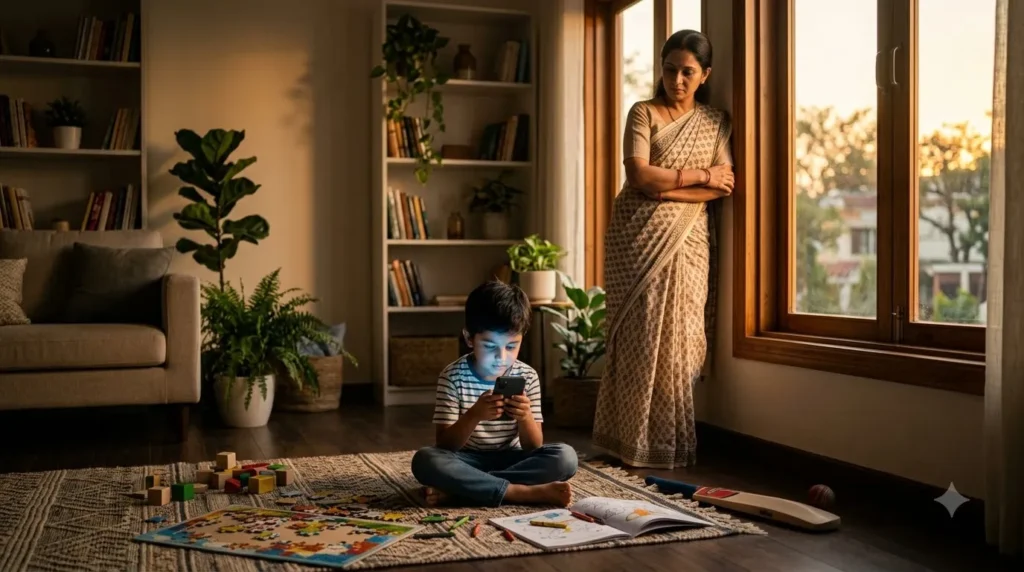
Screen Time and Kids - What Paediatricians Are Actually Worried About Now
Every paediatrician has a version of this conversation. The parent mentions, almost as an aside, that the child has been watching a lot of YouTube lately. Or that screens are the only way to get them to sit still for meals. Or that bedtime has become a negotiation involving exactly how many more minutes of tablet time they can have. The details vary. The underlying pattern is consistent and now nearly universal.
Screen time in children is not a new concern. Paediatricians and researchers have been studying it for decades. But the conversation has shifted considerably in the past several years – partly because the screens themselves have changed, partly because the volume of use has increased well beyond what earlier guidelines were designed to address, and partly because the research on specific effects has become considerably more nuanced than the simple ‘screens are bad, limit them’ messaging that most parents have already tuned out.
What paediatricians are actually worried about in 2025 is not that children are using screens. It’s the specific ways that certain types of screen use at certain ages are interfering with the developmental processes that those years are designed to build. That distinction – between screen use that is largely neutral and screen use that is actively displacing something important – is where the clinical conversation has moved, and it’s more useful than any blanket hour limit.
The American Academy of Pediatrics and the World Health Organization both have screen time guidelines that are widely cited and widely non-complied with. The broad recommendations: no screen time for children under 18 to 24 months except video calls, limited and supervised screen time for ages 2 to 5, and consistent limits with screen-free periods for school-age children.
These guidelines were developed primarily around passive viewing of television and early tablet content. They were not developed for the current reality, which includes algorithmically optimised short-form video, interactive gaming, educational apps with genuine pedagogical value, video calling with distant family members, and children using screens for school work from age five or six. Applying a single hour limit across all these uses in the same way is neither practical nor clinically nuanced.
What the guidelines are actually protecting against is not screen exposure per se but the displacement of what children need to be doing during those years: physically active play, face-to-face social interaction, unstructured imaginative play, sleep, and real-world sensory and motor exploration. Any screen use that significantly displaces these activities in a developing child is the concern. Screen use that supplements or coexists with adequate amounts of these activities is a different conversation.
Paediatricians working in Indian urban contexts are navigating an additional layer: the screen is often the primary childcare tool for working parents with limited support, the primary source of English language exposure in many households, and increasingly the primary educational tool from the primary school years onward. Recommendations that don’t acknowledge this reality are not useful to the families who need them most.
Of all the areas where screen time research produces consistent results, sleep is the most unambiguous. Screen use in the hour before bed delays sleep onset, reduces total sleep duration, and reduces slow-wave sleep quality in children across all age groups studied. The mechanisms are multiple: blue light suppresses melatonin onset, stimulating content keeps the nervous system aroused when it should be winding down, and the interactive nature of many screen activities makes disengagement genuinely difficult for children whose executive function is still developing.
The consequences of chronic sleep disruption in children are not trivial. Sleep is the period during which the brain consolidates learning from the day, produces growth hormone, regulates immune function, and processes emotional experience. A child who consistently gets less sleep than their age requires – because screens have pushed back their sleep onset – is accumulating a sleep debt that affects mood, attention, learning, and physical development. In India, where children often have limited sleep windows due to late family mealtimes and school start times, the additional pressure from screen-related sleep disruption is compounded.
Screen-free bedroom rules and consistent screen cutoffs 60 to 90 minutes before sleep are among the most evidence-supported recommendations in paediatric sleep medicine. They are also among the most consistently ignored.
The relationship between screen time and language development in young children is more nuanced than headlines often suggest, but the core finding is consistent for the under-two age group: screens do not teach language to young children the way human interaction does. Young children learn language through contingent, back-and-forth interaction with caregivers – the serve-and-return pattern where the adult responds to the child’s communicative attempts in real time. A screen cannot do this. A character on a screen does not modify its response based on what the specific child said or did two seconds ago.
For children under two, passive screen viewing displaces this contingent interaction without replacing its developmental function. The research on background television – a screen on in the room while the child plays, not being directly watched – is particularly sobering. Adult speech directed at young children decreases significantly when a television is on in the background, even when the adult believes they are interacting normally. The child’s language environment is measurably impoverished when a screen is present, even as ambient noise.
For children aged two and above, high-quality interactive content – and crucially, viewing with a parent who discusses and extends what’s happening on screen – can support language development. The content and the interaction around it both matter. Passive solo viewing of algorithmically selected short-form video in a toddler, with no adult co-engagement, is the specific pattern that consistently associates with reduced language development outcomes in research.
The attention concern with screens is real but is frequently framed in a way that conflates several distinct issues. The concern is not that screens reduce a child’s biological attention capacity – attention span is not a muscle that shrinks from watching video. The concern is that highly stimulating, rapidly changing, reward-optimised screen content sets an expectation for constant novelty and immediate reward that makes slower-paced, effortful activities – reading, sustained play, listening to a teacher, sitting through a less immediately rewarding activity – comparatively unappealing and difficult to sustain.
This is most clinically visible in children who have had high volumes of fast-paced screen content from early ages and then enter school environments that require sustained attention to teacher-led, moderately paced instruction. The gap between the pace of screen content they’re accustomed to and the pace of classroom instruction is real, and it contributes to apparent inattentiveness that is not ADHD but is a genuine mismatch between conditioned reward expectation and the demands of structured learning.
The nuance here matters: not all screen content affects attention the same way. Slow-paced, high-quality educational content does not appear to have the same attention-disrupting effect as fast-paced commercial entertainment. The speed of editing, the frequency of reward signals, and the degree of interactivity all affect how stimulating the content is to the developing attention system.
Myopia rates in children across Asia have increased dramatically over the past two to three decades, and the research increasingly points to two primary drivers: reduced time outdoors and increased near-work demand. Screen use contributes to both. Children spending hours on tablets and smartphones are not only performing sustained near-work that promotes axial eye elongation – they are simultaneously not spending time outdoors in natural light, which is the most protective factor against myopia progression that has been identified in the literature.
The clinical implication is direct. A child who spends four hours on a screen after school and does not go outside is accumulating both the near-work exposure that promotes myopia progression and missing the outdoor light exposure that inhibits it. Paediatricians are now discussing myopia risk as part of screen time conversations – not just because of vision correction inconvenience, but because high myopia carries long-term retinal risk that is genuinely consequential.
The physical activity concern with screen time is straightforward and well-established. Time spent on screens is time not spent being physically active, and children in India are already significantly below recommended physical activity levels due to academic pressure, safety concerns about outdoor play in urban environments, and reduced access to play spaces. The additional sedentary time from recreational screen use compresses the window for physical activity further.
Childhood physical inactivity has direct consequences: reduced cardiovascular fitness, reduced musculoskeletal development, obesity risk, and reduced bone density development during the years when bone mass is being built. These are not abstract long-term risks – they are measurable in the current generation of children and will have health consequences that extend across their adult lives.
The screen time conversation for children under eight is primarily about displacement of developmental activities. The conversation for older children and adolescents has a different and more urgent dimension that has emerged from research over the past five to seven years.
Social media platforms designed around social comparison, validation-seeking, and algorithmically amplified emotional content are producing measurable mental health consequences in adolescents – particularly girls. Rates of anxiety, depression, and body image concerns have risen in parallel with social media adoption rates in the adolescent population globally. The correlation is well-established. The causality debate continues but is increasingly resolved in the direction of genuine harm for heavy users in certain vulnerability profiles.
The specific mechanisms being studied: social comparison on image-based platforms reduces body satisfaction and self-esteem in adolescent girls. The constant availability of social feedback (likes, comments, views) creates an intermittent reinforcement schedule that is structurally similar to gambling – unpredictable reward that drives compulsive checking behaviour. Cyberbullying, which is continuous and inescapable in a way that in-person bullying historically was not, occurs at scale on these platforms. And sleep disruption from late-night social media use compounds all of these effects.
Paediatricians in India are seeing the downstream consequences of this in adolescent patients presenting with anxiety, low mood, poor sleep, and school refusal – and taking a detailed history that includes social media use patterns is now a standard part of assessing adolescent mental health. Parents who are unaware of what their child is using, at what volume, and what they’re encountering on these platforms are missing significant clinical context.
The useful framing is not ‘how many hours’ but ‘what is the screen displacing and what is the content doing?’ With that in mind, the recommendations that actually emerge from clinical and research consensus:
Avoid screens other than video calls. The language and developmental case against passive viewing at this age is strong. The video call exception is meaningful – it is contingent, responsive interaction with a real person, which is categorically different from passive viewing.
If screens are used, choose high-quality content and watch with the child. Co-viewing with active adult engagement – pointing to things, asking questions, connecting screen content to real-world objects – transforms passive viewing into interactive learning. Solo passive viewing is the specific pattern to minimise. Background television should be off when the child is in the room, even if the child is not watching it.
Prioritise sleep, physical activity, and face-to-face social interaction as non-negotiables. What remains after these are met can include screen time. Set consistent limits – not because the limit number is magical but because consistency builds the habit of disengagement, which matters more as children get older. Know what they’re watching and choose content with low pace, high quality, and some prosocial or educational value.
Screen-free bedrooms and a screen cutoff 60 to 90 minutes before sleep are the two most clinically impactful rules for this age group. Know which platforms your child uses, what they’re doing on them, and who they’re interacting with. Delay social media access for as long as is practically feasible – the research supporting early social media access in children under 13 to 14 does not exist, and the research suggesting harm in early adolescent social media use continues to strengthen.
These are the signs that suggest a paediatric assessment is warranted rather than just a family conversation about screen rules:
Sayee Specialty Hospital’s Paediatrics department provides comprehensive child health consultations – covering developmental assessment, sleep concerns, behavioural and attention concerns, language development, and the full range of childhood health issues that parents bring to their paediatrician. If screen time is a concern in your household and you’re not sure whether what you’re seeing crosses a clinical threshold, a paediatric consultation is the most direct way to get a clear, honest answer.
The question isn’t whether to ban screens. It’s whether what’s happening in your child’s screen life is working for or against their development. A paediatrician can help you figure out which one it is.
Book a paediatric consultation at Sayee Specialty Hospital, or call us at 9 976 976 976. Serving Padappai, Vandalur, Chromepet, Urapakkam, and South Chennai.
Recent Posts
Lower Back Pain Causes, Diagnosis, and Treatment Almost...

Strep Throat: Symptoms, Diagnosis, and Treatment Sore throats...

Understanding Menorrhagia: Causes, Diagnosis, and Treatment Most women...

Your Posture Is Destroying Your Spine Before 40...