


Lower Back Pain: Causes, Diagnosis, and Treatment
Lower Back Pain Causes, Diagnosis, and Treatment Almost...
Multispecialty Hospital in Padappai | Sayee Specialty Hospital
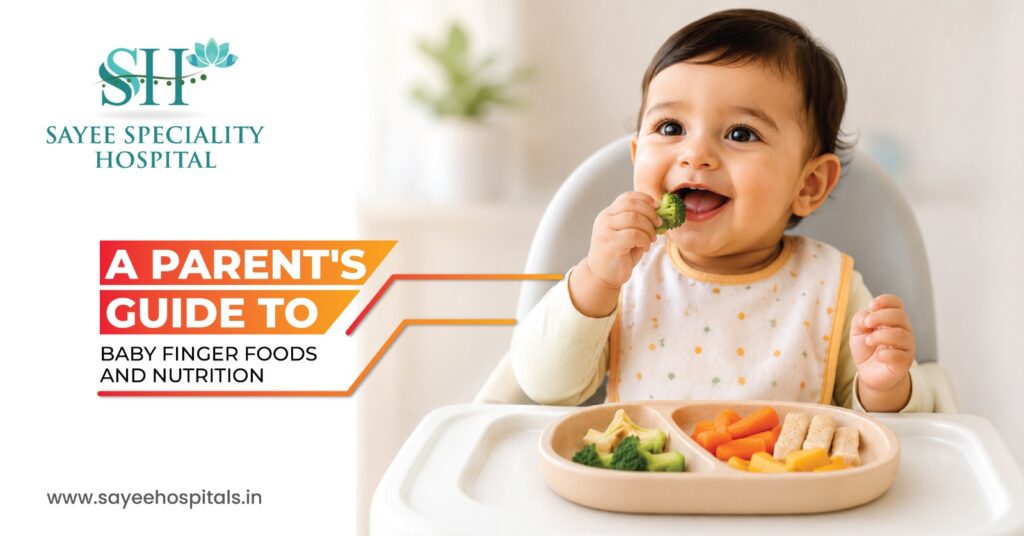
A Parent's Guide To Baby Finger Foods And Nutrition.
Starting solids is one of those parenting milestones that sounds straightforward until you’re actually standing in the kitchen at 7pm, wondering whether the piece of avocado you’ve just cut is too big, too small, too ripe, or completely the wrong food entirely. The information available is vast, occasionally contradictory, and somehow manages to be both overwhelming and not specific enough at the same time.
So here’s a clear, practical guide when to start, what to offer, what to avoid, and how to make sure your baby is actually getting the nutrition they need during one of the most significant developmental windows of their life.
The age range typically cited for starting finger foods is somewhere between 7 and 10 months, but age alone isn’t the most useful guide. Developmental readiness is what actually matters, and it shows up through a specific set of observable behaviours rather than a number on a calendar.
The most important indicator is sitting upright with reasonable stability and minimal support. A baby who can’t yet sit steadily isn’t in a safe position to manage solid food, the risk of choking increases significantly when the torso and head aren’t well supported. Alongside sitting stability, look for the pincer grasp developing, the ability to pick up small objects using the thumb and forefinger rather than the whole hand. That fine motor skill is what allows a baby to self-feed finger foods, and its emergence is a reliable signal that the neuromuscular development needed for solid feeding is on track.
Watch for purposeful mouthing bringing objects and hands to the mouth with intention rather than reflex. Gumming and mashing soft foods between the gums, rather than simply pushing things out with the tongue, indicates the oral motor patterns for eating are developing. And the social readiness cue watching you eat with obvious interest, reaching toward food on your plate, tracking the movement of food from plate to mouth tells you the baby is cognitively engaged with the process of eating in a way that makes introduction more successful.
If most of these signals are present, you’re in the right window. If only one or two are there, giving it another few weeks and reassessing is perfectly reasonable.
The non-negotiable principle for all first finger foods is soft enough to squash between your finger and thumb with gentle pressure. If you can squash it easily, your baby can manage it with their gums. If it offers resistance, it needs more cooking or isn’t ready to offer yet.
Vegetables are an excellent starting point. Steaming or roasting brings them to the right texture while preserving nutrients better than boiling. Sweet potato, butternut squash, and courgette steam beautifully into soft, manageable pieces. Broccoli florets roasted until tender, are a popular option because the stalk gives babies something to hold onto while they chew the softer floret end. Peas, slightly squashed, work well and introduce a new flavour and texture.
For fruit, ripe is the key word. Ripe banana, avocado, soft mango, and peach are all naturally the right texture without any preparation needed. Blueberries should be cut in half. Strawberries should be cut into small pieces rather than offered whole. Raspberries are naturally soft enough to offer as they are.
Proteins matter enormously at this stage and are often underemphasised in first foods discussions. Scrambled eggs are one of the most nutritionally dense, easy-to-manage first proteins soft, easy to pick up, and rich in iron, protein, and choline. Flaked salmon, shredded chicken, and well-cooked lentils are all manageable textures. Tofu steamed and diced works well for families avoiding meat. Shredded cheese adds calcium and fat alongside protein.
Carbohydrates provide energy and help with meal variety. Well-cooked pasta small shapes or short cut pieces, thin strips of lightly toasted bread, and soft well-cooked rice are all reasonable options. The toasting of bread serves a purpose beyond texture, it makes the piece slightly more rigid and easier for a baby to grip and manage.
As solid foods progressively take a larger role alongside breast milk or formula, they need to deliver specific nutrients that are either depleting from birth stores or increasing in demand as the baby grows rapidly. This isn’t about hitting exact numbers at every meal, it’s about understanding which nutrients need consistent attention.
is the most critical nutrient at this stage. Babies are born with iron stores from pregnancy that sustain them for roughly the first five to six months of life. After that, those stores deplete and dietary iron becomes essential. Iron deficiency in infancy affects brain development in ways that can have lasting cognitive and behavioural consequences, it’s genuinely important, not a minor nutritional consideration. Iron-fortified cereals, eggs, meat, beans, and dark leafy greens are the primary sources. The daily target for infants from 7 to 12 months is around 11mg, a significant amount that requires consistent attention to iron-rich foods.
particularly DHA are essential for ongoing brain and visual system development. The brain grows at an extraordinary rate during the first two years of life, and DHA is a structural component of brain tissue. Salmon is the richest and most bioavailable source. Ground flaxseeds, chia seeds, and tofu provide the plant-based omega-3 ALA, though conversion to DHA is less efficient.
supports the rapid skeletal development of infancy. Yogurt is one of the most calcium-dense foods a baby can eat, and it’s a texture most babies manage easily. Broccoli, green peas, pulses, and ground almonds all contribute calcium alongside other nutrients.
works alongside calcium for bone mineralisation and plays a role in immune function. Dietary sources are limited salmon and egg yolk being the main ones and many infants continue to require vitamin D supplementation through the first year regardless of dietary intake, particularly in regions with limited sun exposure.
supports immune function and DNA synthesis during a period of rapid growth. Chickpeas, lentils, chicken, cheese, and zinc-fortified cereals are reliable sources.
is needed for tissue building and repair across every system. Most babies eating a varied diet including eggs, dairy, legumes, and meat or fish will meet their protein needs without specific targeting.
Cow’s milk as a main drink should not be offered to babies under 12 months. This recommendation is specific and evidence-based cow’s milk protein and mineral concentrations are calibrated for calves, not human infants, and the high protein and mineral load places strain on immature infant kidneys. Cow’s milk also lacks the iron and other nutrients in the correct proportions for infant development, and in some cases can cause microscopic intestinal bleeding that contributes to iron deficiency. Breast milk or infant formula remains the primary drink through the first year. Cow’s milk used in cooking, or dairy products like yogurt and cheese, are fine to introduce as foods, the concern is specifically about cow’s milk as a drink replacing breast milk or formula.
When introducing new foods particularly the common allergens like eggs, peanut products, fish, and wheat introduce one new food at a time and wait two to three days before introducing the next one. That spacing window allows you to identify any allergic response and attribute it to a specific food rather than a combination of things introduced simultaneously. The evidence on early allergen introduction has shifted significantly in recent years current guidance in most countries now supports introducing common allergens earlier rather than delaying them, as early introduction appears to reduce rather than increase allergy risk.
Baby cereals particularly single-grain oat cereal introduced first before moving to wheat or mixed grains are a safe and iron-rich vehicle for early solid introduction. Introduce them one at a time with a few days’ gap between new grains.
Starting finger foods is rarely as dramatic in practice as the anticipation makes it feel. Most babies approach food with genuine curiosity touching it, squishing it, occasionally eating some of it and the process of learning to eat is exactly that, a learning process that takes weeks and months rather than days.
The goal of the first several months of solid food introduction isn’t nutritional adequacy breast milk or formula still carries the primary nutritional load. The goal is exposure, skill development, and laying the groundwork for a varied and healthy relationship with food. Variety, colour, and texture exploration across this window have long-term implications for food acceptance that extend well into childhood.
Go at your baby’s pace. Offer without pressure. And remember that food on the floor, on the face, and in the hair is not wasted, it’s part of how babies learn what food is.
Recent Posts
Lower Back Pain Causes, Diagnosis, and Treatment Almost...

Strep Throat: Symptoms, Diagnosis, and Treatment Sore throats...

Understanding Menorrhagia: Causes, Diagnosis, and Treatment Most women...

Your Posture Is Destroying Your Spine Before 40...