


Lower Back Pain: Causes, Diagnosis, and Treatment
Lower Back Pain Causes, Diagnosis, and Treatment Almost...
Multispecialty Hospital in Padappai | Sayee Specialty Hospital
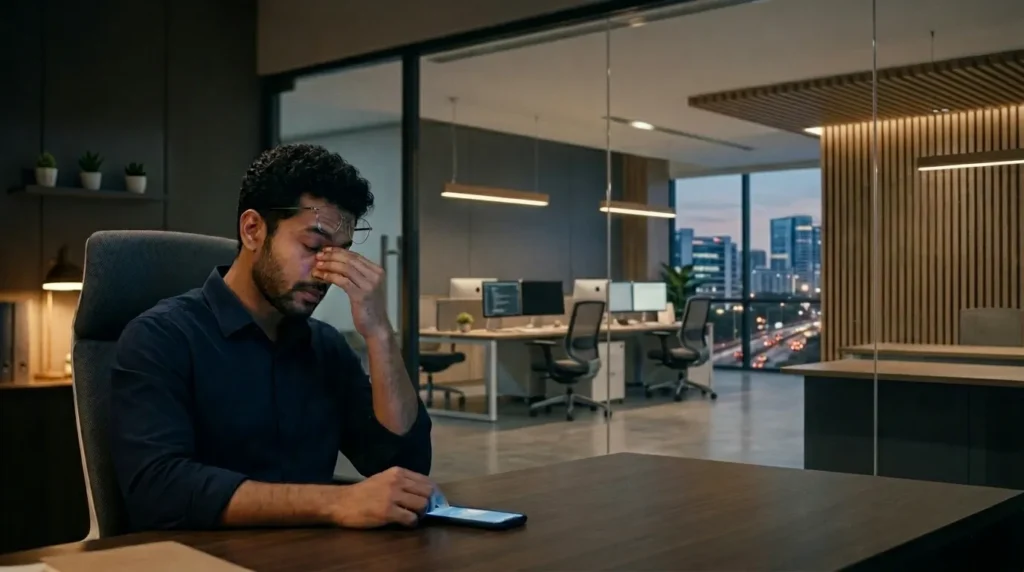
Your Phone Is Slowly Damaging Your Eyes - Here’s What Eye Doctors Won’t Tell You First
Most people reading this are doing so on a phone screen. And before that, there was probably a laptop open, a meeting on a video call, maybe a quick scroll through social media in between. By the time the day ends, the average adult in India is looking at some kind of screen for eight to ten hours. Sometimes more.
Nobody really designed our eyes for this. The human visual system evolved for open spaces, varied distances, natural light – not for staring at a backlit rectangle held 25 centimetres from the face for the better part of a waking day.
The effects of that mismatch are showing up in ophthalmology clinics across the country, in patients who are younger than ever, with complaints that didn’t exist in the same volume a decade ago. And most of them had no idea their screen habits were the cause.
The damage isn’t dramatic or sudden – which is part of why it goes unnoticed for so long. It accumulates through a few distinct mechanisms:
The normal blink rate is around 15 to 20 times per minute. Studies consistently show this drops to 5 to 7 times per minute during screen use. Blinking is how the eye distributes its tear film – the thin protective layer that keeps the corneal surface lubricated, smooth, and clear. When the blink rate drops, the tear film breaks up faster than it’s replenished, and the exposed corneal surface dries out.
This is why eyes feel gritty, tired, and irritated after extended screen sessions rather than during them. The damage to the surface happens gradually; the discomfort is just how the eye eventually signals it.
Inside the eye, a muscle called the ciliary muscle controls the shape of the lens to focus at different distances. For near work – reading, typing, scrolling – this muscle stays contracted. For hours. That sustained contraction leads to a condition called accommodative spasm, colloquially known as ‘eye fatigue’ or ‘eye strain’.
The symptom is blurry vision when you look up from a screen and try to focus on something across the room – the muscle has been locked in close-focus mode for so long that it struggles to release quickly. Over years, in children especially, this near-constant near-focus demand is a significant driver of myopia progression.
Blue light from screens gets talked about constantly – and some of that conversation has drifted into marketing territory. The honest picture is nuanced. The amount of blue light emitted by a phone or laptop is considerably lower than what comes from sunlight, so the retinal damage narrative is probably overstated for most adults in regular use.
What blue light from screens does demonstrably affect is sleep. The eye contains photoreceptors that use blue light as a signal to suppress melatonin production – essentially telling the brain it’s daytime. Phone use in the hour before bed delays melatonin onset, pushes back the sleep cycle, and reduces sleep quality. Poor sleep, in turn, makes eye symptoms worse the next day. It’s a feedback loop that’s easy to miss because the connection isn’t obvious.
For children, however, the blue light concern is more substantive – developing retinas are more permeable to short-wavelength light, and cumulative exposure during growth years warrants more caution than most parents currently apply.
Computer vision syndrome – the umbrella term for screen-related eye and vision problems – produces a cluster of symptoms that are individually easy to misattribute:
People blame dehydration, sinuses, stress, bad sleep, or ‘just getting older’. Screen use is rarely the first thing that comes to mind, even when someone spends nine hours a day in front of one.
Adults who developed their visual system before smartphones arrived have a baseline to return to. Children who are growing up with screens don’t.
Myopia – short-sightedness – is increasing at a rate that researchers have described as epidemic in several Asian countries, including India. The primary drivers identified are reduced time outdoors and increased near-work demand from screens and academics. Once myopia develops in a child, it typically progresses through their teens, and higher myopia is associated with a greater lifetime risk of serious eye conditions including retinal detachment, glaucoma, and macular degeneration.
The window where intervention makes the most difference – myopia control through orthokeratology, low-dose atropine, or increased outdoor time – is during the growth years. By the time a teenager has a high prescription, the options narrow considerably.
If your child is squinting at the board, sitting closer to the TV, getting headaches after homework, or rubbing their eyes frequently – these aren’t things to wait and see on.
Every eye specialist will mention the 20-20-20 rule: every 20 minutes of screen time, look at something 20 feet away for 20 seconds. It’s genuinely useful for giving the ciliary muscle a brief release, and it’s backed by reasonable logic.
But it doesn’t address reduced blinking, it doesn’t fix poor screen positioning, and it doesn’t compensate for eight hours of near work with a twenty-second break every twenty minutes. Think of it less as a solution and more as one tool in a broader approach.
Things that actually move the needle when done consistently:
Eye strain from screens is real and common, but it’s also a diagnosis of exclusion – meaning other causes need to be ruled out before attributing everything to screen use. Some symptoms that seem like digital eye strain are actually early signs of conditions that need treatment:
A comprehensive eye examination – not just a vision chart check – covers the full picture: tear film quality, corneal health, intraocular pressure, retinal assessment, and refraction. If you’re in Padappai or the surrounding areas of South Chennai and have been putting off an eye check, the symptoms you’re managing with eye drops and dark rooms probably deserve a proper look.
Sayee Specialty Hospital’s ophthalmology department offers comprehensive eye consultations for adults and children – covering digital eye strain, dry eye assessment, refractive errors, myopia management, and general eye health. Whether your concern is screen-related or something that’s been building quietly for a while, an accurate assessment is the starting point for anything useful.
Your screen isn’t going anywhere. But how your eyes hold up over the next twenty years depends a lot on what you do – or don’t do – in the next few months.
Book an eye consultation at Sayee Specialty Hospital, or call us at 9 976 976 976 to schedule your visit.
Recent Posts
Lower Back Pain Causes, Diagnosis, and Treatment Almost...

Strep Throat: Symptoms, Diagnosis, and Treatment Sore throats...

Understanding Menorrhagia: Causes, Diagnosis, and Treatment Most women...

Your Posture Is Destroying Your Spine Before 40...