


Lower Back Pain: Causes, Diagnosis, and Treatment
Lower Back Pain Causes, Diagnosis, and Treatment Almost...
Multispecialty Hospital in Padappai | Sayee Specialty Hospital
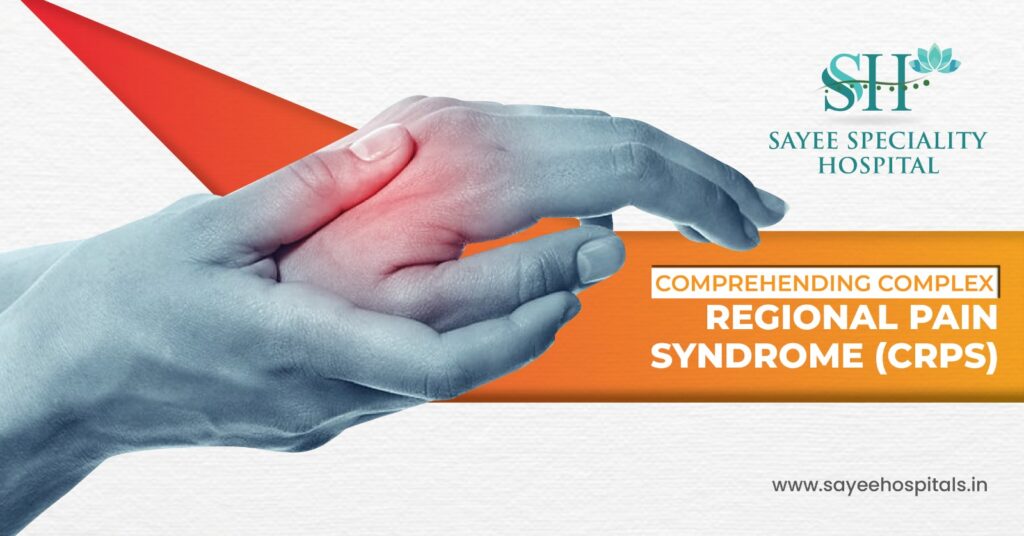
Comprehending Complex Regional Pain Syndrome (CRPS)
Most pain makes a kind of logical sense. You injure something, it hurts, it heals, the pain fades. The injury and the pain exist in rough proportion to each other, and recovery follows a trajectory that feels predictable even when it’s slow.
CRPS doesn’t work like that. It’s one of those conditions that genuinely challenges how most people understand pain, because the pain it produces is entirely disproportionate to whatever caused it, it doesn’t follow a healing curve, and it can persist and intensify long after the original injury has resolved. For the people living with it, that disconnect between what should hurt and what does hurt is one of the most isolating aspects of the condition.
Under normal circumstances, the nervous system’s pain response is proportionate and self-limiting. Something damages tissue, the nervous system signals the brain, protective pain behaviour follows, the tissue heals, and the signal quietens. In CRPS, that shutoff mechanism fails. The nervous system either the peripheral nerves, the spinal cord, or the brain’s own processing centres, or some combination of all three becomes dysregulated in a way that sustains and amplifies pain signals far beyond what the original injury warrants.
The current understanding describes CRPS as a disorder of neuroinflammation and central sensitisation. The nervous system essentially becomes hypersensitised calibrated to interpret ordinary sensory input as painful, and to produce pain responses that are wildly out of proportion to the actual stimulus. Touch that should feel neutral becomes agonising. A light breeze across the skin can be unbearable. The affected limb develops a life of its own in terms of temperature, colour, and autonomic behaviour changes driven by dysregulation of the sympathetic nervous system running alongside the pain pathways.
CRPS is divided into two subtypes based on whether a specific nerve injury is identifiable. Type I previously called reflex sympathetic dystrophy occurs after an injury or illness that didn’t directly damage a named nerve. A wrist fracture, a sprain, a period of immobilisation, these are typical precipitating events. Type II, previously called causalgia, follows a confirmed nerve injury where the damage to a specific nerve is documented. The clinical presentation overlaps significantly between the two, and the distinction matters more for classification than for day-to-day management.
It predominantly affects women, with onset most commonly in the fourth decade of life, though it can and does occur across a wide age range including in children and adolescents.
The pain itself is described in terms that communicate how unlike ordinary pain it is. Burning is the most consistent descriptor deep, relentless, often described as feeling like the limb is on fire from the inside. Tearing, stinging, electric these appear frequently in patient descriptions. The intensity is severe enough that CRPS consistently scores among the highest on standardised pain scales, higher than many post-surgical pain states and comparable to active labour.
Allodynia is one of the hallmark features pain triggered by stimuli that should cause no pain at all. Light touch, clothing against the skin, a change in air temperature, water from a shower. The threshold for pain drops so dramatically that the affected limb becomes almost impossible to tolerate normal contact with.
Beyond the pain, the changes CRPS produces in the affected limb are striking. Skin colour shifts cycling between red, purple, and pale white, sometimes within the same day. Skin temperature changes, with the affected area often markedly warmer or cooler than the surrounding tissue. Skin texture can become thin, shiny, or mottled. Hair and nail growth on the affected limb may accelerate dramatically or slow to almost nothing. Swelling comes and goes. The limb can feel stiff, weak, and impossible to move normally partly because movement hurts, partly because the motor system becomes caught up in the same neurological dysfunction driving the sensory symptoms.
All of these features the autonomic skin changes, the allodynia, the disproportionate pain are the nervous system’s dysregulation made visible. They’re not psychological. They’re not imagined. They’re the physiological consequences of a nervous system that’s lost its normal regulatory balance.
In the majority of cases, CRPS follows a physical trauma, a fracture is the most common precipitant, with wrist fractures particularly over-represented. Surgery, sprains, crush injuries, burns, and even prolonged immobilisation of a limb have all been documented as triggers. The injury itself is often relatively minor and that’s part of what makes CRPS so disorienting. A fracture that would be expected to heal uneventfully in six to eight weeks instead becomes the starting point of a pain condition that can last years.
Why some people develop CRPS following an injury while others with identical injuries don’t remains incompletely understood. Genetic predisposition, pre-existing differences in nervous system sensitivity, inflammatory response characteristics, and psychological factors have all been investigated as contributors. No single predictive factor has been identified.
There’s no blood test, no imaging finding, no single investigation that confirms CRPS. Diagnosis is clinical reached through a combination of the history, the pattern of symptoms, and physical examination findings assessed against the Budapest Criteria, the internationally accepted diagnostic framework for CRPS.
The Budapest Criteria require the presence of continuing pain disproportionate to the inciting event, alongside specific combinations of symptoms and signs across sensory, vasomotor, sudomotor, and motor categories. Meeting those criteria in the right clinical context, with other causes excluded, is how the diagnosis is established.
Early diagnosis matters significantly. The longer CRPS goes unrecognised and unmanaged, the more entrenched the central sensitisation becomes and the harder it is to treat. A condition that might respond reasonably well to early aggressive rehabilitation becomes considerably more resistant after months or years of untreated neurological dysregulation.
Physical and occupational therapy are the foundation of CRPS management, and that priority reflects the underlying neuroscience. The goal isn’t just to manage symptoms, it’s to retrain the nervous system. Given that CRPS is fundamentally a disorder of how the nervous system processes sensory information, rehabilitation that directly addresses that processing is the most targeted intervention available.
Mirror therapy is one of the more remarkable techniques in the CRPS toolkit. The affected limb is hidden behind a mirror, and the reflection of the healthy limb moving normally is positioned where the affected limb would appear to be. Watching what appears to be the painful limb moving freely and painlessly activates the brain’s motor and sensory cortex in ways that begin to correct the distorted body map that develops in CRPS. The evidence for mirror therapy is genuine, and the mechanism using visual feedback to modify pain processing exemplifies the neurological approach to treatment.
Graded motor imagery takes this further, progressing through stages from imagining movement, to mirror therapy, to actual movement each stage preparing the nervous system for the next. Desensitisation work gradually reintroduces normal sensory input to the affected limb different textures, temperatures, and pressures applied progressively to normalise the hypersensitive sensory threshold. The principle is similar to exposure therapy carefully, incrementally reintroducing the stimuli that currently provoke pain until the nervous system learns they’re not dangerous.
Pharmacological management supports the rehabilitation work. Neuropathic pain medications gabapentin, pregabalin, tricyclic antidepressants address the nerve pain component. Low-dose naltrexone has shown promise in some cases. Corticosteroids can be helpful in early acute CRPS where inflammatory activity is prominent.
When rehabilitation and medication aren’t achieving adequate control, interventional options are considered. Sympathetic nerve blocks injecting local anaesthetic near the sympathetic chain in the spine can provide windows of reduced pain that allow more intensive rehabilitation. Spinal cord stimulation, where electrodes placed in the epidural space deliver electrical pulses that modify pain signal transmission, has reasonable evidence behind it for CRPS and is one of the more established neuromodulation approaches for chronic pain conditions. Dorsal root ganglion stimulation is a more targeted variant with emerging evidence specifically for CRPS.
The psychological dimension of CRPS deserves the same clinical attention as the physical. Living with severe, unpredictable, poorly understood chronic pain is genuinely psychologically damaging anxiety, depression, and post-traumatic stress responses are common in CRPS patients and aren’t separate from the condition so much as intertwined with it. Cognitive behavioural therapy adapted for chronic pain, acceptance and commitment therapy, and pain psychology input are integral parts of comprehensive CRPS care rather than optional additions.
CRPS doesn’t follow a single predictable trajectory. Some people, particularly those diagnosed and treated early, achieve remission periods of significantly reduced or absent symptoms. Others experience a more chronic course with fluctuating severity. A subset, particularly those with long standing untreated CRPS, develop significant physical changes including contractures and dystonia in the affected limb.
Early intervention is the most consistent predictor of better outcomes. Which means that anyone who develops disproportionate, burning pain in a limb following an injury particularly with the skin colour and temperature changes described above should push for specialist assessment rather than waiting to see if time resolves it.
CRPS is not a condition that rewards patience. It rewards prompt, aggressive, properly targeted rehabilitation.
Recent Posts
Lower Back Pain Causes, Diagnosis, and Treatment Almost...

Strep Throat: Symptoms, Diagnosis, and Treatment Sore throats...

Understanding Menorrhagia: Causes, Diagnosis, and Treatment Most women...

Your Posture Is Destroying Your Spine Before 40...