Multispecialty Hospital in Padappai | Sayee Specialty Hospital


Physiotherapy & Rehabilitation Unit
- Home
- Physiotherapy & Rehabilitation Unit
Project Timeline
Services
Get an Appointment
Physiotherapy & Rehabilitation Unit - Padappai, Chennai
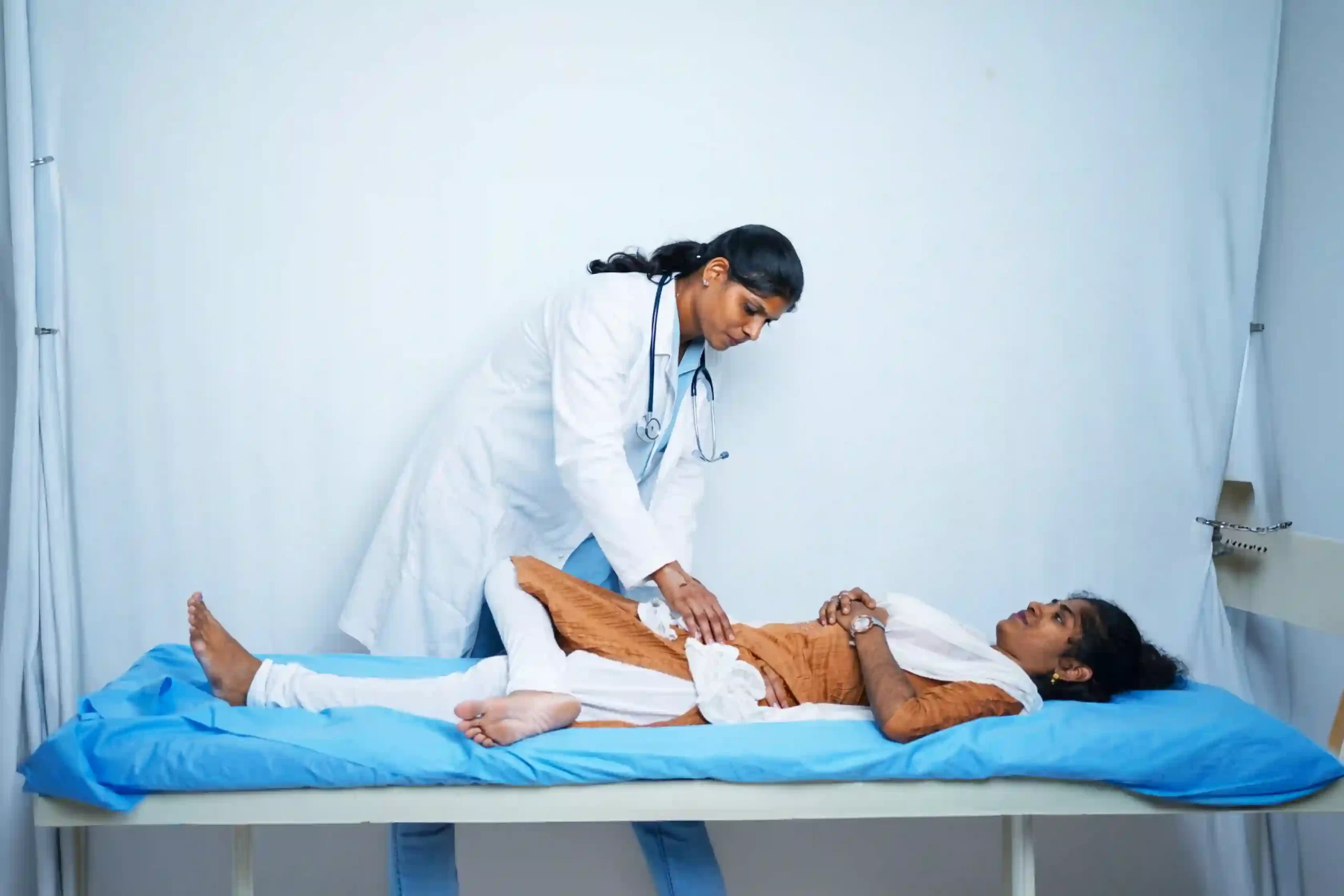
Recovery rarely ends when a procedure does, in most cases that’s where the real work starts. The Physiotherapy & Rehabilitation Unit at Sayee Specialty Hospital is a dedicated in-house facility built to support patients through post-operative recovery, musculoskeletal rehabilitation, neurological recovery, and chronic pain conditions. Situated within the hospital premises in Padappai, the unit is directly integrated with our Orthopaedics, Neurology, General Surgery, Cardiology and Critical Care departments, which means rehabilitation is planned in as part of treatment, not tacked on once a patient is discharged.
Inside the Unit: Infrastructure and Setup
The rehabilitation unit is laid out to support both one-to-one clinical sessions and supervised group mobility work. Treatment bays are used for manual therapy and electrotherapy, while a separate open floor area is kept for gait training, balance re-education and functional exercise. Patients recovering from joint replacement or spinal surgery are seen in a space designed around assistive walking aids, parallel bars and stability equipment, so early mobilisation can begin safely within days of the procedure rather than weeks.
Because the unit sits inside a NABH-accredited multispecialty hospital, physiotherapy staff work from the same case notes as the treating surgeon or physician, and inpatients can be seen at the bedside or in the ICU where mobilisation needs to start before a patient is fit to walk to the therapy floor.
Conditions and Rehabilitation Programs Supported
Post-Surgical Rehabilitation
Structured recovery programs for patients following joint replacement (hip and knee arthroplasty), arthroscopic ligament reconstruction, spinal fixation, and general or abdominal surgery. Early-phase goals focus on pain control, wound-safe movement and preventing stiffness; later phases build strength and return-to-activity capacity.
Musculoskeletal Rehabilitation
Care for chronic back and neck pain, frozen shoulder, tendon and ligament injuries, sports-related strains, and degenerative joint conditions such as osteoarthritis. Assessment looks beyond the painful site to posture, movement pattern and load distribution, since the source of a musculoskeletal complaint is frequently upstream of where the pain is felt.
Neurological Rehabilitation
Support for patients recovering from stroke, traumatic brain or spinal cord injury, and conditions such as Parkinson’s disease or peripheral nerve palsy. Programs are built around restoring function step by step, motor control, balance, transfers, and independent ambulation, in coordination with the neurology team.
Cardiopulmonary and Geriatric Rehabilitation
Graded conditioning for patients recovering from cardiac events or prolonged respiratory illness, and fall-prevention and mobility programs for older adults where deconditioning, balance loss or a previous fall is the primary concern.
Treatment Modalities Used at the Unit
- Manual therapy and joint mobilisation for pain relief and restoring movement
- Therapeutic exercise programs for strength, flexibility and endurance
- Electrotherapy – TENS, interferential therapy and therapeutic ultrasound
- Heat and cold therapy for inflammation and muscle guarding
- Gait and balance training, including use of parallel bars and walking aids
- Postural correction and ergonomic advice for work- or lifestyle-related strain
- Respiratory physiotherapy for breathing pattern disorders and post-illness deconditioning
How a Rehabilitation Program Is Structured
Initial Assessment: a physiotherapist reviews the patient’s medical and surgical history, current pain levels, strength, range of motion and functional limitations before setting rehabilitation goals with the patient.
Individualised Plan: a program is built around the specific diagnosis, the stage of recovery, and what the patient needs to return to, whether that’s climbing stairs unaided, going back to a sport, or simply moving through the day without pain.
Supervised Sessions: therapy is delivered in scheduled sessions at the unit, with inpatients seen at the bedside where required. Session frequency is adjusted as recovery progresses.
Progress Review: reassessment at regular intervals tracks pain, mobility and strength against the original goals, and the plan is adjusted where recovery is faster or slower than expected.
Home Exercise Guidance: patients are given a structured home program and movement precautions, so progress made in the unit is carried forward between visits.
Why Choose Sayee's Physiotherapy & Rehabilitation Unit
Hospital-Integrated Care: because the unit operates within a NABH-accredited multispecialty hospital, rehabilitation is coordinated directly with the treating surgeon or physician rather than run as a separate referral, which matters most in the early days after surgery or a neurological event.
Experienced Physiotherapists: the team works across orthopaedic, neurological, cardiopulmonary and geriatric rehabilitation, with programs adjusted to the individual rather than a fixed protocol applied to everyone.
Continuity from Admission to Discharge: patients can begin mobilisation as inpatients and continue the same program on an outpatient basis after discharge, without a gap in care.
Insurance and Cashless Support: the unit is covered under most major individual and corporate health insurance policies and applicable government health schemes. Our insurance desk manages pre-authorisation and documentation on the patient’s behalf.
Frequently Asked Questions
The Rehabilitation Unit is the physical facility and infrastructure, treatment bays, gait training area, and equipment, where physiotherapy care for post-surgical, musculoskeletal, neurological and chronic pain patients is delivered.
For most orthopaedic and neurological procedures, early mobilisation within a day or two of surgery is associated with better recovery outcomes. The treating surgeon and physiotherapy team jointly decide the appropriate starting point based on the procedure and the patient's condition.
A referral is recommended for post-surgical and neurological cases so the program is aligned with the treating specialist's plan. Patients with musculoskeletal complaints such as back pain or sports injuries may consult the physiotherapy unit directly.
This depends on the condition and its severity. Acute musculoskeletal issues may need 6 to 10 sessions, while post-surgical or neurological rehabilitation is often a longer, staged program reviewed at regular intervals.
Yes. Physiotherapy and rehabilitation services are covered under most individual and corporate health insurance policies and applicable government schemes, with cashless processing available through empanelled providers.