

Lower Back Pain: Causes, Diagnosis, and Treatment
Lower Back Pain Causes, Diagnosis, and Treatment Almost...
Multispecialty Hospital in Padappai | Sayee Specialty Hospital
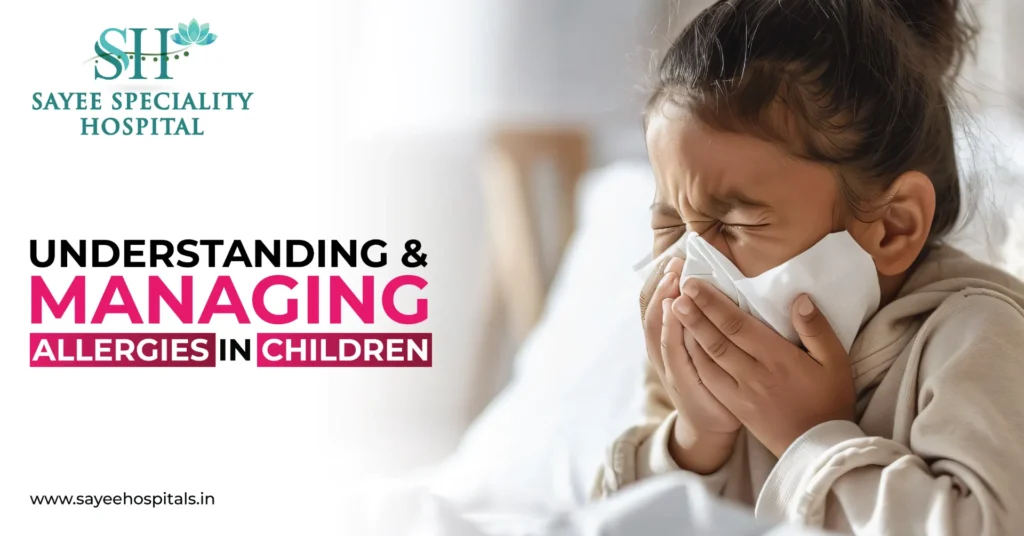
Understanding And Managing Allergies In Children
There’s a particular kind of exhaustion that comes with having a child whose symptoms never quite make sense. The runny nose that never fully clears. The rash that comes and goes without explanation. The cough that shows up every spring like an unwanted guest. You treat one thing, it settles, and then something else flares up. After a while, you stop assuming it’s just another cold.
For a growing number of families, what’s actually going on is allergies and getting to that realisation earlier rather than later makes a genuine difference to how a child grows up day to day.
An allergy is essentially the immune system making a mistake. It encounters something completely harmless pollen, a peanut, a cat, a dust mite and decides it’s a threat. It mounts a defence response, releasing chemicals like histamine into the body, and those chemicals are what produce the symptoms. The substance itself isn’t dangerous. The immune system’s reaction to it is what causes the problem.
Any child can develop allergies, but the risk is meaningfully higher when there’s a family history. If one parent has allergic conditions, the likelihood of a child developing them is roughly doubled. If both parents are affected, it’s higher still. That doesn’t mean it’s inevitable plenty of children with highly allergic parents have no allergic conditions themselves — but it does mean those families should be particularly alert to early signs.
What makes childhood allergies especially tricky is that triggers are genuinely everywhere. Home, school, outdoors, other people’s houses, the canteen. Managing the environment completely isn’t realistic. What is realistic is identifying what’s causing the reaction and building a management plan around it.
Allergic symptoms in children don’t always announce themselves dramatically. Often they’re low-grade, persistent, and easy to attribute to something else entirely another cold, dry skin, a sensitive stomach.
Skin symptoms include hives, eczema flares, or unexplained rashes that appear after contact with certain substances or foods. Respiratory symptoms sneezing, persistent runny nose, nasal congestion, itchy or watery eyes, or a cough that won’t settle are often the most visible signs of environmental allergies like pollen or dust mites. Difficulty breathing or wheeze may suggest the allergic response is affecting the lower airways, which moves into asthma territory. Digestive symptoms stomach cramps, nausea, vomiting, or diarrhoea after eating point toward food as the likely culprit.
The pattern matters as much as the individual symptom. If the same cluster of symptoms keeps coming back seasonally, after specific foods, in certain environments that repetition is the signal worth acting on.
Outdoor allergens are largely seasonal. Tree pollen tends to peak in spring, grass pollen through summer, and weed pollen into autumn. Children who are consistently worse during specific seasons almost always have a pollen component to their allergies.
Indoors, the main culprits are dust mites microscopic organisms that live in bedding, soft furnishings, and carpets pet dander from cats, dogs, and other furry animals, and mould spores that thrive in damp environments. These are year round triggers rather than seasonal ones, which is why some children seem symptomatic continuously rather than in cycles.
Irritants like cigarette smoke, strong perfumes, and air pollution don’t cause allergies in the strict immunological sense, but they aggravate existing allergic airways and lower the threshold for reactions. A child who’s borderline symptomatic on a clean air day can tip into a full flare on a high pollution day.
Food allergies are a separate but equally important category. The most common food allergens in children are peanuts, tree nuts, cow’s milk, eggs, wheat, soy, fish, and shellfish. Most childhood food allergies present in the first few years of life, and while some particularly milk and egg are frequently outgrown, peanut and tree nut allergies tend to be more persistent. Keeping a symptom diary that logs what a child eats alongside when symptoms appear is one of the most practical tools a parent can bring to an initial allergist appointment.
Allergic rhinitis, what most people call hay fever is the most common allergic condition in children, and it’s significantly underestimated in terms of its impact. Beyond the obvious sneezing and runny nose, untreated allergic rhinitis disrupts sleep, impairs concentration, and affects school performance. A child who’s permanently congested and tired isn’t functioning at their best in the classroom, and that chronic low-level impairment often goes unattributed to allergy.
Chronic nasal congestion, when left unmanaged, can also cause mouth-breathing as a compensatory habit. Persistent mouth-breathing in growing children can, over time, affect the development of facial bone structure and dental alignment, an outcome that’s entirely avoidable with proper allergy management.
Ear infections are another frequently overlooked downstream effect. Allergic inflammation in the upper airway can cause fluid to accumulate in the middle ear, creating the conditions for recurrent otitis media. Children with frequent ear infections who also have obvious allergic symptoms are worth assessing for an allergic component , addressing the allergy often reduces the ear infection frequency.
Food allergy reactions range enormously in severity. Mild reactions involve localised hives or mild gastrointestinal upset. Anaphylaxis. a severe, systemic allergic reaction, involves multiple organ systems simultaneously: throat swelling, breathing difficulty, a drop in blood pressure, and collapse. Anaphylaxis is a medical emergency requiring immediate epinephrine injection and emergency care. Children with a confirmed risk of anaphylaxis should carry an adrenaline auto-injector (like an EpiPen) at all times, and everyone in their immediate environment family, teachers, childcare workers should know how to use it.
A child with significant allergies navigates daily life differently from their peers, and that social dimension matters alongside the medical one. Schools need to be formally informed of a child’s allergies not just verbally mentioned, but documented with a written allergy action plan that specifies triggers, symptoms, and exactly what to do in an emergency.
Specific school considerations are worth thinking through: class pets that could trigger animal dander reactions, craft materials that might contain latex or nut based products, canteen menus for food allergic children, and physical education in high pollen environments. None of these are insurmountable, but they require proactive communication rather than waiting for a reaction to happen.
If symptoms are recurring and unexplained, an allergist referral is the right next step. Skin prick testing, where small amounts of allergen extracts are applied to the skin to observe the response remains the most widely used diagnostic tool. Specific IgE blood tests can identify allergic sensitisation to particular allergens. In food allergy cases, a supervised oral food challenge under medical observation is sometimes used to confirm or rule out a reaction.
The diagnosis shapes the management plan, which is why getting it properly established matters rather than just treating symptoms empirically.
Childhood allergies are common, they’re manageable, and for the vast majority of children, they don’t define the quality of their lives, they just require a bit more awareness and planning. The children who struggle most are often those whose allergies went unidentified for years, accumulating school absences, sleep disruption, and a constant background of feeling unwell that everyone assumed was just normal.
Early diagnosis changes that trajectory. A child who knows their triggers, has the right medications accessible, and whose school and family are properly informed is a child who can get on with being a child.
That’s worth the effort of getting the diagnosis right.
Recent Posts
Lower Back Pain Causes, Diagnosis, and Treatment Almost...
Strep Throat: Symptoms, Diagnosis, and Treatment Sore throats...

Understanding Menorrhagia: Causes, Diagnosis, and Treatment Most women...

Your Posture Is Destroying Your Spine Before 40...