

Lower Back Pain: Causes, Diagnosis, and Treatment
Lower Back Pain Causes, Diagnosis, and Treatment Almost...
Multispecialty Hospital in Padappai | Sayee Specialty Hospital
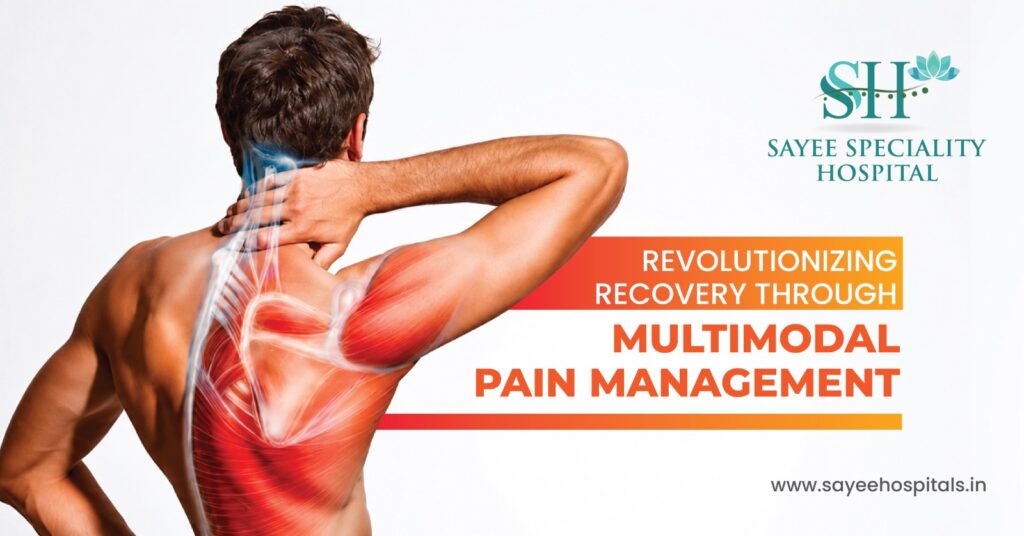
Revolutionizing Recovery Through Multimodal Pain Management
For a long time, the default response to post surgical pain was straightforward: strong opioids, high doses, and the assumption that serious surgery meant serious medication. That approach worked in the narrow sense, it controlled pain, but it came with a set of costs that the medical community has spent the last two decades reckoning with. Dependence, prolonged sedation, delayed recovery, constipation, nausea, and a difficult transition off medication once the acute phase was over.
Modern surgical recovery looks quite different now. Not because pain is being taken less seriously but because the understanding of how to treat it has become genuinely more sophisticated.
Pain isn’t a single signal travelling along a single pathway. It’s a complex cascade involving multiple sites peripheral nerve endings at the surgical site, the spinal cord where signals are relayed and modulated, and the brain where they’re ultimately interpreted. Targeting only one point in that system with one type of medication was always going to be an incomplete solution.
Multimodal analgesia – MMA works on a different principle entirely. Instead of one drug at high dose, it combines several medications with different mechanisms of action at lower individual doses. Paracetamol addresses central pain processing. NSAIDs reduce peripheral inflammation at the surgical site. Gabapentinoids calm sensitised nerve pathways. Local anaesthetics delivered through regional techniques block transmission at the nerve level. Each works on a different part of the pain pathway simultaneously, and the combined effect is greater than any single agent could achieve alone.
The practical result is meaningful better pain control with significantly lower opioid requirements. And lower opioid requirements mean fewer opioid side effects, clearer cognition during recovery, faster return of gut function, earlier mobilisation, and reduced risk of the kind of prolonged opioid use that can follow major surgery when high-dose prescribing is the norm.
One of the most significant shifts in surgical pain management over the last decade has been the expanded use of regional anaesthesia techniques. Rather than relying solely on systemic medication that travels through the bloodstream and affects the whole body, regional techniques deliver anaesthetic directly to the nerve or nerve group supplying the surgical site.
Nerve blocks injecting local anaesthetic around a specific nerve can provide hours to days of targeted pain relief from a single procedure. For hip and knee replacements, femoral nerve blocks and adductor canal blocks have become standard parts of the recovery protocol in many centres. For shoulder surgery, interscalene blocks. For abdominal procedures, transversus abdominis plane blocks. The specificity is remarkable patients can be alert, oriented, and relatively comfortable while the operative area remains effectively numb.
Epidural analgesia, well established in obstetric care, has an equally important role in major abdominal and thoracic surgery, providing sustained segmental pain control that allows earlier breathing exercises and earlier mobilisation after procedures where systemic opioids would otherwise be heavily sedating.
These techniques sit at the centre of Enhanced Recovery After Surgery protocols the structured, evidence-based frameworks that major surgical centres now use to systematically reduce surgical stress, minimise complications, and accelerate the return to normal function.
What makes modern perioperative pain management work isn’t just the pharmacology, it’s the coordination. A well-functioning team brings together distinct expertise at each stage of the surgical journey, and the quality of that coordination directly affects patient outcomes.
Surgeons and anaesthesiologists develop the individualised plan before the patient reaches the operating table identifying the most appropriate regional techniques, selecting an opioid-sparing analgesic combination suited to the procedure and the patient’s medical history, and anticipating where the pain management challenges are likely to arise.
Nurses are the continuous thread through the recovery process. They’re monitoring pain scores regularly, identifying when the plan needs adjustment, recognising early signs of complications, and doing the patient education work that makes discharge safe rather than just timely. A patient who understands what level of discomfort is expected, what to take and when, and what symptoms should prompt them to seek help is a patient who manages their recovery at home far more successfully.
Pharmacists contribute precision reviewing the complete medication picture, identifying interactions, ensuring the doses being prescribed are appropriate for the individual’s weight, renal function, and other medications. In complex patients, that review catches problems that might otherwise only surface as complications.
Effective pain management doesn’t start in the recovery room. It starts in the pre-operative consultation, and the evidence strongly supports that patients who are properly prepared before surgery recover more smoothly after it.
Preoperative education sets realistic expectations which sounds simple but has measurable clinical impact. Patients who know in advance what the normal trajectory of post-surgical discomfort looks like, what their analgesic plan involves, and what non-pharmacological tools are available to them are less anxious going into surgery, report lower pain scores postoperatively, and require less rescue medication. Anxiety and pain are physiologically intertwined in ways that aren’t just psychological the stress response amplifies pain perception, and reducing preoperative anxiety reduces postoperative pain.
Non-pharmacological techniques introduced preoperatively become practical tools during recovery. TENS transcutaneous electrical nerve stimulation delivers low-level electrical impulses through the skin that interfere with pain signal transmission and provide genuine, if modest, relief as part of a broader plan. Cryotherapy structured cold application to the surgical site, reduces local inflammation and provides localised pain relief in the early post-operative period. Breathing exercises and relaxation techniques give patients agency over their own comfort during a phase when a lot feels out of their control.
One of the most practically important shifts in post-surgical pain management is the move from as needed dosing to scheduled dosing for non-opioid analgesics. It sounds like an administrative detail. It isn’t.
When medication is taken only when pain becomes severe, there are repeated cycles of under-treatment followed by catch up, the pain climbs, the patient waits, the dose is taken, it takes time to work, and in the gap the pain has already caused unnecessary suffering and often anxiety that further amplifies the perception of pain. Keeping non opioid analgesics at consistent levels throughout the day maintains a stable baseline and reduces the peaks that drive opioid requirements.
Consistent pain control also enables early mobilisation getting patients moving in the hours and days after surgery rather than waiting until pain allows it. That shift in approach has had a significant impact on outcomes. Early movement improves circulation, reduces the risk of deep vein thrombosis, prevents the muscle deconditioning that sets in surprisingly quickly after surgical bed rest, and has been shown to reduce the incidence of chronic post-surgical pain, a recognised complication when acute pain is poorly managed.
The shift to multimodal, team based pain management produces a noticeably different recovery experience. Hospital stays are shorter, not because patients are being discharged prematurely, but because they’re genuinely recovering faster. Return to function comes earlier. Opioid-related side effects are less prevalent. And the risk of transitioning from prescribed post-surgical opioids to problematic long-term use, a pathway that’s been well documented in the literature is meaningfully reduced.
None of this means post surgical recovery is now painless. It isn’t, and setting that expectation would be counterproductive. What it means is that pain is being managed in a way that supports recovery rather than just suppressing sensation treating the whole physiological and psychological picture rather than one narrow part of it.
If you’re preparing for surgery, it’s worth asking your surgical team what their pain management protocol looks like. Specifically: what regional anaesthesia is planned, what the multimodal analgesic plan involves, and what non pharmacological strategies you can start preparing to use. That conversation is part of your care and the more actively you engage with it, the better your recovery is likely to go.
Recent Posts
Lower Back Pain Causes, Diagnosis, and Treatment Almost...

Strep Throat: Symptoms, Diagnosis, and Treatment Sore throats...
Understanding Menorrhagia: Causes, Diagnosis, and Treatment Most women...

Your Posture Is Destroying Your Spine Before 40...