

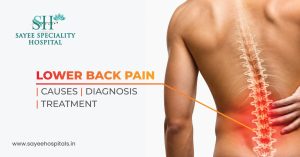
Lower Back Pain: Causes, Diagnosis, and Treatment
Lower Back Pain Causes, Diagnosis, and Treatment Almost...
Multispecialty Hospital in Padappai | Sayee Specialty Hospital
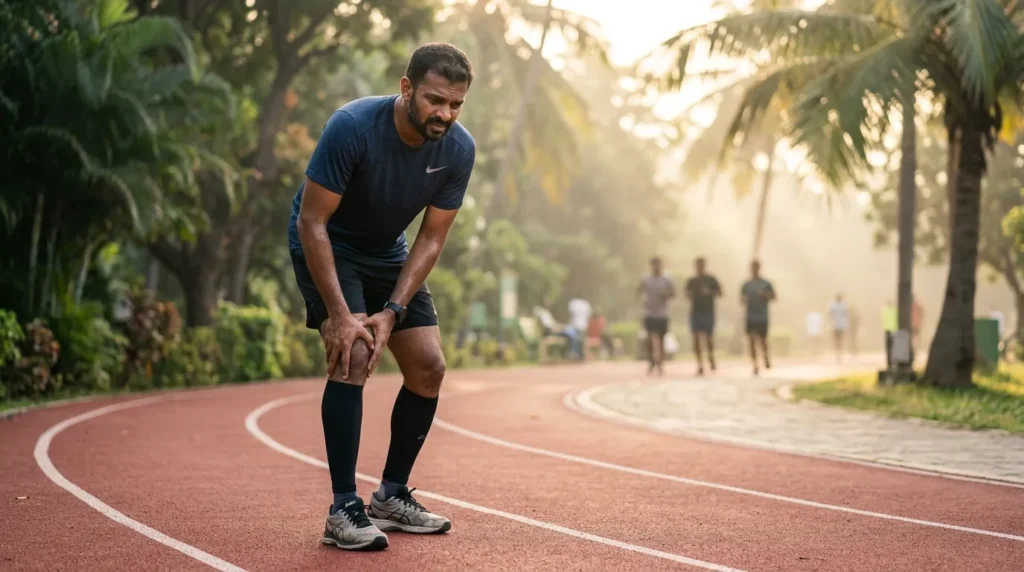
That Knee Pain After 30 Is Not Normal Aging - Here's What's Really Happening
At some point in your early thirties, the knee starts having opinions. Climbing stairs feels heavier than it used to. Sitting cross-legged on the floor is fine going down but awkward coming back up. After a long walk, there’s a dull ache that wasn’t there at 25.
Most people file this under ‘getting older’ and move on. A pain reliever here, a knee brace from the pharmacy there. And because it doesn’t stop them completely, it never quite becomes urgent enough to deal with properly.
But here’s what orthopaedic specialists consistently point out: knee pain in your thirties and forties is rarely about age. It’s almost always about something specific – a structural issue, a movement pattern, a gradual wear problem – that has a name, a cause, and in most cases, a treatment path that doesn’t involve surgery or permanently giving up activity.
The problem is that leaving it unaddressed quietly makes it worse. What’s manageable at 33 becomes limiting at 43.
The knee is the largest joint in the body and one of the most mechanically complex. It takes the full load of your body weight with every step, absorbs impact during running or jumping, and relies on a careful balance of cartilage, ligaments, tendons, and muscle to stay stable. When any one of those components gets stressed or damaged, the joint lets you know.
Here are the conditions most commonly responsible for knee pain in adults between 30 and 55:
This is the most commonly misunderstood one. Osteoarthritis is widely assumed to be an ‘old person’s disease’, but early-stage OA can begin as early as the mid-thirties in people with prior joint injuries, high-impact activity histories, or genetic predisposition. It doesn’t mean your joint is ‘worn out’ – it means cartilage is losing its cushioning quality faster than normal. Caught early, the progression can genuinely be slowed.
This is one of the most common knee pain diagnoses in active adults and has nothing to do with running exclusively. It’s a tracking problem – the kneecap isn’t gliding smoothly over the femur, often due to muscle imbalances in the hip and quad. The hallmark symptom is pain around or behind the kneecap, particularly when going down stairs, squatting, or sitting for long periods.
The menisci are two C-shaped cartilage pads that act as shock absorbers between the thigh and shin bones. In younger adults, they typically tear from a sudden twist or impact. But from the mid-thirties onward, degenerative meniscus tears become more common – the cartilage weakens over time and can tear from ordinary movements like stepping off a kerb awkwardly or squatting. These don’t always cause dramatic pain; sometimes it’s just persistent stiffness, occasional locking, or a deep ache on one side of the knee.
A lot of adults in their thirties are walking around with ligament injuries from their twenties that were never properly treated – a sports twist that was iced and forgotten, a bad fall that healed ‘well enough’. Partial ligament tears and ligament laxity can cause chronic instability in the joint, leading to compensatory stress on surrounding structures. Over years, that compensation has consequences.
The iliotibial band – a thick strip of connective tissue running from the hip to the outer knee – is a common pain source in runners, cyclists, and people who sit for extended hours. When it tightens, it creates friction at the outer knee that feels like a sharp or burning pain, especially during downhill movement or after prolonged sitting.
Inflammation of the patellar tendon – the tissue connecting the kneecap to the shinbone – shows up as pain just below the kneecap, often after jumping or prolonged activity. It’s common in people who play badminton, basketball, or cricket, and in those who’ve recently increased their exercise intensity without gradual progression.
Part of why knee problems progress unchecked is that the early symptoms are easy to rationalise:
None of these are dramatic on their own. All of them together paint a picture that an orthopaedic specialist can read clearly – and act on before the underlying issue becomes harder to manage.
Does Knee Pain After 30 Always Mean Surgery?
This is the fear that keeps many people from seeking a proper diagnosis – the assumption that seeing an orthopaedic doctor automatically leads to an operation. In practice, that’s far from the case.
The majority of knee pain in adults under 55 is managed successfully without surgery. The treatment pathway depends entirely on the diagnosis, but commonly includes:
Surgery – whether arthroscopic for a meniscus tear or partial knee replacement for advanced OA – is recommended when conservative management has been tried thoroughly and hasn’t achieved adequate relief. It’s not the default starting point.
The human body compensates remarkably well – but compensation has a price. When one knee is painful, people unconsciously shift weight to the other side. Over months and years, that asymmetric loading creates secondary problems: hip pain, lower back strain, altered gait patterns that affect the spine.
Early osteoarthritis that’s managed well at 35 can stay mild for decades. Left alone, the cartilage loss accelerates, bone-on-bone contact becomes more extensive, and what was once a physiotherapy problem becomes a surgical one.
The trajectory isn’t fixed. But it does depend on when you intervene.
You don’t need to wait until you can’t walk. These are reasonable triggers for booking a proper orthopaedic evaluation:
For anyone in South Chennai looking for the best orthopaedic care, proximity to a specialist with the right diagnostic facilities makes a real difference. Access to digital X-ray, CT imaging, and an experienced orthopaedic team means a complete picture of what’s happening – not just a surface-level assessment.
Sayee Specialty Hospital offers comprehensive orthopaedic care for knee pain, joint conditions, sports injuries, and bone health – backed by in-house digital X-ray and CT scan facilities for accurate diagnosis without the run-around. Our orthopaedic specialists work with patients across Padappai, Vandalur, Urapakkam, Chromepet, and the broader South Chennai corridor.
If you’ve been managing knee pain on your own and it’s time to actually understand what’s causing it, a specialist consultation is the right next step. Among the best orthopaedics in Chennai’s southern districts, Sayee combines specialist expertise with accessible, patient-first care.
Book an orthopaedic consultation at Sayee Specialty Hospital, Padappai, or call 9 976 976 976 to schedule your visit. Your knees have carried you this far – it’s worth finding out what they actually need.
Recent Posts
Lower Back Pain Causes, Diagnosis, and Treatment Almost...

Strep Throat: Symptoms, Diagnosis, and Treatment Sore throats...
Understanding Menorrhagia: Causes, Diagnosis, and Treatment Most women...
Your Posture Is Destroying Your Spine Before 40...