


Lower Back Pain: Causes, Diagnosis, and Treatment
Lower Back Pain Causes, Diagnosis, and Treatment Almost...
Multispecialty Hospital in Padappai | Sayee Specialty Hospital
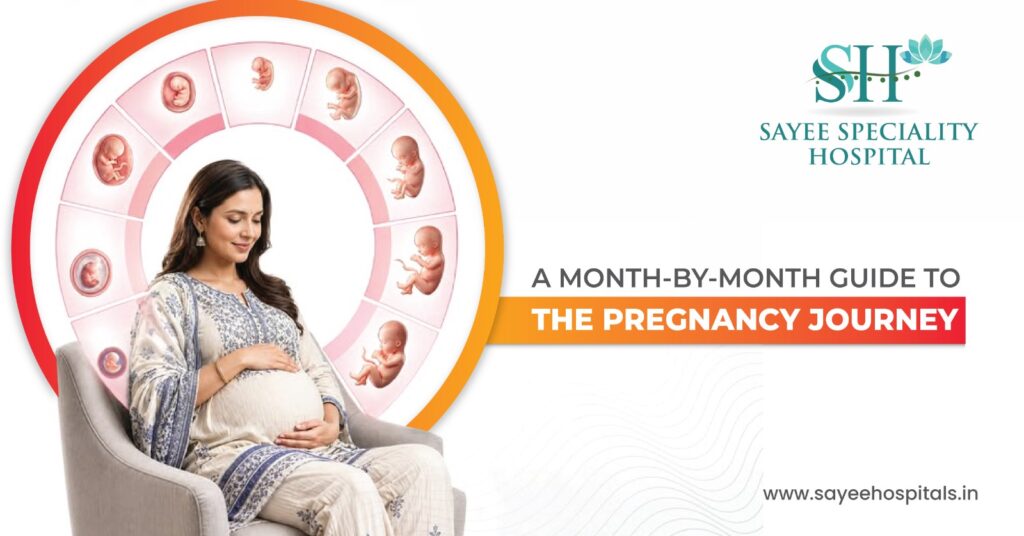
A Month By Month Guide To The Pregnancy Journey
Forty weeks sounds like a long time until you’re living them. And then somehow it’s both endless and over in a blink, a period of constant change, occasional discomfort, moments of genuine wonder, and a running undercurrent of “is this normal?” that no amount of reading ever fully quiets.
What helps, for most people, is understanding what’s actually happening not just to the baby, but to the body carrying it. Month by month, trimester by trimester, the pregnancy follows a sequence that’s been happening in human bodies for hundreds of thousands of years. Knowing what to expect at each stage doesn’t remove the uncertainty, but it does replace the vague anxiety of the unknown with something more grounded and manageable.
Most women don’t know they’re pregnant for much of the first month, which makes what’s happening during this period particularly remarkable in retrospect. Within days of fertilisation, the embryo implants in the uterine lining and the placenta begins forming. By day 22, the tiny heart still a simple tube at this stage begins beating. The neural tube, which will become the brain and spinal cord, starts closing. The embryo is roughly the size of a grain of rice, but the foundational architecture of an entire human being is already being laid down.
For the mother, hormone levels shift dramatically and rapidly. Human chorionic gonadotropin – hCG rises steeply, triggering the hormonal cascade that sustains the pregnancy and produces the first symptoms. Breast tenderness and sensitivity are often among the earliest signs. Fatigue sets in quickly for many women not ordinary tiredness but a heaviness that makes it genuinely difficult to stay awake past early evening. Nausea may begin, typically worst in the morning though it can strike at any time.
The embryo transitions into a foetus during this period as the major organ systems begin forming heart, brain, liver, kidneys, lungs. The placenta becomes fully functional, taking over the task of sustaining the pregnancy. Eyelids form over the developing eyes. Fingers and toes begin to differentiate distinct digits with visible wrists and ankles. By the end of week 8, the foetus is around an inch long.
Blood volume begins increasing, a process that continues throughout pregnancy and will ultimately result in the body producing around 50% more blood than usual. The expanding uterus presses against the bladder, and the increased kidney filtration rate means the need to urinate becomes noticeably more frequent. Nausea is often at its most intense during this month, and for some women the fatigue feels genuinely incapacitating.
The first trimester closes with the foetus reaching 2.5 to 3 inches in length and taking on increasingly recognisable features. Soft fingernails and toenails are growing. The first 20 tooth buds for the baby teeth that will appear years later are already present in the developing jaw. By the end of the first trimester, all the major organ systems are formed, even if not yet mature. The heartbeat is detectable with a handheld Doppler device, and most women have their first prenatal scan around this time.
For many women, the end of the first trimester brings genuine relief nausea begins to ease, energy starts returning, and the risk of miscarriage drops substantially. Clothes begin feeling tight around the waist, though the bump isn’t usually visible to others yet. Blood pressure and hormonal fluctuations can cause headaches and occasional light-headedness, particularly when standing quickly.
The second trimester is, for most women, the most comfortable stretch of pregnancy. Nausea has typically resolved, energy has improved, and the bump isn’t yet large enough to cause significant physical discomfort. The foetus is now actively moving swallowing amniotic fluid, practising breathing movements, turning and repositioning though those movements aren’t yet strong enough to feel. The skin is transparent and pink, the umbilical cord fully functional, and the foetus reaches around 6 to 7 inches by the end of the month.
The mother’s appetite usually returns properly during this period, and the visible baby bump begins to appear. The anatomy scan typically scheduled between weeks 18 and 22 – gives the first detailed structural picture of the baby’s development and is one of the most anticipated appointments of the pregnancy.
This is the month when most women feel foetal movement for the first time, a sensation described variously as fluttering, bubbles, or gentle tapping. As the pregnancy progresses those movements become more distinct and recognisable. The foetus is growing rapidly, establishing regular sleep and wake cycles, and developing the unique fingerprints and toe prints that will remain unchanged for a lifetime.
The uterus has risen to roughly the height of the navel. The cardiovascular system is working significantly harder, the heart beats faster to manage the increased blood volume and some women notice palpitations or breathlessness during physical exertion. The anatomy scan during this window provides detailed assessment of fetal anatomy, placental position, and amniotic fluid levels.
By month six, foetal movement is well established and kicks are felt regularly. The eyes, previously fused shut, begin to open. The skin is red and wrinkled, covered with lanugo, the fine downy hair that helps regulate temperature before enough body fat has developed and vernix caseosa, a waxy protective coating. The baby weighs somewhere between 1.5 and 2 pounds and is around 12 inches long.
The mother’s centre of gravity has shifted significantly by this point, contributing to the lower backache that becomes increasingly common in the second half of pregnancy. The round ligaments, which support the uterus, stretch as it grows, sometimes producing sharp, catching pains in the sides of the abdomen, particularly with sudden movements. Skin stretching over the expanding abdomen can cause itchiness, and the first stretch marks may appear.
The third trimester is defined by rapid brain development and the final maturation of organ systems. The baby’s brain is growing quickly during this period developing the folds and grooves that characterise the mature brain and begins responding to external stimuli. Light filtering through the abdominal wall, loud sounds, music, the mother’s voice all of these register. The baby is practising breathing movements, opening and closing their eyes, sucking their thumb, and changing position regularly, though the increasingly limited space makes full somersaults less common.
For the mother, physical discomfort becomes a more consistent feature of daily life. Swollen ankles and feet are common as blood pooling increases in the lower extremities. Braxton Hicks contractions irregular, painless tightenings of the uterus become more noticeable as the uterus rehearses for labour. Stretch marks deepen, sleep becomes fragmented as finding a comfortable position becomes more difficult, and fatigue returns.
Brain growth continues at an extraordinary rate during month eight, and the baby is accumulating the fat deposits under the skin that will help regulate temperature after birth. Fingernails have reached the fingertips. The bones of the skull remain deliberately soft and unfused the fontanelles to allow the head to compress slightly during passage through the birth canal.
The physical challenges of late pregnancy peak during this month for many women. The top of the uterus sits directly beneath the rib cage, compressing the lungs and stomach simultaneously. Shortness of breath on minimal exertion and heartburn after almost any meal become persistent companions. The breasts may begin producing colostrum the first form of milk in preparation for feeding.
The baby reaches full term at week 37, meaning all systems are mature enough for life outside the womb. The lungs complete their final maturation surfactant production reaches the level needed for independent breathing. The baby descends into the pelvis in preparation for delivery, settling into a head-down position in most cases. This “lightening” or “dropping” brings genuine relief to breathing and heartburn, though it shifts pressure back down onto the bladder.
Prenatal appointments move to weekly during this final stretch. The cervix begins effacing thinning and softening and dilating in preparation for labour. Mucus plug loss, an increase in Braxton Hicks activity, and the onset of early labour contractions are the signals that the end of the journey is approaching.
Each trimester has its own character. The first is about survival and establishment, the foundational structures forming against the odds in those critical early weeks. The second is about growth and discovery movement, anatomy, the pregnancy becoming real and visible. The third is about preparation the body and baby finishing what they started, getting ready for the most significant transition either of them will make.
Understanding each stage doesn’t make pregnancy easier exactly but it makes it more navigable. Every symptom has a reason. Every change has a purpose. And at the end of forty weeks, the sequence that’s been running since those first extraordinary days of cell division delivers exactly what it was always building toward.
Recent Posts
Lower Back Pain Causes, Diagnosis, and Treatment Almost...

Strep Throat: Symptoms, Diagnosis, and Treatment Sore throats...

Understanding Menorrhagia: Causes, Diagnosis, and Treatment Most women...

Your Posture Is Destroying Your Spine Before 40...