

Lower Back Pain: Causes, Diagnosis, and Treatment
Lower Back Pain Causes, Diagnosis, and Treatment Almost...
Multispecialty Hospital in Padappai | Sayee Specialty Hospital
Red Food Myth In Anaemia Treatment
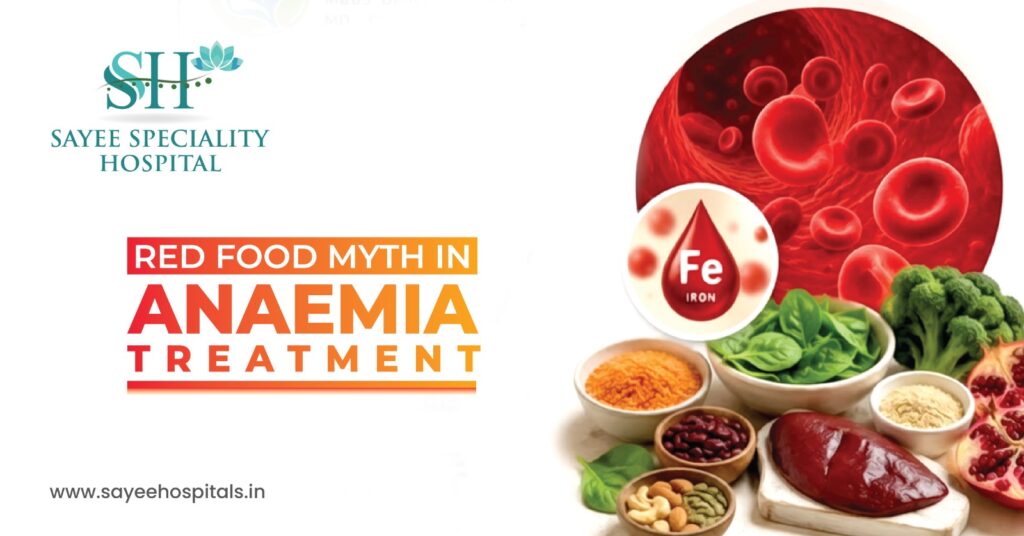
There’s a piece of nutrition advice that’s been passed down through families for generations, repeated by well-meaning relatives, and seemingly backed up by simple visual logic: eat red foods, because they look like blood, so they must build blood. Pomegranates, beetroot, red apples all commonly recommended to anyone diagnosed with anaemia or even just feeling a bit run down.
It’s intuitive. It’s memorable. And it’s largely wrong.
The logic behind the red food myth rests on a kind of visual association that doesn’t hold up to actual nutritional analysis. The pigments that give fruits and vegetables their red colour anthocyanins in foods like pomegranate and red cabbage, betalains in beetroot are genuinely valuable compounds. They’re powerful antioxidants, they have documented anti-inflammatory properties, and they’re absolutely worth including in a healthy diet for reasons entirely separate from anaemia.
But pigment and iron content are chemically unrelated. The compounds responsible for red colouration have nothing to do with how much elemental iron a food contains. A pomegranate gets its colour from anthocyanins. Its iron content roughly 0.3mg per 100g is genuinely modest, nowhere near enough to make a meaningful difference to someone with an active iron deficiency. Beetroot, despite its famously deep red colour and reputation as a “blood-building” food, contains around 0.8mg of iron per 100g again, a relatively small amount in the context of daily iron requirements, which sit around 8mg for adult men and up to 18mg for menstruating women.
To put that in perspective: someone with iron-deficiency anaemia would need to eat an impractical quantity of beetroot or pomegranate daily to make any meaningful dent in their iron stores and that’s before accounting for how much of that iron the body actually absorbs.
Here’s where the story gets more interesting, because some red foods do have a real role in anaemia management, but the mechanism has nothing to do with their colour or their own iron content.
Strawberries, tomatoes, and red bell peppers are excellent sources of vitamin C. And vitamin C plays a genuinely significant role in iron metabolism specifically, it converts non-heme iron (the form found in plant foods) from its less absorbable ferric form into the more absorbable ferrous form, dramatically improving how much of that iron the body can actually take up. Some research suggests that vitamin C can increase non-heme iron absorption by several-fold when consumed alongside an iron-containing meal.
So the connection is real it’s just indirect. These foods aren’t correcting anaemia by supplying iron themselves. They’re acting as absorption enhancers for the iron coming from other foods on the plate. A spinach salad with red pepper and a squeeze of lemon is doing something nutritionally meaningful. A bowl of pomegranate seeds eaten alone, on the assumption that it’s treating anaemia, mostly isn’t.
Understanding iron-deficiency anaemia properly requires understanding that not all dietary iron is created equal and this is the distinction that the red food myth completely sidesteps.
Heme iron comes from animal sources red meat, poultry, fish, and organ meats like liver. The body absorbs heme iron remarkably efficiently, typically somewhere between 15% and 35% of what’s consumed, and that absorption rate isn’t significantly affected by what else is eaten at the same meal. Liver, in particular, is exceptionally iron-dense and remains one of the most efficient dietary sources of iron available.
Non-heme iron comes from plant sources lentils, chickpeas, beans, spinach, fortified cereals, tofu. The body absorbs non-heme iron far less efficiently, somewhere between 2% and 20%, and that range is heavily dependent on what’s eaten alongside it. This is where the vitamin C pairing becomes genuinely useful, and it’s also where certain other dietary components work against absorption.
Tannins and polyphenols found in tea, coffee, and red wine, bind to non-heme iron in the digestive tract and significantly reduce how much gets absorbed. This is well-documented enough that dietary advice for people managing iron deficiency commonly includes avoiding tea or coffee within roughly an hour of an iron-containing meal or supplement. Calcium, too, can interfere with iron absorption when consumed in large amounts at the same time as iron-rich foods.
For people relying primarily on plant-based iron sources, whether by choice or circumstance these absorption factors aren’t minor details. They can be the difference between a diet that’s nutritionally adequate on paper and one that’s actually correcting a deficiency in practice.
Anaemia isn’t a single condition with a single cause, and that’s really the core issue with any food-colour-based approach to managing it. Iron-deficiency anaemia is the most common type, but it’s far from the only one.
Vitamin B12 deficiency and folate deficiency both cause anaemia through entirely different mechanisms affecting how red blood cells are formed rather than the iron available to make haemoglobin. Anaemia of chronic disease occurs when ongoing inflammation from conditions like rheumatoid arthritis, inflammatory bowel disease, or chronic kidney disease interferes with how the body uses iron, even when iron stores themselves are adequate. Anaemia from internal blood loss heavy menstrual bleeding, gastrointestinal bleeding from ulcers or polyps requires identifying and addressing the source of blood loss, not just replacing what’s being lost.
Each of these requires a different management approach, and dietary iron intake red foods or otherwise addresses essentially none of them except straightforward dietary iron deficiency. Someone with B12 deficiency anaemia eating more pomegranates isn’t addressing the actual problem at all.
Getting anaemia properly managed starts with diagnosis, not diet. A full blood count identifies whether anaemia is present and gives initial clues about the type, based on the size and characteristics of the red blood cells. Ferritin testing assesses iron stores specifically. B12 and folate levels rule those deficiencies in or out. Depending on the clinical picture, further investigation into the cause of blood loss or chronic disease may follow.
Once iron-deficiency anaemia is confirmed as the issue, dietary strategy becomes genuinely useful. For people eating meat, incorporating red meat and organ meats liver in particular, provides a concentrated, efficiently absorbed source of iron. For plant-based diets, building meals around legumes, dark leafy greens, and iron-fortified cereals, deliberately paired with vitamin C-rich foods, and timed away from tea and coffee, meaningfully improves the iron actually being absorbed.
For established deficiency, dietary changes alone are often not enough to correct it within a reasonable timeframe. Oral iron supplements ferrous sulfate or similar formulations are the standard first-line treatment for confirmed iron-deficiency anaemia, typically taken for several months to both correct the deficiency and replenish stores. For people who can’t tolerate oral iron, or where absorption is impaired by underlying gut conditions, intravenous iron infusion provides a faster and more reliable correction, administered under medical supervision.
The red food myth persists because it’s simple, visually intuitive, and feels like it should be true. But the body doesn’t process iron based on the colour of the food it came from it processes it based on chemical form, absorption pathways, and what else is present in the gut at the same time.
If you or someone you know has been told they’re anaemic, the path forward isn’t a shopping list of red fruits and vegetables. It’s a blood test to identify the type and cause, followed by a dietary and medical approach tailored to that specific picture. Pomegranates and beetroot can absolutely stay on the plate, they’re nutritious foods with real benefits just not for the reason the myth suggests.
Recent Posts
Lower Back Pain Causes, Diagnosis, and Treatment Almost...

Strep Throat: Symptoms, Diagnosis, and Treatment Sore throats...
Understanding Menorrhagia: Causes, Diagnosis, and Treatment Most women...

Your Posture Is Destroying Your Spine Before 40...