


Lower Back Pain: Causes, Diagnosis, and Treatment
Lower Back Pain Causes, Diagnosis, and Treatment Almost...
Multispecialty Hospital in Padappai | Sayee Specialty Hospital
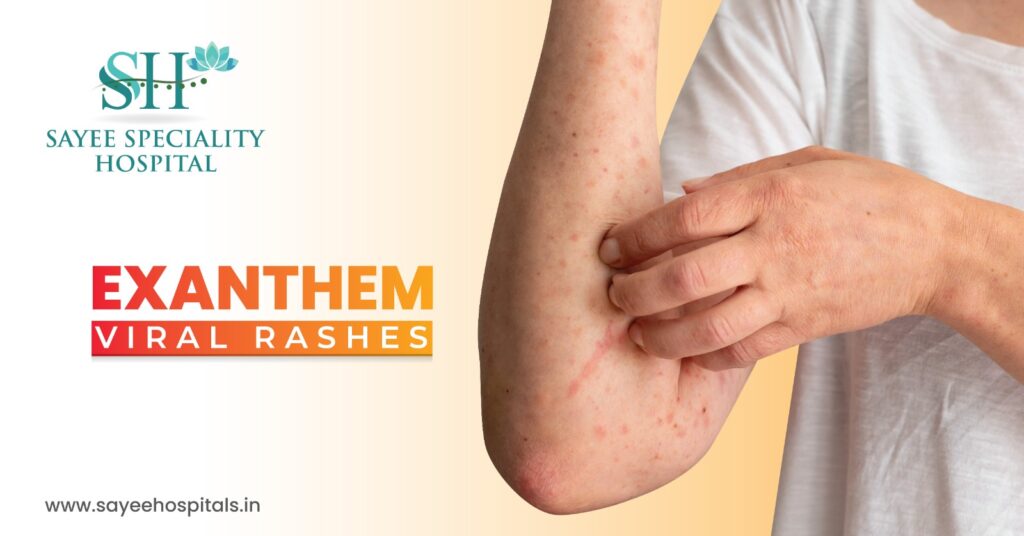
Exanthem : Viral Rashes
Most parents have been there, you’re managing what seems like a straightforward fever, and then on day two or three, a rash appears. The instinct is immediate: panic, Google, more panic. Is it serious? Is it contagious? Does it change everything about how this illness needs to be handled?
Sometimes the rash is the most useful piece of information in the whole picture. In viral illness, a skin eruption isn’t just an inconvenient side effect, it’s often the body communicating exactly what’s going on underneath.
The word exanthem comes from the Greek for “breaking out” and that’s essentially what it describes. A viral exanthem is a widespread skin eruption that develops as a secondary response to a viral infection. It’s not the infection itself appearing on the skin, it’s the consequence of the body’s interaction with the virus, and it can look quite different depending on which virus is responsible.
The mechanism varies. In some cases, the rash is the immune system’s work inflammatory cells and immune mediators reaching the skin as part of the broader defence response. In others, the virus directly infects skin cells, causing localised damage that becomes visible. In others still, viral toxins trigger a skin reaction. The same visible outcome spots, blotches, bumps can arise through different underlying pathways, which is partly why identifying the specific virus from the rash alone isn’t always straightforward.
Viral exanthems are most common in children, largely because adults have typically already built immunity to the viruses most associated with them through prior exposure or vaccination. The classic childhood illnesses chickenpox, measles, roseola, and fifth disease, all produce characteristic rash patterns that have been documented for long enough that experienced clinicians can often identify them on appearance alone. More recently, COVID-19 joined the list of viruses known to produce cutaneous eruptions, in patterns ranging from urticarial rashes to chilblain-like changes on the extremities.
One of the clinically useful patterns with viral exanthems is the direction of spread. Most begin centrally on the face or the trunk, before moving outward to the limbs. That centrifugal progression is a consistent feature across many viral rashes and helps distinguish them from other causes of skin eruption.
The character of the rash varies considerably by cause. Chickenpox produces intensely itchy, fluid-filled vesicles that appear in crops new lesions arriving while older ones are crusting over, so multiple stages coexist simultaneously. Measles produces a flat, blotchy maculopapular rash that spreads from the hairline downward, preceded by the distinctive Koplik’s spots inside the mouth.
Roseola, caused by human herpesvirus 6, follows a particular sequence high fever for several days, then as the fever breaks, a rose pink rash appears across the trunk. Fifth disease, caused by parvovirus B19, gives the characteristic “slapped cheek” appearance before spreading to the limbs in a lacy pattern.
Some viral rashes are itchy enough to be genuinely distressing, particularly chickenpox in children. Others cause no discomfort at all. The sensation or lack of it doesn’t indicate severity.
The rash rarely arrives in isolation. Because the underlying cause is a systemic viral infection, the skin changes sit alongside the broader picture of the illness and those accompanying symptoms are often more informative than the rash itself.
Fever is almost universal, and in some viral exanthems it runs high enough to be concerning in young children from a febrile convulsion risk standpoint. Headache, general malaise, and the bone-tired fatigue that comes with viral illness are consistent companions. Upper respiratory symptoms runny nose, sore throat, conjunctivitis are prominent in measles and several other viral exanthems.
Loss of appetite and abdominal discomfort appear frequently enough to occasionally muddy the picture and send parents down the gastroenteritis pathway before the rash appears.
The full symptom cluster, taken together with the rash pattern and the child’s age and vaccination history, is usually what points toward the specific diagnosis.
This is where the distinction between the rash and the virus matters enormously. The rash itself isn’t contagious through touch pressing on a chickenpox blister, for instance, doesn’t transmit the varicella virus to an intact skin surface. But the virus causing the rash absolutely is contagious, typically through respiratory droplets or, in the case of chickenpox, through direct contact with blister fluid.
Contagion windows vary by virus and don’t always align neatly with the rash. Measles, for instance, is contagious from around four days before the rash appears to four days after meaning a child is spreading the virus during the prodromal phase when nobody yet knows measles is what they’re dealing with. Fifth disease is actually most contagious before the rash develops, which is similarly counterintuitive.
The groups requiring particular caution are pregnant women and immunocompromised individuals. Parvovirus B19 fifth disease can cause severe anaemia in a developing fetus if a non-immune woman is exposed during pregnancy. Measles and chickenpox carry significantly elevated complication risks in immunocompromised children and adults. If a child with a viral exanthem has had contact with either of these groups, that’s worth flagging to a healthcare provider promptly rather than assuming it’ll be fine.
For the majority of viral exanthems in otherwise healthy children, treatment is supportive there’s no antiviral medication that targets most of these viruses directly, and the illness needs to run its course. The goal is keeping the child comfortable while the immune system does its job.
For itching particularly significant with chickenpox cool compresses applied to affected areas provide temporary relief. Calamine lotion remains a time-tested option for itchy rashes, and mild topical hydrocortisone cream can reduce localised inflammatory itch. Keeping nails short and clean reduces the damage from scratching, which matters because broken skin from scratch wounds creates an entry point for bacterial infection, a secondary complication that can turn a straightforward viral illness into something considerably more complex.
Fever and aches are managed with paracetamol or ibuprofen at age-appropriate doses. It’s worth noting that aspirin should be avoided in children with viral illnesses due to the association with Reye’s syndrome, a rare but serious condition affecting the liver and brain.
Rest and hydration are the unglamorous but genuinely important pillars. A well hydrated child recovers faster, handles fever better, and is less susceptible to the complications that arise when a viral illness drags on in a depleted body. Fluids, rest, and keeping the child away from vulnerable contacts until the infectious period has passed covers most of what home management requires.
Most viral exanthems in healthy children resolve within a week to two weeks without complications. The signs that something is shifting beyond normal recovery warrant prompt medical assessment.
A rash that develops signs of secondary bacterial infection increasing redness spreading outward from individual lesions, warmth, swelling, pus, or red streaking along the skin needs antibiotic treatment that home management can’t provide. Bacterial superinfection of chickenpox lesions, in particular, is a well recognised complication that can escalate to cellulitis or deeper tissue infection relatively quickly.
A fever that keeps climbing rather than following the expected pattern of rising and falling, or that returns after appearing to resolve, is worth investigating. Breathing difficulties, unusual drowsiness or difficulty rousing, a rash that appears as flat purple or red spots that don’t fade when pressed ,a non-blanching rash or a child who seems genuinely unwell beyond what the viral illness alone would explain all warrant same day medical review.
The non-blanching rash point deserves specific emphasis. A rash that doesn’t fade when you press a clear glass firmly against it can indicate meningococcal disease, a bacterial infection, not viral and is a medical emergency. Knowing how to do the glass test is one of the more practically useful pieces of health knowledge any parent can have.
Viral exanthems are common, they’re part of childhood for most children, and the vast majority resolve without lasting consequences. Vaccination has dramatically reduced the burden of the most serious ones measles and chickenpox vaccination in particular has changed the epidemiological landscape considerably in countries with high uptake.
For parents, the most useful thing is knowing what normal viral rash progression looks like, understanding the contagion implications, and being clear about which signs warrant urgent attention versus which ones are part of the expected course. That knowledge rather than anxious Googling at midnight, is what actually serves a sick child well.
Recent Posts
Lower Back Pain Causes, Diagnosis, and Treatment Almost...

Strep Throat: Symptoms, Diagnosis, and Treatment Sore throats...

Understanding Menorrhagia: Causes, Diagnosis, and Treatment Most women...

Your Posture Is Destroying Your Spine Before 40...