


Lower Back Pain: Causes, Diagnosis, and Treatment
Lower Back Pain Causes, Diagnosis, and Treatment Almost...
Multispecialty Hospital in Padappai | Sayee Specialty Hospital
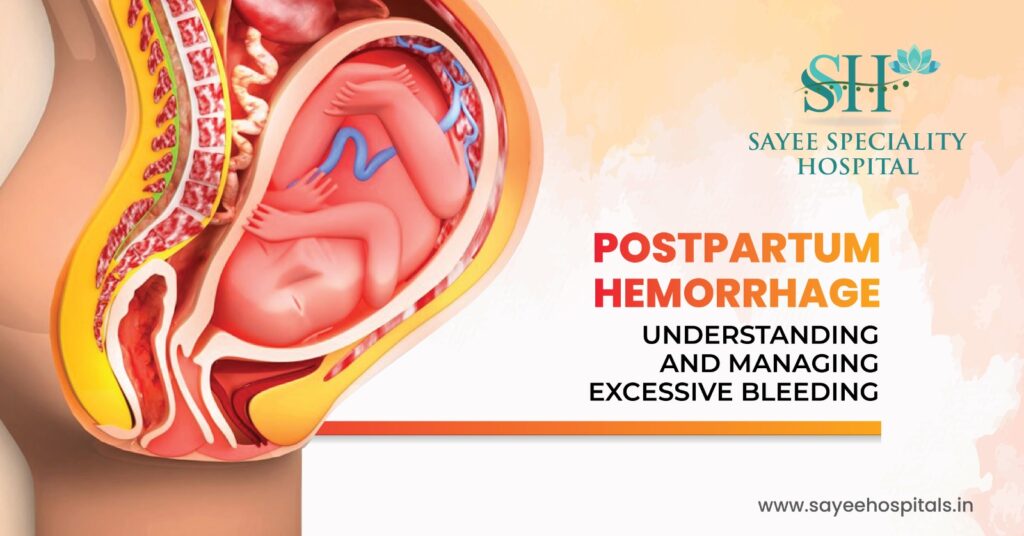
Postpartum Hemorrhage: Understanding And Managing Excessive Bleeding.
Childbirth is one of those experiences where the focus understandably stays fixed on the baby. The room shifts, attention moves, and the mother’s ongoing physical state can quietly take a back seat in those first overwhelming hours. Which is part of why postpartum hemorrhage catches so many families off guard. The birth went well. The baby is here. And then something goes wrong anyway.
PPH is one of the leading causes of maternal mortality globally, and yet awareness of it outside clinical settings remains surprisingly low. Understanding what it is, why it happens, and what the warning signs look like after leaving hospital isn’t alarmist, it’s genuinely important.
Some degree of bleeding after delivery is normal and expected. The body loses blood during every birth, the clinical threshold that defines postpartum hemorrhage is blood loss exceeding one litre after delivery, or any amount of blood loss accompanied by signs that the body is struggling to compensate, such as a falling blood pressure or a rising heart rate.
That physiological distinction matters. PPH isn’t defined purely by volume, it’s defined by what that volume does to the patient. A fit, healthy woman with a higher blood volume may tolerate a loss that would push a smaller or more anaemic woman into shock. The vital signs tell the fuller story.
PPH is categorised by timing. Primary PPH occurs within the first 24 hours after delivery and the majority of cases, in practice, develop within the first hour after birth, which is why that immediate postpartum period is so closely monitored in clinical settings. Secondary or late PPH occurs anywhere from 24 hours to 12 weeks postpartum. This delayed presentation is the one more likely to catch families off guard at home, when the birth feels long past and significant bleeding is the last thing expected.
When PPH occurs, the clinical priority is identifying the source of bleeding as quickly as possible, because treatment is entirely different depending on what’s causing it. The Four Ts framework — Tone, Trauma, Tissue, Thrombin gives care teams a systematic way to work through the possibilities rapidly.
Tone refers to uterine atony, the failure of the uterine muscle to contract adequately after delivery. In a normal third stage of labour, the uterus contracts firmly, compressing the blood vessels where the placenta was attached and limiting blood loss. When those contractions are weak or absent, those vessels remain open. Uterine atony accounts for around 80% of PPH cases, making it by far the most common cause and the first thing clinicians assess.
Trauma covers physical injury to the birth canal lacerations of the vagina or cervix, or in more serious cases, uterine rupture. These are particularly likely following instrumental deliveries, prolonged labour, or when a baby is larger than average. Unrepaired tears bleed continuously regardless of how well the uterus is contracting, which is why a thorough examination of the birth canal follows every delivery.
Tissue refers to retained products of conception fragments of placenta or membranes that remain attached to the uterine wall rather than delivering completely. The uterus cannot contract properly around retained tissue, and those fragments themselves can be a source of ongoing bleeding. Ultrasound after delivery can identify retained placental material that isn’t clinically obvious.
Thrombin covers coagulopathy conditions affecting the blood’s ability to clot. These may be pre-existing clotting disorders that were known before pregnancy, or they may develop acutely during a complicated labour. Disseminated intravascular coagulation, or DIC, is a serious acquired coagulopathy that can develop in the context of severe PPH itself, creating a dangerous cycle where bleeding drives coagulopathy which drives further bleeding.
In the immediate postpartum period, hospital staff are monitoring closely enough that early PPH is generally identified and managed before it escalates. The more vulnerable window for many women is after discharge, when the clinical oversight is gone and the responsibility for recognising warning signs shifts to the patient and her family.
Heavy lochia the normal postpartum vaginal discharge, is expected in the days after birth, gradually reducing over the following weeks. The signs that something has shifted beyond normal include soaking through a maternity pad within an hour or less, passing blood clots larger than roughly the size of a golf ball, or noticing that bleeding has increased rather than gradually decreased.
Systemic signs of significant blood loss include dizziness, light headedness, or fainting particularly on standing. Blurred vision, confusion, or a feeling of unreality. Skin that looks pale and feels cold or clammy. A heart rate that feels noticeably rapid or irregular. These are the body’s compensatory responses to falling blood volume they’re the signs that something is happening that goes beyond normal postpartum recovery.
Any of these, individually or together, warrants calling for emergency help rather than waiting to see if things improve. Secondary PPH presenting at home can escalate quickly, and the response time matters.
Management is driven by cause, and in most cases several interventions happen simultaneously rather than sequentially.
For uterine atony the most common cause, the immediate priorities are stimulating uterine contraction and replacing lost blood volume. Uterotonic medications, primarily oxytocin, are given to prompt the uterine muscle to contract. Ergometrine, misoprostol, and tranexamic acid are additional agents used depending on clinical circumstances. Uterine massage bimanual compression performed by the clinical team physically stimulates contraction when medication alone isn’t achieving it.
Traumatic bleeding from lacerations or tears is managed surgically suturing the damaged tissue to achieve haemostasis. Retained placental tissue may require manual removal or surgical evacuation under anaesthesia.
For severe or rapidly progressing hemorrhage, resuscitation runs alongside haemostasis efforts. IV fluids maintain circulating volume while the team works to control the source. Blood transfusion often multiple units replaces lost red cells and clotting factors. In major hemorrhage, the ratio of packed red cells to fresh frozen plasma to platelets matters, and major haemorrhage protocols in well-resourced centres activate a coordinated response across surgical, anaesthetic, haematology, and blood bank teams simultaneously.
In cases where medical and surgical measures haven’t controlled the bleeding, interventional radiology uterine artery embolisation can achieve haemostasis without hysterectomy. Emergency hysterectomy remains the definitive last-resort option when all else has failed and the patient’s life is at risk.
Physical recovery from PPH depends significantly on how much blood was lost and how quickly the situation was stabilised. Anaemia is almost universal after significant hemorrhage and typically requires iron supplementation sometimes IV iron if oral isn’t sufficient alongside dietary support. Fatigue in the weeks following PPH is often more profound than typical postpartum tiredness, and rest matters more than it might otherwise.
The emotional dimension of PPH is real and frequently underacknowledged. Experiencing a medical emergency in what was expected to be a joyful moment potentially involving resuscitation, surgical intervention, time in high dependency care, or separation from a newborn during a critical early bonding period leaves a mark. Postnatal PTSD following complicated deliveries is documented and recognised, and it’s worth naming openly rather than assuming it will resolve on its own. If the experience is replaying intrusively, affecting sleep, or creating anxiety about future pregnancies, that’s worth raising with a GP or midwife.
Future pregnancy after PPH is possible for the majority of women, and most go on to have uncomplicated subsequent deliveries. A history of PPH does flag the need for proactive planning delivery in a well-resourced setting with active management of the third stage and an awareness among the care team of the previous history. That conversation is worth having early in any subsequent pregnancy rather than leaving it until the third trimester.
PPH is serious, it moves fast, and it deserves more public awareness than it currently gets. The good news is that with prompt recognition and appropriate clinical response, outcomes are good the vast majority of women who experience it recover fully.
What makes the difference, more often than not, is time. Time to recognition, time to treatment, time to resuscitation. For women recovering at home after delivery, knowing what abnormal postpartum bleeding looks like and being willing to act on it quickly rather than waiting is the most important thing this blog can leave you with.
When something feels wrong after a birth, trust that instinct. Go in. Say the words postpartum hemorrhage. The clinical team can rule it out. But they can only help if you give them the chance.
Recent Posts
Lower Back Pain Causes, Diagnosis, and Treatment Almost...

Strep Throat: Symptoms, Diagnosis, and Treatment Sore throats...

Understanding Menorrhagia: Causes, Diagnosis, and Treatment Most women...

Your Posture Is Destroying Your Spine Before 40...