

Lower Back Pain: Causes, Diagnosis, and Treatment
Lower Back Pain Causes, Diagnosis, and Treatment Almost...
Multispecialty Hospital in Padappai | Sayee Specialty Hospital
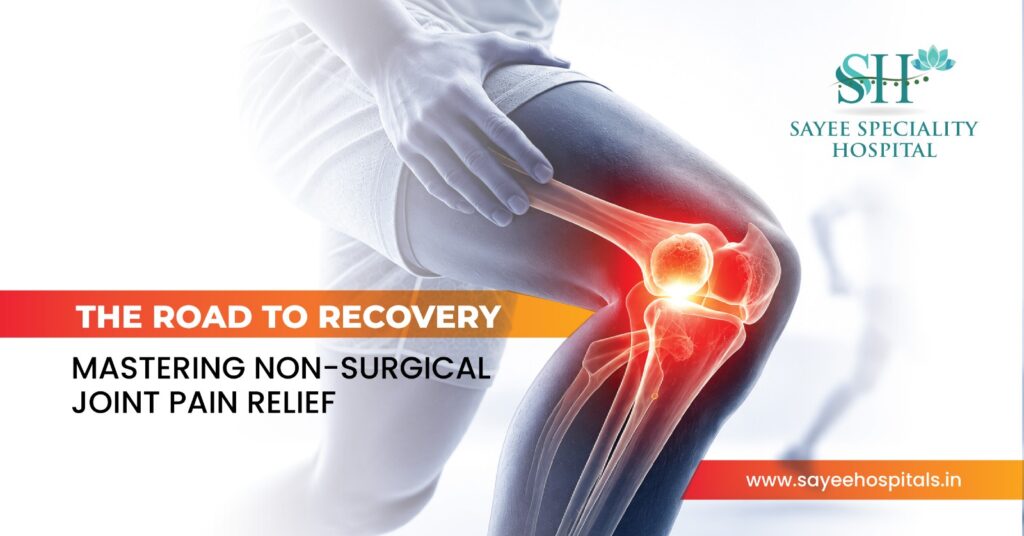
The Road To Recovery: Mastering Non-Surgical Joint Pain Relief
Somewhere along the way, a lot of people picked up the idea that chronic joint pain has two settings put up with it, or get surgery. That binary isn’t accurate and for many patients, it leads to years of unnecessary suffering on one end, or jumping to an invasive procedure before less risky options have been properly explored on the other.
The reality is that conservative, non surgical management of joint pain has become genuinely sophisticated. For knees, hips, and shoulders dealing with arthritis or chronic degeneration, the toolkit available without going anywhere near an operating theatre is broader and more effective than most people realise.
Before anything else can happen before rehabilitation, before lifestyle changes, before any of the longer term work, the pain needs to be at a level where movement is actually possible. That’s not a luxury consideration. It’s the clinical prerequisite for everything that follows, because a person in severe pain won’t and can’t do the physiotherapy that drives real recovery.
For mild to moderate joint pain, non prescription anti inflammatories like ibuprofen or naproxen are a reasonable starting point. They address the inflammatory component of joint pain rather than just masking the sensation, which makes them more useful than simple analgesics for arthritis type conditions. Paracetamol works differently, it doesn’t reduce inflammation, but remains a useful baseline pain management tool, particularly for people who can’t tolerate NSAIDs due to gastrointestinal or cardiovascular considerations.
When oral medication isn’t providing sufficient relief, targeted injections bring the treatment directly to the source.
Corticosteroid injections are the most established option anti inflammatory medication delivered directly into the joint space, bypassing the systemic effects of oral steroids. The pain relief they produce can be significant and can last anywhere from several weeks to several months, creating a window where meaningful rehabilitation becomes possible. They’re not a long-term solution on their own, but as a bridge to getting someone moving and strengthening, they earn their place.
Visco supplementation uses hyaluronic acid, a substance that naturally occurs in healthy joint fluid injected into the joint to improve lubrication and cushioning. The evidence is more mixed than for corticosteroids, but a meaningful subset of patients, particularly those with knee osteoarthritis, report sustained benefit. It’s a reasonable option to consider when steroid injections haven’t provided adequate duration of relief.
PRP therapy platelet rich plasma sits in the regenerative medicine space and has attracted significant interest over the last decade. The process involves drawing a small amount of the patient’s own blood, concentrating the platelets through centrifugation, and injecting that concentration back into the affected joint. Platelets carry growth factors that play a role in tissue repair, and the theory is that a high local concentration accelerates the body’s natural healing response. The evidence base is still developing, but results in knee osteoarthritis and certain tendon related conditions are promising enough that it’s increasingly offered as a serious option rather than an experimental one.
If there’s one intervention that consistently makes the most difference to long-term joint pain outcomes, it’s structured physiotherapy. Not generic exercise, not a leaflet of stretches, a properly tailored programme designed around the specific joint, the specific pattern of weakness and restriction, and the specific goals of the individual patient.
The logic is straightforward. Joints don’t exist in isolation. The knee is supported by the quadriceps, hamstrings, glutes, and hip stabilisers. The shoulder depends on the rotator cuff, the periscapular muscles, and the deep stabilisers of the glenohumeral joint. When the muscles surrounding a joint are weak or poorly coordinated, the joint itself absorbs disproportionate load, which accelerates degeneration and worsens pain. Rebuilding that muscular support doesn’t just reduce pain. It changes the mechanical environment of the joint in ways that slow down the underlying condition.
Range of motion work matters alongside strengthening. Joints that are protected through inactivity avoided because movement hurts lose flexibility progressively, which creates its own layer of stiffness and dysfunction on top of the underlying problem. Gentle, progressive mobility work alongside strengthening is what restores function rather than just managing symptoms.
A good physiotherapist also addresses movement patterns, the way a person walks, climbs stairs, or performs daily tasks, that may be loading the joint inefficiently. Small corrections to mechanics can have surprisingly large effects on pain over time.
Lifestyle modification gets mentioned frequently in this context and sometimes gets dismissed as generic advice. It isn’t. The mechanical reality of what body weight does to weight-bearing joints is significant and well documented.
Each kilogram of body weight translates to roughly three to four kilograms of force across the knee joint during walking, and more during stairs or slopes. For someone carrying excess weight with knee or hip osteoarthritis, even a modest reduction in body weight produces a disproportionately large reduction in joint load. That’s not about aesthetics, it’s basic biomechanics, and the clinical evidence supporting weight loss as a joint pain intervention is solid.
Activity modification doesn’t mean stopping activity. It means substituting high impact loading for lower-impact alternatives that maintain cardiovascular fitness and muscle mass without the joint stress. Swimming is the most joint friendly option available, the water offloads the joints almost entirely while allowing real muscular work. Cycling, both static and outdoor, provides excellent lower limb strengthening with minimal impact. These aren’t consolation prizes for people who can’t run they’re genuinely effective forms of exercise that many people find they prefer once they try them properly.
Assistive devices knee braces, walking aids, custom orthotics, get underused because people associate them with a kind of defeat. That framing doesn’t serve anyone. A well fitted knee brace that offloads the medial compartment reduces pain and allows more activity, which maintains muscle mass, which improves the joint environment. An orthotic that corrects overpronation changes how load is distributed all the way up through the kinetic chain. These are clinical tools, not admissions.
Chronic joint pain doesn’t exist purely as a mechanical problem. The way the nervous system processes persistent pain changes over time, central sensitisation means that someone who has been in pain for years may have a pain system that’s become more reactive independently of what’s happening in the joint itself. Managing that dimension requires a broader approach than injections and physiotherapy alone.
Heat and cold therapy address the day to day fluctuations, warmth for morning stiffness and chronic muscular tension, cold for acute flare ups and post activity inflammation. Simple, inexpensive, and consistently underrated.
Yoga and tai chi have reasonable evidence behind them for chronic joint conditions, specifically because they combine gentle mobility work with body awareness and stress reduction. The stress reduction component isn’t incidental cortisol and the physiological stress response have direct effects on inflammation.
Cognitive behavioural therapy for chronic pain addresses the psychological dimension of living with persistent pain. the catastrophising, the activity avoidance, the depression and anxiety that frequently accompany long-term pain conditions. It doesn’t make the pain imaginary. It changes how the nervous system responds to it, which for many people produces measurable reductions in pain intensity and significant improvements in function and quality of life.
Conservative management of chronic joint pain isn’t about achieving perfect pain elimination that’s not always a realistic target, and chasing it can lead to treatment decisions that carry more risk than benefit. The realistic goal is meaningful reduction in pain, restoration of enough function to stay active, and slowing the progression of the underlying condition.
For many patients, that goal is entirely achievable without surgery. For others, conservative management buys years of good quality life before surgery becomes the right conversation. Either way, working through this pathway properly with a team that includes physiotherapy, medical management, and lifestyle support is the foundation of good joint care.
If you’ve been told surgery is your only option without a proper trial of conservative treatment first, it’s worth getting a second opinion. The evidence says otherwise.
Recent Posts
Lower Back Pain Causes, Diagnosis, and Treatment Almost...

Strep Throat: Symptoms, Diagnosis, and Treatment Sore throats...
Understanding Menorrhagia: Causes, Diagnosis, and Treatment Most women...

Your Posture Is Destroying Your Spine Before 40...