Getting your first period is something most teenage girls expect to happen. When it doesn’t, when 15 comes and goes, then 16, while friends around you are navigating something you haven’t experienced, the confusion and quiet anxiety that follows can be difficult to put into words. For some young women, that absence eventually leads to a diagnosis that changes how they understand their own body entirely.
Mayer Rokitansky Küster Hauser syndrome – MRKH for short is one of those diagnoses. It’s rare, it’s often poorly understood outside specialist circles, and it arrives at an age when most young women are already navigating enough. Here’s what it actually means, what it doesn’t mean, and why the word “hope” in the title is genuinely earned.
What MRKH Actually Is
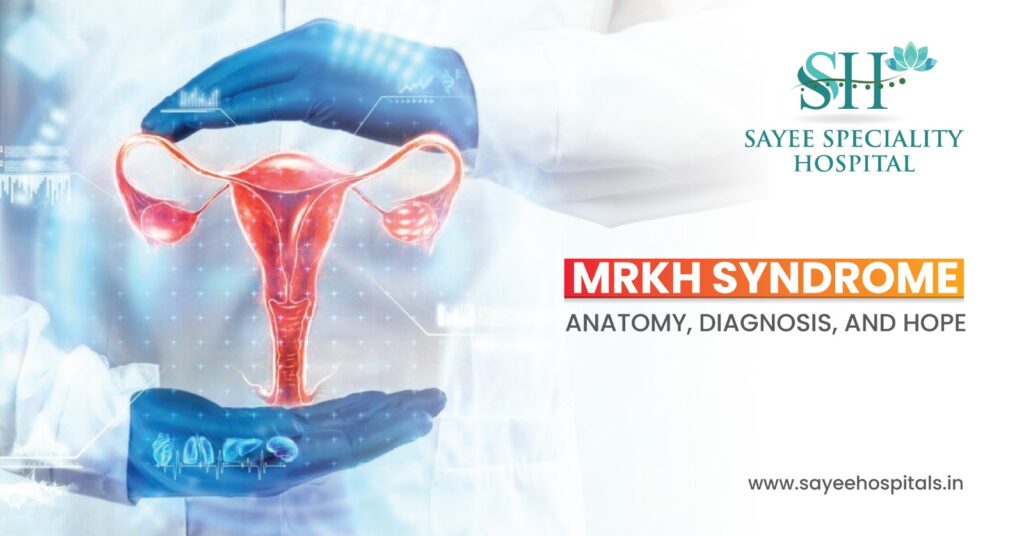
MRKH syndrome is a congenital condition meaning it’s present from birth in which the uterus, cervix, and upper portion of the vagina either fail to develop fully or are absent entirely. It affects roughly 1 in 4,500 females and is caused by incomplete development of the Müllerian ducts, the embryonic structures that would normally form these reproductive organs. That’s why it’s also called Müllerian agenesis.
Here’s the part that surprises most people when they first hear it: the ovaries are completely unaffected. Women with MRKH have normal ovarian function, normal female chromosomes (46,XX), and normal external anatomy. Oestrogen is produced, puberty progresses typically, breast development, pubic hair, everything, because all of that is driven by the ovaries, not the uterus. The absence is internal and structural, not hormonal.
Type 1 and Type 2 What’s the Difference
MRKH is broadly categorised into two forms, and the distinction matters for how thoroughly a patient needs to be investigated at diagnosis.
Type 1 – sometimes called isolated MRKH – involves the reproductive anatomy only. The uterus, cervix, and upper vagina are absent or underdeveloped, and nothing else is affected.
Type 2 – often referred to as MURCS association, involves the same reproductive underdevelopment alongside abnormalities in other organ systems. The kidneys are most commonly involved, a single kidney, a kidney located in an unusual position, or a horseshoe kidney are all documented associations. Skeletal anomalies, particularly scoliosis or vertebral differences, are also seen. Hearing differences and, more rarely, cardiac abnormalities round out the picture.
This is why a diagnosis of MRKH isn’t just a gynaecological workup, it typically involves renal imaging, spinal assessment, and hearing evaluation as well, to establish which type a patient has and whether any additional conditions need monitoring.
How It Gets Diagnosed
Most MRKH diagnoses happen in adolescence, prompted by primary amenorrhoea, the absence of a first menstrual period by around age 15 in a girl who is otherwise going through puberty normally. That combination, puberty progressing typically but no period arriving, is the classic presentation that sends clinicians investigating.
The diagnostic workup usually includes pelvic ultrasound as a starting point, followed by MRI of the pelvis for more detailed anatomical mapping. Blood tests check hormone levels and confirm chromosomal profile. The physical examination and imaging together build a picture that distinguishes MRKH from other causes of primary amenorrhoea, including androgen insensitivity syndrome, which can present similarly but has a different underlying mechanism.
An important detail worth noting: because the ovaries are functional, some women with MRKH experience monthly cramping and pelvic discomfort even without bleeding. The ovaries still ovulate, endometrial like tissue can still respond cyclically, and the resulting pain, with no outlet, can be genuinely significant. This symptom is sometimes dismissed or goes unexplained for months before a diagnosis is made.
Treatment and Management
There’s no single treatment for MRKH, management is tailored around each person’s anatomy, priorities, and wellbeing.
For vaginal lengthening, progressive dilation therapy is the standard first-line approach. Using graduated dilators over a period of months, most women achieve a functional vaginal canal without surgery. It requires consistency and patience, but success rates with proper guidance are high and the approach avoids surgical risk entirely. For women who are unable to complete dilation or prefer a surgical route, procedures using tissue grafts – the Vecchietti or McIndoe techniques among others, are available options.
General healthcare follows some modified pathways. Cervical cancer screening isn’t applicable in the absence of a cervix, but HPV vaccination is still recommended since vaginal and vulval HPV related conditions remain relevant. STI screening and sexual health care continue as normal. Cyclic pelvic pain, where present, is typically managed with ibuprofen or hormonal medication to suppress the cycle.
The psychological dimension of an MRKH diagnosis deserves equal weight to the physical. Being told at 15 or 16 that your reproductive anatomy is significantly different from what you expected and processing what that means for your identity, relationships, and future, is not a small thing. Specialist psychosocial support, peer support networks, and counselling are all recognised parts of comprehensive MRKH care, not optional extras.
Fertility and the Path to Parenthood
This is often the question that sits heaviest after a diagnosis, particularly for young women who haven’t yet had the chance to think about whether or not they want children.
Carrying a pregnancy isn’t possible without a uterus. That’s the straightforward reality. But biological motherhood, in the sense of having children who are genetically your own, is a genuine option, because the ovaries function normally. Eggs can be retrieved through IVF stimulation and fertilised, and the resulting embryo carried by a gestational surrogate. Uterine transplantation is also an emerging possibility, with successful pregnancies following transplant now documented in several countries, though it remains experimental and not yet widely available.
For women who choose not to pursue biological parenthood, adoption and fostering are paths that many in the MRKH community have navigated with tremendous fulfilment.
None of these paths are without complexity. But options exist, more than existed even a decade ago and that matters.
A Final Word
An MRKH diagnosis changes things. It changes how a young woman understands her body, it raises questions she wasn’t expecting to face at that age, and it asks something significant of her emotionally at a time when she’s still figuring out who she is.
But it doesn’t define the ceiling of what her life looks like. With the right medical team, the right support, and access to accurate information, the kind that doesn’t catastrophise or minimise, women with MRKH live full, healthy, connected lives.
That’s not a platitude. It’s what the evidence, and the community, consistently shows.