Internal And External Fixation In Fracture Treatment
Fracture treatment often necessitates repositioning and stabilizing bone fragments to ensure proper healing. Internal and external fixations are common methods used by orthopedic surgeons to achieve this, employing various implants to maintain bone alignment and promote recovery. These techniques not only reduce hospital stays but also help patients regain function more quickly and decrease the risk of improper bone healing.
Internal Fixation: Techniques and Benefits
Internal fixation involves using implants such as plates, screws, nails, and wires to hold broken bone fragments together. These implants are made from durable materials like stainless steel, titanium, cobalt, and chrome, which are compatible with the body and rarely cause allergic reactions.
- Plates: Plates function as internal splints, attached to the bone with screws to hold broken pieces together. Depending on the fracture’s nature, plates may remain in place permanently or be removed after healing.
- Screws: Screws are the most frequently used implant for internal fixation due to their versatility. They come in various sizes to match different bones and fracture types. Screws can be used alone or in conjunction with other implants such as plates and rods. After the bone heals, screws can either be left in place or removed.
- Nails or Rods: For long bone fractures, nails or rods are often inserted through the bones. Bolts at each end of the rod prevent the fracture from shortening or rotating, ensuring the rod stays in place until the bone This method is commonly used for femur and tibia fractures, with rods and screws typically left in place after healing.
- Wires/Pins: Wires or pins are used to hold small bone fragments together, particularly in the hands or feet. They are often employed in conjunction with other fixation methods but can be used alone for certain small bone fractures. Depending on the fracture, wires may be removed after a certain period or left in place permanently.
External Fixation: Temporary and Permanent Solutions
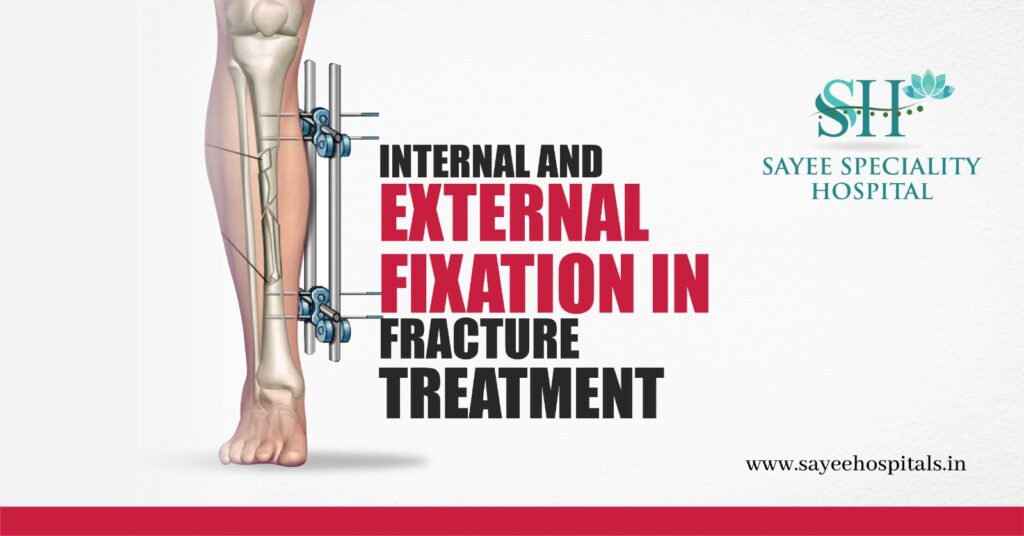
External fixators serve as stabilizing frames that hold broken bones in place using metal pins or screws inserted into the bone through the skin and muscle. These pins and screws are connected to a bar outside the skin, providing external support.
External fixators are commonly used as temporary solutions, particularly for patients with multiple injuries who are not yet ready for long surgical procedures. They offer good stability until the patient is healthy enough for definitive surgery. In some cases, external fixators are used as the primary method to stabilize bones until complete healing.
Internal and external fixations are essential techniques in fracture management, providing stability and promoting efficient healing. Understanding these methods and their applications helps in making informed decisions about fracture treatment, ensuring the best possible outcomes for patients.